
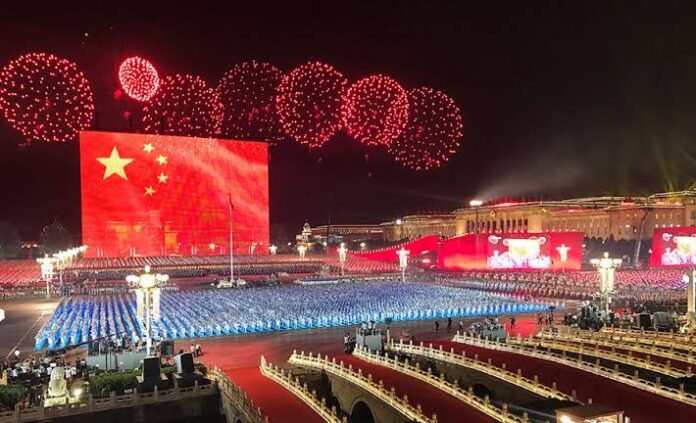
As China marks its National Day on October 1, millions of people across the country are entering the annual Golden Week holiday, a seven-day period that combines national celebrations with travel, tourism, family reunions, and domestic consumption.
For Africa, however, the significance of the October holiday extends beyond China’s borders. With China now deeply integrated into African trade, investment, infrastructure and diplomatic relations, the National Day and Golden Week provide an opportunity for African countries, businesses and citizens to engage more actively with one of the continent’s most important economic partners.
China’s 2026 National Day holiday runs from October 1 to 7, according to the State Council’s official holiday calendar. Authorities have also prepared additional transport capacity as travel demand rises during the period.
Golden Week has become one of China’s most important annual periods for domestic tourism and consumer activity. Cities, airlines, hotels, retailers and cultural attractions experience increased demand as millions of Chinese travel during the holiday.
For African economies seeking to expand tourism and exports to China, the period therefore offers a potential commercial opportunity.
African tourism authorities, airlines, hotels, tour operators and cultural institutions could use the holiday season to promote African destinations to Chinese travellers, while African businesses could increase visibility for products such as coffee, tea, cocoa, flowers, fruit, minerals, textiles and other goods in the Chinese market.
The economic relationship between the two sides provides a strong foundation for such engagement.
China-Africa trade reached a record US$295.6 billion in 2024, an increase of 4.8 percent from the previous year, according to Chinese trade data. African exports to China rose 6.9 percent to US$116.8 billion, while Chinese exports to Africa reached US$178.8 billion. China has remained Africa’s largest trading partner for 16 consecutive years, according to Chinese official figures.
The relationship has also continued to evolve in 2026. China began implementing expanded zero-tariff treatment on imports from all 53 African countries with which it has diplomatic relations from May 1, according to the Forum on China-Africa Cooperation. The policy could create additional opportunities for African exporters seeking greater access to the Chinese market.
Beyond commerce, the October celebrations also provide an opportunity to reflect on the diplomatic dimension of China-Africa relations.
The 2024 Forum on China-Africa Cooperation summit in Beijing brought together leaders from all 53 African countries that maintain diplomatic relations with China and the African Union Commission. The summit produced the Beijing Declaration and the 2025–2027 FOCAC Action Plan, covering areas including trade, industrialization, agriculture, infrastructure, education, health, and security cooperation.
For African countries, participating in National Day-related activities does not necessarily mean simply celebrating a foreign national occasion. It can also provide a platform for people-to-people diplomacy, cultural exchange and business networking.
Embassies, chambers of commerce, universities, media organisations and private companies across Africa can use the period to organise China-Africa cultural events, business forums, exhibitions and tourism promotions.
Such activities could also help Africans better understand Chinese society and culture while giving Chinese audiences greater exposure to Africa beyond conventional narratives centred on commodities and development challenges.
The growing relationship, however, also makes it important for African countries to approach China ties through their own economic priorities. Increased access to the Chinese market, investment and technology can be linked to Africa’s broader objectives of industrialisation, value addition, employment creation and intra-African trade.
The National Day and Golden Week therefore offer more than a calendar event. They present a moment for Africa to recognise the scale of its relationship with China, strengthen people-to-people connections and identify new commercial opportunities.
As China celebrates 77 years since the founding of the People’s Republic, Africa’s engagement with the October holiday can become another channel through which diplomacy, trade and cultural understanding are connected—reflecting the increasingly interdependent relationship between the world’s second-largest economy and a continent seeking greater participation in global markets.

