

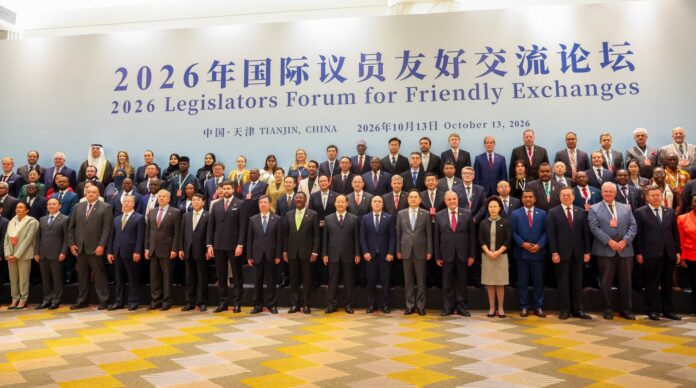
More than 60 lawmakers from five continents meet in China as African countries seek to turn parliamentary diplomacy into investment, manufacturing jobs, and greater access to Chinese markets.
Kenya is using parliamentary diplomacy to pursue a more balanced economic partnership with China, placing trade, technology transfer, skills development, and local manufacturing at the center of its engagement at the 2026 Legislators Forum for Friendly Exchanges.
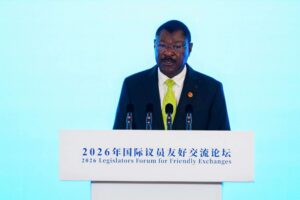
National Assembly Speaker Moses Wetang’ula is attending the international gathering in China alongside Kilifi North MP Owen Baya, nominated Senator Irene Mayaka, and Tongaren MP John Chikati. The forum brings together more than 60 serving and former legislators from five continents to promote parliamentary cooperation, dialogue, peace and sustainable development.
For African economies, the meeting offers an opportunity to move beyond diplomatic goodwill towards practical cooperation on industrialisation, agricultural value addition, renewable energy, vocational training and investment.
The engagement also comes at a significant moment in China–Africa relations. 2026 marks 70 years of diplomatic relations between China and African countries and has been designated the China–Africa Year of People-to-People Exchanges, creating additional opportunities for cooperation in education, culture, governance, and professional development.
Trade imbalance at the center of Kenya’s agenda
Wetang’ula has placed the disparity between Kenyan imports from China and exports to the Chinese market at the centre of his message.
Kenya imported goods worth approximately $5.19 billion from China in 2025, while exports to the Asian economy amounted to only $130.8 million, according to figures cited by the Speaker. The imbalance highlights a longstanding challenge for African economies: expanding access to Chinese goods and infrastructure without building equally strong export industries.
“Kenya must move beyond being a destination for imported goods and become a competitive producer of products that can serve both domestic and international markets,” Wetang’ula said in his address.
He pointed to the Standard Gauge Railway, Nairobi Expressway and Lamu Port as examples of Kenya–China cooperation, arguing that the next phase should focus on using infrastructure and investment to stimulate domestic production and employment.
“Trade must deliver measurable benefits to our people. We need more Kenyan products entering the Chinese market, stronger local manufacturing and investment that creates decent jobs for our young people,” he said.
The Speaker’s message reflects a broader African policy priority: securing greater domestic value from trade and investment relationships, rather than relying predominantly on imported manufactured products or exporting commodities with limited processing.
Technology and skills emerge as priorities
Beyond trade, Kenya is seeking to use its relationship with China to accelerate industrial development and prepare its workforce for a technology-driven economy.
The Speaker cited cooperation involving 144 technical and vocational education and training institutions equipped with modern facilities, alongside 314 trainers who have received training through Kenya–China collaboration.
“Technology transfer must go hand in hand with skills development. Our young people should not only use imported technologies but also acquire the knowledge to manufacture, maintain and improve them,” Wetang’ula said.
His delegation’s programme includes visits to industrial and innovation facilities in Tianjin, including Tellyes Scientific Inc and the Advanced Research Center for China Artifact Art at Tiangong University. The visits have showcased China’s approaches to technological innovation, industry-education integration, cultural preservation and urban development.
What the forum means for African states
The forum, organised by the Chinese People’s Association for Friendship with Foreign Countries, is being held in Tianjin from October 11 to 13. Nearly 70 legislators from more than 50 countries are participating, making it a platform for exchanging experiences in governance, legislation and development.
Its agenda builds on previous editions, which have addressed sustainable development, green infrastructure, environmental protection, economic cooperation and global governance. The 2025 forum in Urumqi adopted a declaration supporting deeper parliamentary cooperation, inclusive economic globalisation and green development.
For African countries, the practical gains could include stronger legislative cooperation, exchanges on industrial policy, improved technical education and greater engagement with Chinese businesses. However, these are potential benefits rather than confirmed investment commitments arising from the 2026 meeting.
The challenge for African governments will be translating parliamentary engagement into measurable outcomes, including export growth, technology partnerships, local manufacturing and employment.
Wetang’ula said: “Parliamentarians must ensure that international partnerships are supported by policies that protect national interests, encourage investment and deliver tangible benefits to citizens.”
As the forum concludes, the test for Kenya and its African counterparts will be whether the relationships built in China translate into new market opportunities and productive investment at home. For Kenya, narrowing the trade gap while expanding industrial capacity remains central to turning its longstanding relationship with China into more inclusive economic growth.

