

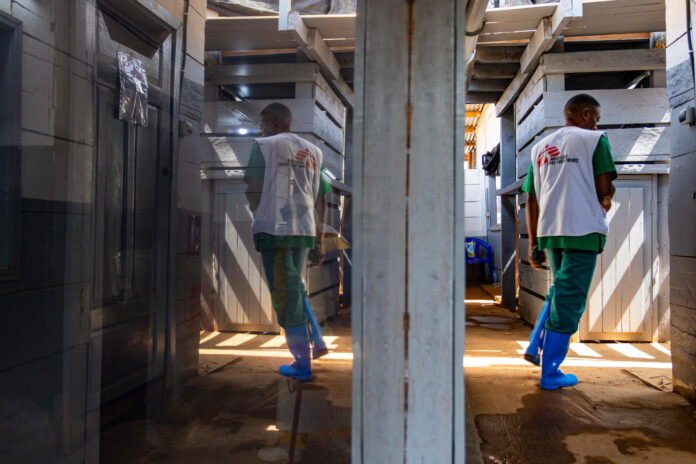
Children are bearing a disproportionate share of the deaths in the ongoing Ebola outbreak in northeastern Democratic Republic of the Congo (DRC), prompting Médecins Sans Frontières (MSF) to call for urgent action to improve paediatric care, expand access to medical innovations and protect children from preventable infections.
Nearly one in four confirmed Ebola cases in North Kivu province involves a child, according to Epicentre, MSF’s epidemiological research centre. The organisation warns that children face heightened risks from the disease but remain underserved in treatment, vaccination research and access to potentially lifesaving medical interventions.
The youngest children are particularly vulnerable. In North Kivu, children under five account for 24 per cent of confirmed cases, compared with 13 per cent in Ituri province. Infants under one year represent 13 per cent of cases in North Kivu, against six per cent in Ituri.
The death toll among children has raised further concern. At MSF’s Ebola treatment centre (ETC) in Butembo, North Kivu, 24 of the 30 children treated between June and September 2026 died from the Bundibugyo virus. Most were under five years old.
MSF attributes the high fatality rate partly to the rapid progression of the disease in communities and limited access to specialised care.
“General health facilities often lack the specialised expertise, equipment, and infection prevention and control measures needed to identify and safely manage suspected cases,” said Stéphanie Hoffmann, MSF’s project coordinator in Butembo.
Many children admitted to the treatment centre had previously been hospitalised for other illnesses at different health facilities. Their family members did not have Ebola, raising concerns that some children may have contracted the virus within healthcare facilities.
MSF says strengthening infection prevention and control, ensuring adequate supplies of personal protective equipment and training healthcare workers in non-Ebola facilities are essential to preventing healthcare-associated transmission while maintaining routine medical services.
Children need specialised care and emotional support
Beyond the medical risks, isolation in Ebola treatment centres can be distressing for young patients who may struggle to understand their circumstances or meet basic needs independently.
MSF has introduced measures to reduce the emotional impact of isolation, including designated visibility areas where parents can see and communicate with hospitalised children.
The organisation has also recruited and trained caregivers to provide daily assistance and emotional support to children inside several treatment centres while wearing full personal protective equipment. At the Kitatumba ETC in Butembo, 13 caregivers are currently supporting young patients.
The initiative seeks to provide essential human contact and reassurance during treatment, although MSF acknowledges that it cannot eliminate the difficulties children face in isolation.
Medical challenges also persist, including limited guidance on paediatric drug dosages and inadequate availability of child-friendly formulations of investigational medicines.
“A child-centred approach must be at the heart of medical care, operational planning, and research efforts,” said Dr Guyguy Manangama, an MSF epidemiologist and deputy director of operations.
Research and vaccines must include children
MSF argues that children are being left behind in the development and deployment of new Ebola interventions. Historically, children have often been excluded from clinical research or included only after lengthy delays, creating gaps in evidence and access to potentially lifesaving treatments.
The organisation is urging national authorities, research institutions, pharmaceutical developers and international funders to prioritise children in ongoing and future studies of the Bundibugyo virus.
It also wants treatments, vaccines and other preventive tools evaluated for paediatric use from the earliest stages of research, rather than waiting for evidence generated exclusively through adult studies.
Despite the significant burden of disease among children, MSF says access to vaccination trials, campaigns and emerging therapeutic innovations remains limited.
“Children cannot continue to wait for data generated in adults before benefiting from advances in Ebola care and prevention,” Manangama said.
The outbreak’s consequences extend beyond Ebola itself. Disruptions to routine healthcare can expose children to vaccine-preventable diseases, malnutrition and other common illnesses, compounding the risks faced by already vulnerable communities.
MSF says routine immunisation, nutrition programmes and access to general healthcare must remain central to the response.
The organisation warns that reducing preventable deaths will require more than controlling transmission: children must also receive timely specialised care, emotional support and equitable access to medical research and innovations.

