


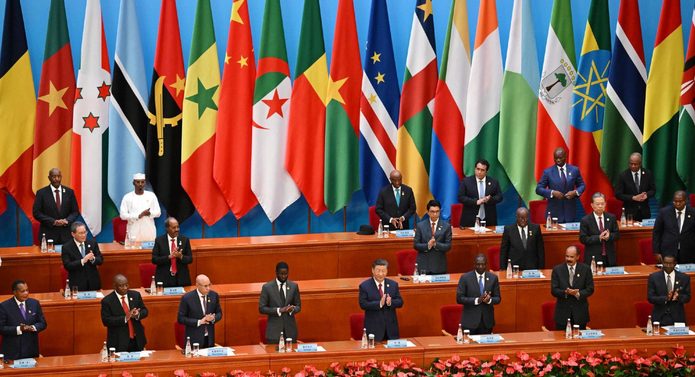
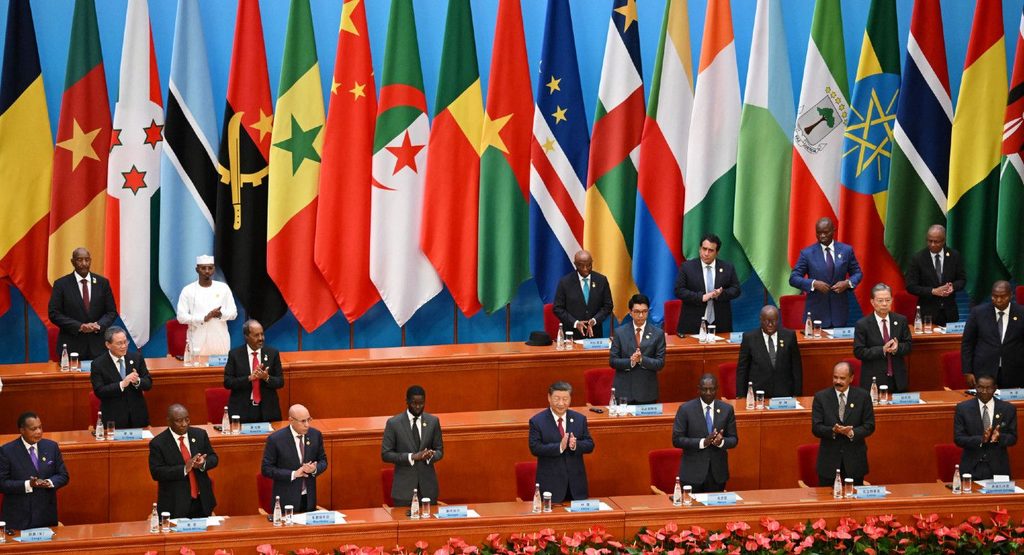
The growing presence of Chinese nationals across Africa is one of the most visible consequences of the continent’s rapidly deepening relationship with China. From construction sites and mining towns to wholesale markets, restaurants, factories and technology hubs, Chinese communities have expanded alongside trade, investment and infrastructure projects.
But the story is not entirely new. China-Africa relations have roots in the anti-colonial struggles of the 1950s and 1960s, long before the modern era of the Belt and Road Initiative (BRI).
China’s formal engagement with Africa gained momentum around the 1955 Bandung Asian-African Conference, when Premier Zhou Enlai met representatives from African countries including Egypt, Ethiopia, Liberia, Libya and Sudan. China subsequently opened a trade office in Cairo in 1956 and began building relations with newly independent African states and liberation movements.
This history is important in understanding today’s Chinese presence. Beijing’s early relationship with Africa was primarily political and ideological, centred on anti-colonialism, South-South solidarity and support for newly independent governments. By the 1960s, China was providing aid, training and political support to African states and liberation movements.
One of the most enduring symbols of that era is the Tanzania-Zambia Railway (TAZARA). Constructed between 1970 and 1975 with Chinese assistance, the approximately 1,860-kilometre railway connected Zambia to the Tanzanian port of Dar es Salaam, reducing Zambia’s dependence on transport routes through white-minority-ruled southern Africa.
Oxford research estimates that China’s aid to Africa between 1956 and 1976 amounted to more than US$2.4 billion, with TAZARA representing its largest single project during the Mao era.
From political solidarity to migration
The transformation of China’s economy from the late 1970s, followed by rapid economic growth from the 1990s, fundamentally changed the relationship. Chinese companies began looking overseas for markets, natural resources, construction contracts and new business opportunities.
The launch of FOCAC in 2000 institutionalised this relationship, while the BRI, launched in 2013, accelerated Chinese commercial activity across Africa.
This economic expansion has produced a corresponding movement of people. Precise figures remain difficult because Chinese migrants are highly mobile and many work on temporary contracts. Estimates have nevertheless put the Chinese population in Africa at between one million and two million, although these figures should be treated cautiously.
Another estimate based on overseas Chinese population data puts the number in Africa at 1.18 million in 2022, compared with about 240,000 in 2010, an increase of nearly 500 per cent in 12 years.
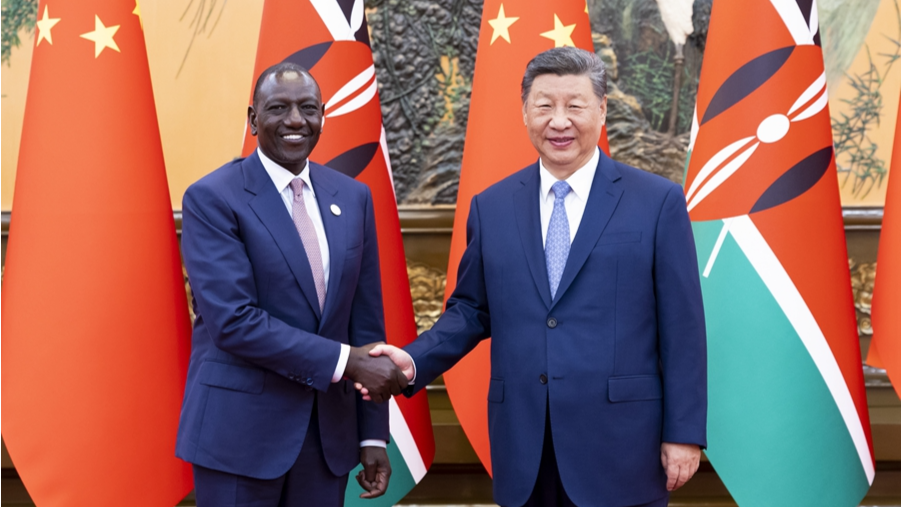
The reasons for the migration are diverse. Some Chinese nationals arrive as engineers, construction workers, managers and technicians employed by Chinese companies. Others come independently as traders, restaurant owners, manufacturers, miners, farmers and small-business entrepreneurs.
Africa’s rapidly growing consumer markets are another attraction. The continent’s infrastructure deficit, demand for affordable manufactured goods and expanding urban population create opportunities for Chinese entrepreneurs.
A relationship worth US$295.6 billion
The scale of the economic relationship helps explain why migration continues. China-Africa trade reached a record US$295.6 billion in 2024, according to FOCAC data.
The relationship is also evolving. In May 2026, China extended zero-tariff treatment to all African countries with which it maintains diplomatic relations, covering 100 per cent of tariff lines. The policy is intended to increase African exports to China and deepen economic integration.
Yet the Chinese presence is not without controversy. Competition with local traders, concerns over employment, mining practices, immigration and the repatriation of profits have generated debate in several African countries.
At the same time, public attitudes towards China remain relatively favourable. Afrobarometer’s 2026 findings show that 62 per cent of Africans surveyed regard China’s influence on their country as somewhat or very positive, higher than perceptions of US influence at 52 per cent and EU influence at 50 per cent.
The “Chinese population explosion” in Africa, therefore, is not simply a story of migration. It is the human face of a relationship that has evolved from anti-colonial solidarity in the 1950s to trade, infrastructure, investment, technology and private enterprise in the 21st century.
China’s growing communities are both a consequence and a driver of that transformation linking African markets with one of the world’s largest economies while creating a new, increasingly complex chapter in Sino-African relations.

