

The Kenya Defence Forces is strengthening its emergency medical response capacity as Kenya prepares for forecast El Niño conditions and above-average rainfall between October and December, with authorities warning that floods could disrupt health services and trigger outbreaks in vulnerable communities.
The preparations are aimed at ensuring the military can support civilian health authorities if flooding overwhelms local medical facilities, cuts off communities from essential services or creates conditions for disease outbreaks in displacement centres.
Flooding can damage health infrastructure, restrict access to hospitals and clinics, contaminate water sources and increase the risk of waterborne diseases such as cholera. Kenya experienced the impact of heavy rains during the March-May period, when flooding affected 27 counties, while landslides were reported in Tharaka-Nithi, Elgeyo-Marakwet and Kiambu.
By May, floods had caused 122 deaths and affected more than 42,000 people, highlighting the pressure that extreme weather can place on the country’s emergency response systems.
The Kenya Meteorological Department has forecast El Niño conditions and above-average rainfall in several parts of the country between October and December 2026. A national preparedness assessment has identified 18 counties and 5,660 health facilities in areas considered vulnerable to the effects of flooding, while overall flood preparedness has been assessed at 54 per cent.
The government has activated an El Niño Contingency Plan, with the Ministry of Health and the National Disaster Operations Centre coordinating preparedness activities. Counties are also undertaking assessments to strengthen their ability to respond to flooding and related public health emergencies.
Against this backdrop, the KDF is strengthening an emergency medical team designed to provide additional capacity during large-scale disasters.
Thirty KDF health professionals completed initial induction training in 2024, laying the foundation for a specialised team that can be deployed to support communities and health facilities during emergencies.
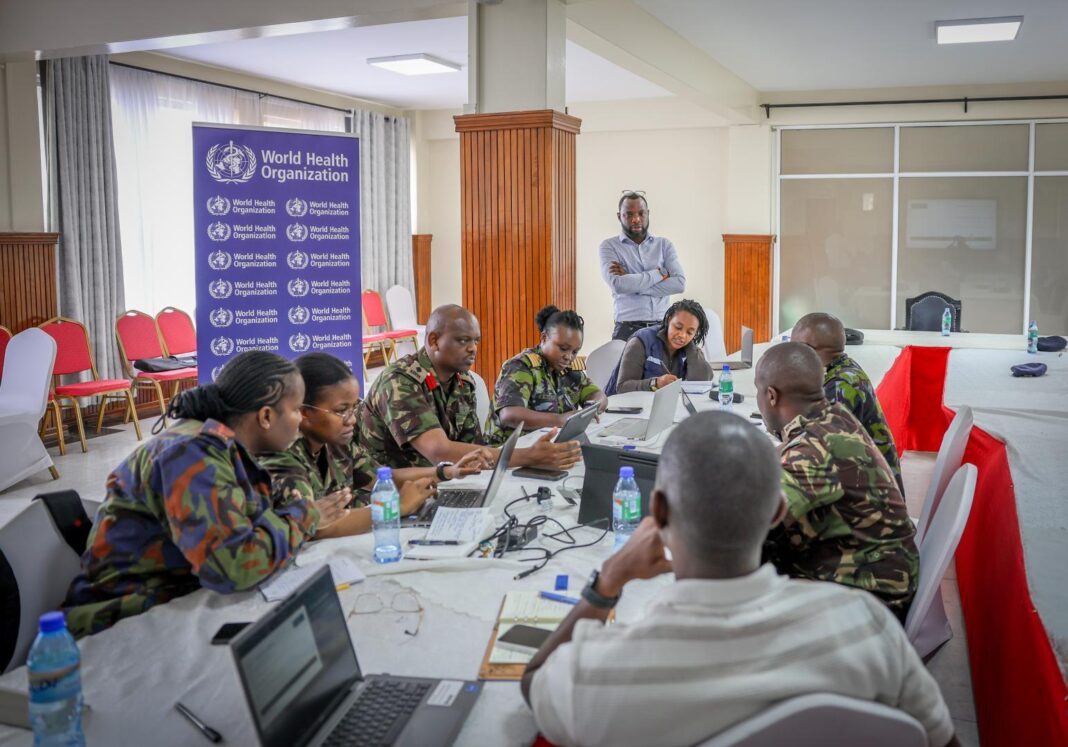
Between September 8 and 11, 2026, the KDF health security team, working with experts from the World Health Organization, advanced preparations for the emergency medical team.
The exercise established a core management structure with defined leadership responsibilities while developing standard operating procedures covering clinical care, logistics and water, sanitation and hygiene.
The team also reviewed a roadmap towards establishing a WHO-accredited Type 1 fixed Emergency Medical Team. Such a facility would provide essential medical services from a fixed location during a major emergency and could be deployed as part of a wider national response.
The proposed capability is intended to complement, rather than replace, civilian health services during emergencies.
The September exercise also included a tabletop simulation designed to test how the medical team would respond to a major flooding scenario followed by a cholera outbreak in displacement camps.
Participants worked through the different stages of a potential emergency, including activation of the team, coordination with national and county health authorities, mobilisation of personnel and supplies, delivery of clinical and public health services, sanitation support and eventual handover and withdrawal.
The simulation exposed gaps in existing procedures and helped clarify responsibilities between the KDF, health authorities and other agencies involved in disaster response.
“As KDF, it is expected of us to be called upon when our time comes. If the systems are overwhelmed, we can be an important national asset. We are not working alone. We are part of a team,” said Director of Medical Services, Major General (Dr) Francis Kuria, Chief of Clinical Support Services.
At the conclusion of the exercise, participants developed an El Niño preparedness and response plan outlining possible scenarios and priority actions for responding to flooding and the health emergencies that could follow.
The plan is expected to guide the team’s mobilisation, coordination and deployment if communities are affected by severe weather during the October-December rainfall season.
The preparations also underscore the importance of coordination across government, as the scale of a major flood or disease outbreak could exceed the capacity of individual institutions.
“Preparedness is about testing systems before they are needed. Exercises like this help us work through scenarios and address gaps before an emergency occurs. WHO will continue working with KDF and its partners ahead of the El Niño season and beyond,” said Dr Martins Livinus, Team Lead for Emergency Preparedness and Response at WHO Kenya.
The KDF’s expanded medical preparedness comes as Kenya seeks to strengthen its ability to respond to climate-related emergencies, with military medical personnel positioned to provide additional support when civilian health systems face exceptional pressure.



