


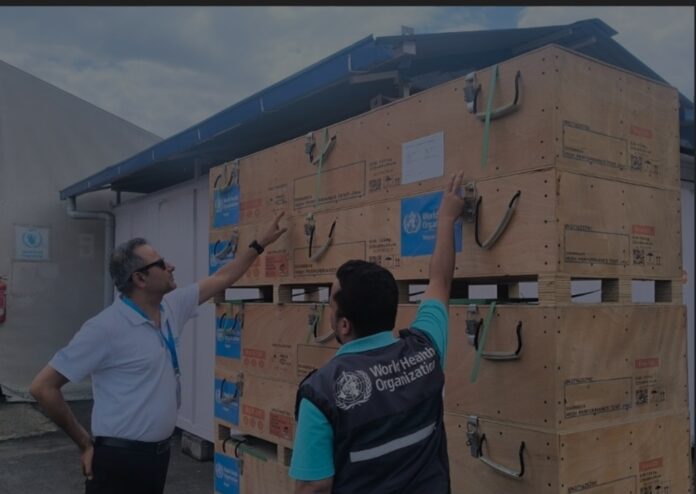
The World Health Organization has released US$150,000 in emergency funding to help Nepal cope with the aftermath of flash floods that have killed more than 730 people and left nearly 2,500 others missing, in what officials are calling one of the deadliest disasters to strike the country in recent memory.
The money comes from the South-East Asia Regional Health Emergency Fund (SEARHEF), WHO’s rapid-response financing mechanism for the region, and marks the fund’s 54th emergency intervention since it was established in 2008.
Dr Nilesh Buddha, Officer-in-Charge of the WHO South-East Asia Regional Office, said the funding is meant to address the most pressing needs on the ground, and reaffirmed the organization’s commitment to standing by Nepal through both the immediate response and the longer recovery ahead.
A Fast-Moving Disaster
The floods struck on 26 August, and WHO moved quickly, dispatching emergency medical supplies within hours — including an Interagency Emergency Health Kit large enough to meet the health needs of roughly 10,000 people for three months, along with tents to shelter displaced families. As the scale of the damage became clearer, the agency followed up with additional shipments of surgical masks, gloves, hand sanitizer and other medical essentials.
The human toll continues to mount. Beyond the confirmed deaths and the nearly 2,500 people still unaccounted for, more than 200 people have been injured, with 74 currently receiving treatment, according to figures from national authorities.
Six Districts, 10,000 Households in Need
The disaster has hit hardest across six districts in Bagmati and Gandaki provinces, where an estimated 10,000 households now require immediate relief. The damage extends well beyond housing: critical infrastructure, including health facilities, has been badly affected.
In Rasuwa district among the worst-hit areas four health facilities have been completely destroyed, while two more in Dhading have suffered partial damage.
Hospitals in Dhading and Trishuli are currently unreachable because the roads leading to them have been washed out or damaged, complicating efforts to get displaced residents the care they need.
Guarding Against a Second Wave of Harm
With health infrastructure crippled and communities displaced, WHO is working alongside the Nepali government and partner organizations to coordinate the broader health response. Priorities include strengthening disease surveillance, keeping essential health services running, and getting ahead of secondary health risks that often follow a disaster of this scale — drowning-related injuries, diarrhoeal and respiratory illness, water- and food-borne disease, and vector-borne infections.
Officials also flagged a less visible but equally serious concern: the psychological toll of the disaster. The loss of family members, homes and livelihoods, compounded by displacement and ongoing uncertainty, is expected to weigh heavily on the mental health and psychosocial well-being of affected communities in the weeks and months ahead.

