
The World Health Organization (WHO) is pushing countries to stop treating oral health as a stand-alone concern by integrating the tracking of oral diseases into broader national surveillance of noncommunicable diseases (NCDs).
The move follows an update to the WHO STEPwise approach to NCD risk factor surveillance (STEPS), which gives countries a simplified way of collecting population-level data on oral diseases alongside other major NCD risk factors.
The revised Oral Health Module, updated by WHO in 2024 and detailed in a new publication in the Bulletin of the World Health Organization, is designed to address a long-standing challenge: the lack of reliable, comparable and policy-relevant data on oral health.
Rather than relying mainly on people seeking dental care, the updated approach allows countries to gather information from representative populations, providing a broader picture of oral health needs and access to services.
For policymakers, this could change how oral diseases are understood — from conditions managed primarily in dental clinics to an important component of public health surveillance.
“The updated STEPS Oral Health Module gives countries a practical way to integrate oral diseases into broader NCD surveillance,” said Dr Søren Brostrøm, Director of WHO’s Department of Noncommunicable Diseases and Mental Health.
By collecting information on oral diseases together with other NCDs and their shared risk factors, WHO says countries can generate evidence to guide prevention strategies, health planning and resource allocation.
A simpler way to collect oral health data
One of the major changes is the attempt to make oral health surveillance easier to incorporate into routine national surveys.
Traditionally, collecting clinical information on oral diseases could require specialized dental personnel and more complex assessments.
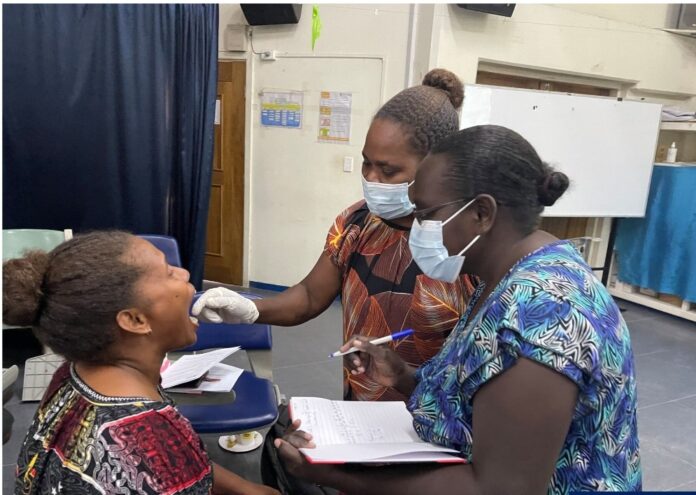
The revised module simplifies the clinical component so that trained survey workers including those who are not oral health specialists can conduct the assessment.
This means countries could potentially collect oral health information without having to build entirely separate surveillance systems.
The module combines people’s responses about their oral health and access to care with a brief clinical assessment conducted on a representative sample.
The approach is intended to give governments a more complete picture of oral health conditions and the barriers preventing people from receiving care.
WHO says the revised module includes indicators considered particularly relevant for policy, including oral health status and access to oral health services.
It also aligns with the WHO Global Oral Health Action Plan 2023–2030 monitoring framework and global burden of disease requirements.
Why the data matters
For health systems, the significance of the change goes beyond counting people with dental problems.
Poor oral health can intersect with broader health and social inequalities, while the same behavioural and social determinants can influence oral diseases and other NCDs.
WHO’s decision to place oral health within the STEPS framework therefore creates an opportunity for countries to examine these issues together rather than through fragmented health programmes.
It could also help governments identify populations that face the greatest barriers to oral healthcare and determine where prevention and services need to be strengthened.
Without reliable population-level data, however, such decisions can be difficult to make.
Countries may know that oral diseases are a problem but lack sufficiently detailed information to determine who is most affected, what risk factors are involved or how many people are able to access appropriate care.
The updated module is intended to close some of that evidence gap.
What it could mean for countries
The development is particularly relevant for countries seeking to strengthen integrated approaches to NCD prevention.
Instead of conducting separate surveys for different diseases, countries using the STEPS framework can incorporate oral health questions and a brief clinical assessment into an established surveillance platform.
That could reduce duplication while making oral health more visible in national health statistics.
The approach also gives policymakers an opportunity to monitor whether investments and interventions are translating into improvements over time.
For countries working towards the WHO’s 2030 oral health targets, comparable data will be important for measuring progress.
WHO says the revised module was developed through collaboration between international experts and WHO collaborating centres and reflects current evidence on measuring and monitoring oral diseases.
The publication comes at a time when global health systems are increasingly being encouraged to move away from disease-specific silos and address common risk factors through integrated public health strategies.
The message from WHO is therefore straightforward: oral health data should not sit outside the wider health information system.
By embedding oral disease surveillance within routine NCD monitoring, governments could gain a clearer picture of a health issue that has often remained less visible in national policy discussions —land use that evidence to decide where prevention, services and resources are most urgently needed.

