

Chinese President Xi Jinping’s three-day state visit to the United States has ended, leaving behind a mixture of diplomatic ceremony, renewed dialogue and unresolved disputes that could shape the global economy well beyond Washington and Beijing.
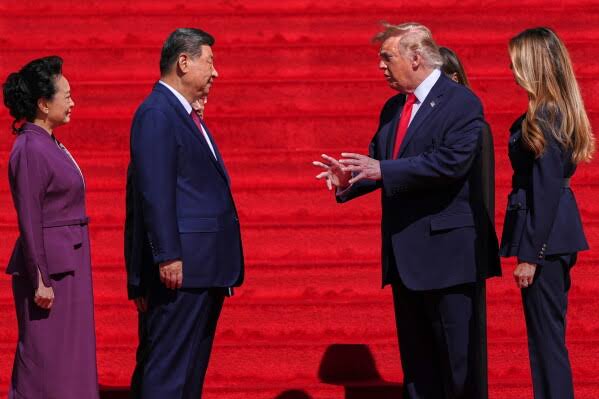
Xi arrived in the United States on September 23 at the invitation of US President Donald Trump, marking his first state visit to Washington in more than a decade. Trump personally welcomed Xi at Joint Base Andrews before the Chinese leader was given a high-profile state reception at the White House on September 24.
The visit came at a critical moment for the world’s two largest economies. Their relationship remains heavily influenced by disagreements over tariffs, technology, artificial intelligence, rare-earth minerals, Taiwan and the wider strategic competition between Washington and Beijing.
Yet the tone in Washington was notably more diplomatic than confrontational. Trump described his relationship with Xi in warm terms, while Xi called for the two countries to manage their differences and maintain what China describes as a relationship of “strategic stability.” The Chinese president said the two countries should be partners rather than rivals and argued that cooperation and competition could coexist. The carefully choreographed welcome reflected the importance both governments attach to preventing their rivalry from developing into a deeper confrontation.
Xi Jinping’s US Visit Comes as Trade Tensions Remain Unresolved
Trade was one of the biggest issues surrounding the Xi Jinping US visit. The United States and China have spent years imposing tariffs and other restrictions on each other’s goods and technologies. Although the two governments have taken steps to prevent the trade dispute from escalating further, major disagreements remain.
During the latest talks, the existing trade truce was extended by two months, according to US Treasury Secretary Scott Bessent. The extension gives Washington and Beijing additional time to continue negotiations rather than allowing the current arrangement to expire immediately.
However, the extension does not represent a comprehensive settlement. Questions surrounding tariffs, Chinese purchases of American goods, rare-earth supplies and technology restrictions remain part of the broader negotiations. Reuters reported that US Trade Representative Jamieson Greer said further details from the trade negotiations would be released later, underlining that many of the substantive issues remain under discussion.
For businesses around the world, that uncertainty matters. Companies that depend on Chinese manufacturing, American technology or global supply chains are watching Washington and Beijing closely. Any change in tariffs or export restrictions can affect the cost of electronics, machinery, vehicles, batteries and other products traded across international markets.
Artificial Intelligence Emerges as a New Battleground
Artificial intelligence was another major issue surrounding the Trump-Xi meeting. The US and China are competing for leadership in advanced AI, semiconductor technology and the computing infrastructure needed to develop increasingly sophisticated systems.
The rivalry has implications far beyond Silicon Valley and China’s technology sector. AI is becoming increasingly important to banking, healthcare, manufacturing, education, agriculture, logistics and government services. As a result, decisions made by Washington and Beijing could influence how AI technology spreads across developing economies, including African countries.
Xi said during his Washington visit that the development of AI should remain under human control. The statement came as the two countries continue to compete over advanced computing, chips and AI capabilities. Despite the prominent place of AI on the agenda, the summit did not produce a major breakthrough on the broader technology rivalry. That means the competition over semiconductors, advanced computing and AI development is likely to continue.
For Africa, the consequences could be significant. African governments and businesses increasingly rely on technology originating from both Western and Chinese companies. A deeper technological divide between Washington and Beijing could force countries to navigate competing technology ecosystems while trying to expand digital infrastructure and AI adoption.
Rare Earth Minerals Remain Strategically Important
Rare-earth minerals were another major issue hanging over the summit. These minerals are essential components in numerous modern technologies, including electronics, electric vehicles, renewable-energy equipment and advanced military systems.
China has a dominant position in global rare-earth processing, giving Beijing considerable leverage in negotiations with Washington. The United States, meanwhile, has been trying to strengthen alternative supply chains and reduce its dependence on China for strategically important materials.
Although rare earths were among the issues surrounding the summit, the meeting did not publicly produce a comprehensive solution to the underlying dispute. That matters for Africa because the continent possesses significant deposits of critical minerals that are increasingly important to the global energy and technology transition.
Countries including the Democratic Republic of Congo, Zambia, Zimbabwe, Namibia and South Africa have resources that are attracting increasing international interest. As the US-China technology competition continues, demand for alternative sources of minerals could increase the strategic importance of Africa’s mining sector.
But greater demand also raises questions about investment, processing capacity, local value addition, environmental standards and whether African countries can capture more economic value from their natural resources.
Taiwan Remains One of the Most Sensitive Issues
Taiwan remains another major source of tension between Washington and Beijing. China regards Taiwan as part of its territory, while the United States maintains extensive unofficial relations with Taiwan and has historically provided it with defensive support.
The issue was among the difficult subjects surrounding the Trump-Xi meeting, alongside technology, trade and the war involving Iran. Reuters reported that there was no major breakthrough on Taiwan during the summit. That lack of resolution means the underlying strategic tensions between the United States and China remain.
For other countries, particularly developing economies, stability between Washington and Beijing is important because a major confrontation would have consequences for global trade, financial markets, energy prices and international supply chains.
Xi’s State Dinner Brings China and US Business Leaders Together
The diplomatic symbolism of the visit was particularly visible during the White House state dinner. Trump and First Lady Melania Trump hosted Xi and his wife, Peng Liyuan, at the White House on September 24. The event brought together government officials and prominent business and technology figures. Among the high-profile technology executives associated with the dinner were figures from companies including Nvidia, OpenAI, Amazon and other major US technology firms. Their presence highlighted the commercial importance of the relationship even as Washington and Beijing compete strategically.
The dinner also demonstrated the role of business diplomacy in the wider US-China relationship. Technology companies are directly affected by restrictions on advanced chips, AI systems, data and investment. At the same time, American businesses continue to have commercial interests in China, while Chinese companies remain connected to global supply chains.
What the Visit Means for Africa
For African countries, the significance of Xi Jinping’s US visit extends beyond diplomacy between two major powers. China and the United States both have substantial economic relationships with Africa, although their approaches and areas of engagement differ.
China has become a major trading partner for many African countries and has invested in infrastructure, manufacturing, telecommunications, mining and energy projects across the continent. The United States remains an important source of investment, technology, development assistance and trade opportunities. If Washington and Beijing manage to stabilize their relationship, African economies could benefit from a more predictable global trading environment.
However, prolonged competition could also create opportunities. The race for critical minerals may increase interest in African mining projects. Competition over digital infrastructure could create additional financing options for African governments. Meanwhile, growing demand for clean-energy technologies could encourage investment in solar power, batteries and other renewable-energy sectors.The challenge for African countries will be negotiating these relationships in ways that support local industries and economic development.
A Visit Focused on Stability Rather Than a Grand Reset
By the time Xi departed Washington on September 25, the visit had produced plenty of diplomatic imagery but fewer major public breakthroughs than some observers might have hoped for. Xi and Trump met at the White House, attended a state dinner and continued discussions on trade, technology and international affairs. On Friday, the two leaders had tea before Xi and Peng visited the National Archives as part of the final day of the state visit. The White House has described the talks positively, while Chinese officials have emphasized dialogue, cooperation and strategic stability.
But the underlying disagreements have not disappeared. Trade negotiations continue. AI competition remains intense. Rare-earth supply chains remain strategically important. Taiwan remains a major security issue. And the broader competition between the world’s two largest economies continues to influence international politics. The most immediate result of the Xi Jinping US visit may therefore be less about a single historic agreement and more about keeping communication open. That distinction matters.
A stable channel between Washington and Beijing gives both sides room to negotiate when disagreements emerge. For the rest of the world, including Africa, it also provides some protection against the economic disruption that could follow a sharper deterioration in US-China relations. The Xi Jinping US visit has ended, but the bigger story is only beginning.
The decisions made in Washington over the coming months on trade, AI, technology and critical minerals could influence everything from global supply chains to Africa’s mineral resources and digital economy. For African governments and businesses, the message is clear: the relationship between Washington and Beijing is no longer simply a distant geopolitical issue. It is increasingly connected to the continent’s trade, technology, investment and economic future.

