

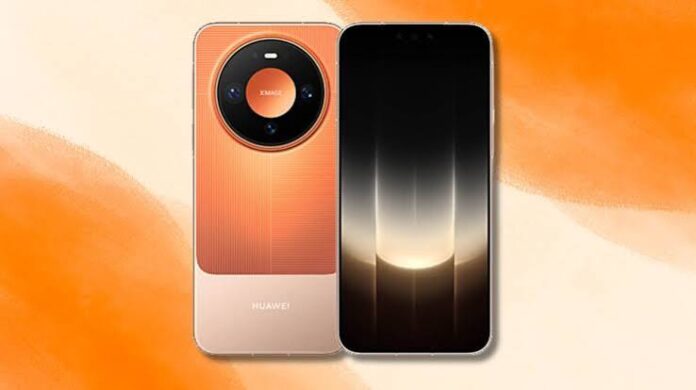
Huawei has unveiled its new Mate 90 smartphone series, putting advanced chip design, artificial intelligence and high-performance mobile computing at the centre of its latest push in the global smartphone market as demand for more powerful devices continues to grow across Africa.
The new lineup features Huawei’s latest Kirin processors, including the Kirin 9050 Pro, which the company says incorporates its new LogicFolding architecture. The technology is designed to increase processing density and improve performance by vertically restructuring elements of the chip. Huawei has positioned the technology as an important step in its efforts to develop proprietary semiconductor capabilities amid continuing restrictions on China’s access to some advanced chipmaking technologies.
The Mate 90 range runs on Huawei’s HarmonyOS 7 and includes several models, with the premium Mate 90 Pro Max and Mate 90 RS Ultimate Design using the more advanced Kirin 9050 Pro. Huawei says the new processor delivers significant improvements in computing, graphics and artificial-intelligence processing compared with the previous generation.
The launch comes as smartphones become increasingly important to Africa’s digital economy. The continent’s smartphone market shipped an estimated 84.4 million devices in 2025, representing 13 per cent year-on-year growth, according to data reported from Omdia. Smartphones accounted for about 55 per cent of total mobile handset shipments, highlighting the continuing transition from traditional feature phones to smartphones.
The expansion is being driven by growing demand for affordable internet access, digital financial services, social media, e-commerce, online education and entertainment. Markets such as Nigeria, South Africa, and Egypt recorded particularly strong growth, while Kenya also registered an increase despite pressure on consumers from higher living costs.
For Huawei, Africa represents a market where advances in smartphone technology could intersect with a rapidly expanding digital ecosystem. The company already has a significant presence in Africa’s mobile-device market. StatCounter data for September 2026 put Huawei’s share of mobile-device vendors in Africa at 5.15 per cent, behind Samsung, Apple, Xiaomi and Tecno.
However, the biggest opportunity may not simply be selling premium smartphones. Africa continues to face a major smartphone affordability challenge. The GSMA estimates that about 63 per cent of Africans live within mobile broadband coverage but are not using mobile internet, while only 9 per cent remain outside mobile broadband coverage. Affordability, alongside digital skills and other barriers, remains one of the major reasons people do not fully use available networks.
This creates a two-speed smartphone market in Africa: a growing premium segment seeking advanced cameras, AI and high-performance processors, alongside a much larger price-sensitive market looking for affordable devices capable of supporting mobile money, messaging, video and basic digital services.
Huawei’s Mate 90 technology nevertheless illustrates how quickly smartphone capabilities are evolving. The premium Mate 90 Pro Max includes a 200-megapixel telephoto camera, while the series combines large-capacity batteries, fast charging, advanced displays and AI-oriented processing. The Kirin 9050 Pro’s LogicFolding architecture is particularly significant because it demonstrates Huawei’s attempt to extract greater performance through chip design and integration rather than relying solely on access to the most advanced external semiconductor technologies.
Africa’s growing smartphone market also has wider economic implications. GSMA estimates that mobile technologies and services contributed $240 billion to Africa’s economy in 2025, equivalent to 7.8 per cent of continental GDP, supporting about 13 million jobs. The contribution is projected to reach $290 billion by 2030 as digital adoption expands.
The challenge for manufacturers such as Huawei will therefore be translating technological breakthroughs into devices that are accessible to African consumers. While flagship phones demonstrate the direction of innovation, affordability, financing options, local distribution and reliable connectivity will determine how deeply the next generation of smartphone technology penetrates Africa.
For Huawei, the Mate 90 is more than another flagship launch. It is also a demonstration of the company’s growing investment in homegrown chip technology—and a potential platform for competing in an African smartphone market that is becoming increasingly central to the continent’s digital transformation.

