

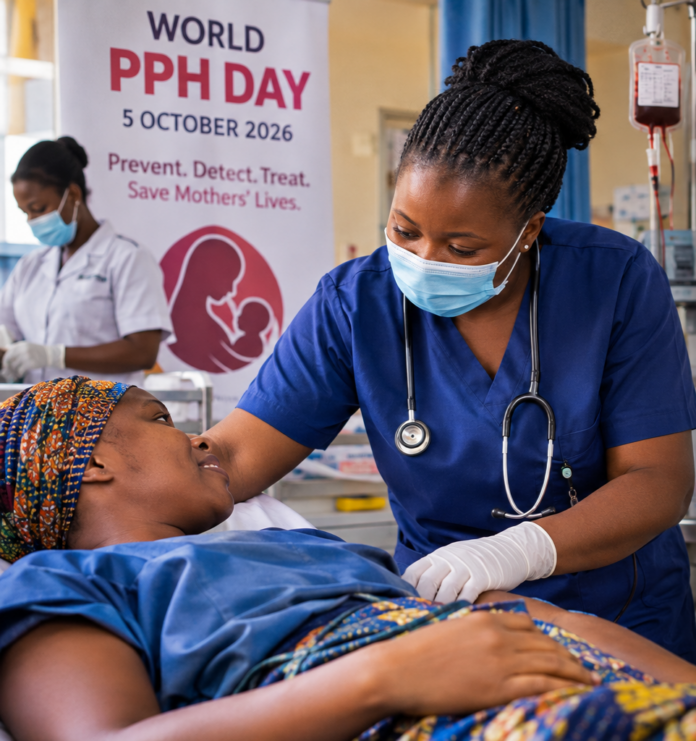
Nearly 43,000 women die every year from excessive bleeding after childbirth, with postpartum haemorrhage (PPH) continuing to rank as the leading cause of maternal deaths globally, the PPH Foundation has said.
As the world marked World Postpartum Haemorrhage Day on October 5, 2026, the foundation called on governments and health systems to move faster in implementing proven measures for preventing, detecting and treating severe bleeding after childbirth.
PPH affects an estimated 27 million women every year, making it one of the most urgent threats to maternal survival. Yet health experts say many deaths can be prevented when bleeding is recognised early and women have timely access to appropriate medicines, skilled health workers, blood and emergency referral services.
The renewed call comes one year after the World Health Organization (WHO), the International Federation of Gynecology and Obstetrics (FIGO) and the International Confederation of Midwives (ICM) issued consolidated recommendations on the prevention, diagnosis and treatment of PPH.
WHO has since released an implementation guide intended to help countries translate the recommendations into national policies and routine clinical practice.
For the PPH Foundation, however, the challenge is no longer simply knowing what works, but ensuring those interventions reach women when and where they are needed.
“PPH is a clinical emergency, but it is also a health-system challenge. We need systems that ensure every mother has timely access to skilled care, emergency blood supplies and rapid referral services,” said Prof Moses Obimbo, Project Lead of the EndPPH Initiative.
Early detection can make the difference
One of the key changes in the latest global guidance is a stronger emphasis on the early recognition of blood loss.
Health workers have traditionally relied heavily on visual estimates to determine how much blood a woman has lost. But blood loss can be underestimated, potentially delaying lifesaving treatment.
The new approach encourages objective measurement of blood loss, allowing health workers to identify excessive bleeding earlier and respond before a woman’s condition deteriorates.
WHO also recommends a first-response package that combines several interventions rather than relying on a single treatment.
The package includes uterine massage, oxytocic medicines, tranexamic acid, intravenous fluids and examination to establish the source of bleeding, followed by escalation of care where necessary.
The PPH Foundation says these measures need to become part of everyday maternity care rather than remaining recommendations contained in guidelines.
Blood remains a critical link
Even when health workers recognise PPH quickly, treatment can fail if blood is unavailable.
Women experiencing severe haemorrhage may require blood transfusion, making reliable blood supplies an essential component of maternal healthcare systems.
The foundation has sought to address this gap through its ROAMING Blood Initiative, which aims to bring voluntary blood donation closer to communities.
The initiative has involved partnerships with organisations including the Kenya Red Cross, Drop Access, Nairobi City County Blood Services, Kenya Blood and Tissue Transplant Services and Eldon Biologicals.
Blood mobilisation has also been incorporated into broader EndPPH activities, including the third PPH School and the third International EndPPH Run.
Prof Julius Ogeng’o, Co-Lead of the EndPPH Initiative, said efforts to strengthen blood availability must be rooted in communities.
“You go to where the people are. You engage them, you build trust, and you build a network,” he said.
The approach reflects a wider recognition that maternal survival cannot depend solely on what happens inside a delivery room. Communities also have a role to play in creating systems that can respond quickly when emergencies occur.
Prevention begins before childbirth
The foundation is also urging a stronger focus on identifying risks during pregnancy rather than waiting for complications to develop during labour or after delivery.
Conditions such as anaemia, preeclampsia and gestational diabetes require early identification and appropriate management. Access to quality antenatal care can help health workers identify women who may need closer monitoring and prepare for potential complications.
Dr Kireki Omanwa, President of the Kenya Obstetrical and Gynaecological Society and Co-Lead of the EndPPH Initiative, stressed that apparent low-risk pregnancies still require careful monitoring.
“Even apparently normal pregnancies require attention to detect complications early,” he said.
This means preparedness for PPH must extend from antenatal clinics to maternity wards, emergency departments, blood services and referral networks.
The foundation is supporting this approach through the PPH School, research, stakeholder engagement and discussions on implementing the PPH Bundle, while also working to strengthen the capacity of frontline health workers across Africa.
Turning guidelines into action
The PPH Foundation’s World PPH Day message is ultimately about closing the gap between evidence and practice.
It is calling on governments, healthcare facilities, health workers, researchers, development partners, innovators, blood services, the media and communities to accelerate action against postpartum haemorrhage.
Among its priorities are stronger frontline preparedness, reliable supplies of blood and essential medicines, functional emergency referral systems and practical training for health workers.
The foundation is also urging investment in research focused on implementation and greater community participation in maternal health and blood donation.
The continued toll of PPH highlights a wider challenge in maternal healthcare: lifesaving knowledge does not save lives unless it reaches the point of care in time.
With global guidance increasingly clear on how PPH should be prevented, recognised and treated, the next test is whether health systems can consistently translate that evidence into action.
For millions of women giving birth each year, the difference between a manageable complication and a fatal emergency may come down to how quickly that system responds.
PPH remains a global challenge, but the solutions are increasingly known. The task now is to ensure those solutions reach every health worker and every woman who needs them.

