
When life leaves no room for hesitation, people are often forced to make decisions that change the course of everything that follows.
For five storytellers from Kenya, Uganda, Nigeria and Sierra Leone, those moments came in very different forms an HIV diagnosis, tuberculosis, an armed robbery, a dangerous survival experience and the sudden responsibility of raising a child.
Their stories will take centre stage in Nairobi on November 7 as The Moth returns to the city for its seventh Mainstage event, bringing together five people to tell true, personal stories without notes under the theme, “Now or Never.”
Hosted by Kenyan media entrepreneur and women’s rights advocate Adelle Onyango, the event will be held at the Catholic University of Eastern Africa’s LRC Auditorium.
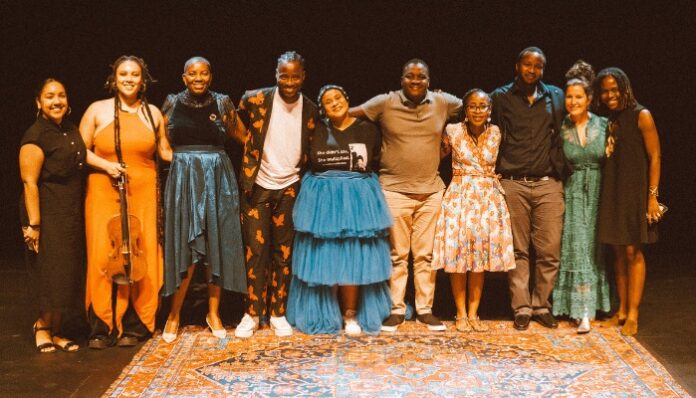
The storytellers ,Anne Obure, Shakirah Namwanje, Odun Orimolade, Bernard Mbugua and Mahmood Bangura, will explore moments when waiting stopped being an option and action became unavoidable.
For Namwanje, founder of Uganda’s WOMANDLA Foundation and an HIV and sexual and reproductive health rights advocate, that moment was an HIV diagnosis.
Her story is not only about receiving a diagnosis but also about confronting the fears and uncertainty that can accompany it while holding on to a deeply personal dream becoming a mother.
That experience will unfold against a continuing HIV burden across sub-Saharan Africa. UNAIDS estimated that 26.3 million people were living with HIV in the region in 2024, representing roughly two-thirds of the global total.
Kenya had an estimated 1.3 million people living with HIV that year, according to the National Syndemic Diseases Control Council. Young people aged 10 to 24 accounted for close to a third of new infections.
Yet alongside progress in reducing new infections, stigma continues to complicate the HIV response.
Namwanje’s story therefore moves the conversation beyond numbers, showing what an HIV diagnosis can mean for an individual’s aspirations, relationships and decisions about the future.
For Mbugua, the defining moment came much earlier in life.
The human rights defender and EndTB campaign champion will recount his experience of being diagnosed with tuberculosis as a teenager and the choice he faced between traditional and spiritual approaches to treatment and modern medicine.
TB remains one of the world’s leading infectious killers, with Africa accounting for roughly a quarter of the global burden, according to the World Health Organization’s Global Tuberculosis Report 2025.
Kenya has made progress, reducing TB incidence by more than a fifth and TB deaths by 35 per cent between 2020 and 2024. But the country remains among the world’s high TB-burden countries, while national data suggests a substantial proportion of cases remain undetected.
Mbugua’s story puts a human face to a disease often reduced to statistics and treatment targets.
In Lagos, artist, researcher and curator Odun Orimolade found herself in a very different kind of defining moment.
She will tell the story of an unexpected exchange with an armed robber during a crime — an encounter that, in an otherwise frightening situation, produced a strange moment of human connection.
Her account touches on a reality familiar to people living in rapidly growing African cities, where questions of personal safety intersect with wider economic and social pressures.
The fourth story comes from Anne Obure, a hydrotherapist, swimming coach and business coach.
What began as a scuba-certification retreat became something much closer to a survival exercise.
Obure’s story explores what happens when carefully made plans unravel and people have to find reserves of resilience they did not know they possessed.
Her experience also connects with the pressures facing young people across Kenya.
Recent Afrobarometer findings cited by The Moth identify health, the rising cost of living and unemployment among the leading concerns Kenyan youth want addressed.
The fifth story is quieter but carries a different kind of responsibility.
Mahmood Bangura, a Sierra Leonean social scientist and educator who has worked on Ebola vaccine trials and other epidemiological studies, became his niece’s guardian following a death in his family.
Already a father of two, Bangura will tell the story of his determination to provide his niece with the education and opportunities her mother would have wanted for her.
It is a story of family responsibility and the often-unseen role played by relatives when children lose parental care.
In Sierra Leone, SOS Children’s Villages estimates that hundreds of thousands of children grow up without their parents.
Bangura’s decision illustrates how one person’s choice to step forward can shape another person’s future.
Together, the five stories demonstrate the premise behind The Moth: that personal experiences can make complex social issues more tangible than statistics alone.
Since its founding in 1997, The Moth says it has presented more than 70,000 true stories globally and built a community of more than 1,000 storytellers from more than 80 countries through its Global Community Program.
The organisation’s Nairobi programme has also developed over several years, with Kenya serving as a centre for Moth storytelling workshops for almost 15 years.
Sarah Austin Jenness, executive producer at The Moth, said this year’s theme asks audiences to consider what people do when circumstances demand immediate action.
“Now or never” therefore becomes more than an event slogan.
For Namwanje, it is about confronting an HIV diagnosis without surrendering her aspirations.
For Mbugua, it is about navigating illness and competing ideas about treatment.
For Orimolade, it is an encounter with danger that took an unexpected turn.
For Obure, it is about continuing when an experience becomes more difficult than expected.
And for Bangura, it is the decision to assume responsibility for a child and honour a promise.
Adelle Onyango, who has hosted the Nairobi Mainstage for seven years, says the stories demonstrate how personal experiences can create connections between strangers.
By the end of the evening, she says, the stories will no longer belong only to the people who lived them.
That may be the deeper proposition behind The Moth’s return to Nairobi: that behind every public-health statistic, social problem or family crisis is an individual confronting a moment in which there is no longer time to wait.
On November 7, five storytellers will ask what happens when that moment arrives and what people choose to do when it is, quite simply, now or never.

