
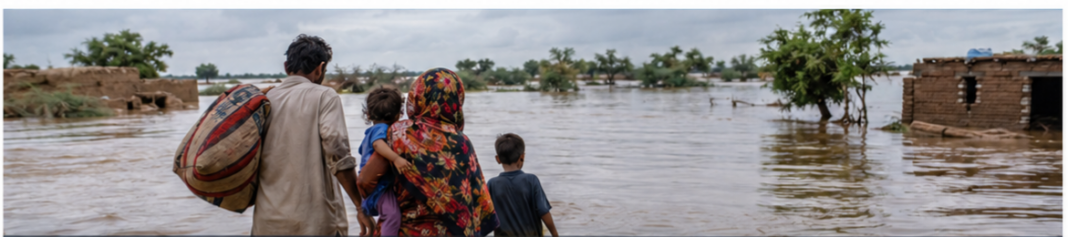

With climate-related disasters intensifying and vulnerable communities bearing the consequences, world leaders are facing mounting pressure to turn climate commitments into tangible action ahead of the 31st United Nations Climate Change Conference (COP31) in Türkiye next month.
The summit, scheduled for November 9–20 in Antalya, comes at a time when questions over climate financing, adaptation and accountability are threatening confidence in international climate negotiations.
At the centre of the debate is a growing concern that, despite years of global commitments, countries most exposed to climate change continue to struggle to access the resources needed to protect their populations and strengthen resilience.
Speaking at a high-level meeting at the United Nations Headquarters on October 16, UN General Assembly President Khalilur Rahman warned that COP31 must demonstrate that international cooperation can deliver practical results for communities already experiencing the consequences of a warming planet.
“COP31 must be more than another negotiating milestone. It must demonstrate that multilateralism delivers,” Rahman said.
He pointed to devastating disasters, including those experienced in Nepal, as reminders of the human cost of climate change, warning that families are being displaced, children are losing access to education and communities are facing losses that are increasingly difficult to recover from.
Rahman also cautioned that the world remains on a trajectory towards approximately 2.8°C of warming above pre-industrial levels under current climate policies, significantly exceeding the temperature goals established under the Paris Agreement.
The projected warming highlights the widening gap between the action countries have committed to take and what is required to limit the severity of climate change.
Climate finance takes centre stage
As preparations for COP31 gather pace, climate finance is emerging as one of the critical issues likely to shape negotiations.
Türkiye, which will host the conference, plans to advance initiatives aimed at accelerating clean energy development, reducing methane emissions and strengthening climate resilience.
One of the proposed initiatives is the Climate Implementation Bridge, developed in partnership with the United Nations Development Programme (UNDP). The initiative seeks to translate national climate commitments into projects capable of attracting investment and connecting them with financing.
However, the challenge extends beyond the amount of money available. Developing countries also need financing that is accessible, affordable and predictable enough to support long-term climate programmes.
Türkiye’s Ambassador to the UN, Ahmet Yıldız, said the availability and accessibility of climate finance would be essential to turning national commitments into implementation.
For countries facing mounting climate-related losses alongside competing development priorities, limited access to funding can delay investments in early warning systems, resilient infrastructure, clean energy and disaster preparedness.
The financing question is particularly significant for developing economies already grappling with high levels of public debt, which can constrain their ability to invest in climate adaptation while meeting other essential public spending needs.
Brazil, which hosted COP30 in 2025, has identified expanding climate investment in developing countries struggling with debt as one of three priorities for the Antalya negotiations.
The other priorities include making the new just transition mechanism operational and improving how countries measure progress on climate adaptation.
Brazil’s Ambassador to the UN, Sérgio França Danese, called for viable solutions that would expand countries’ fiscal capacity to invest in climate action.
The priorities reflect a broader challenge facing climate negotiations: ensuring that countries can move from agreeing on ambitious goals to financing and implementing the measures needed to achieve them.
Africa’s climate burden
For Africa, the stakes are particularly high.
Although the continent contributes only around three per cent of global greenhouse gas emissions, it faces some of the most severe consequences of climate change, including extreme weather events and growing pressure on livelihoods and essential infrastructure.
Ethiopia’s Ambassador to the UN, Tesfaye Yilma Sabo, warned that delays in climate action carry increasing costs for developing countries.
He also highlighted how access to financing and technology is shaping which countries benefit from the transition to cleaner economies and which risk being left behind.
The disparity raises questions about climate justice, particularly for African countries that have contributed relatively little to the historical accumulation of greenhouse gases but must increasingly allocate resources to responding to climate-related risks.
For communities dependent on agriculture and other climate-sensitive livelihoods, inadequate investment in adaptation can leave households more exposed to disruptions caused by extreme weather.
The challenge is not limited to responding after disasters occur. It also involves strengthening the systems that help communities anticipate risks, prepare for emergencies and recover when losses occur.
Climate finance can support these efforts through investments in resilient infrastructure, climate information services, early warning systems and adaptation programmes tailored to local conditions.
However, the effectiveness of such investments depends on whether resources reach vulnerable communities and whether climate policies respond to their actual needs.
Vulnerable communities demand action
The need for stronger adaptation measures is also evident in Pacific island nations, where rising sea levels and extreme weather threaten homes, infrastructure and livelihoods.
Australia, which is leading the COP31 negotiations under an arrangement that shares responsibilities with host country Türkiye, has called for more accessible climate financing and stronger adaptation plans informed by scientific evidence and local needs.
Australian Ambassador James Larsen said rebuilding confidence in climate action would require listening to vulnerable communities, supporting those in need and accelerating practical initiatives.
His remarks underscore a central question facing the summit: whether international climate cooperation can produce outcomes that people experience beyond diplomatic meeting rooms.
The upcoming negotiations are expected to test countries’ willingness to strengthen implementation, expand investment and address the financial barriers preventing developing nations from responding effectively to climate change.
World leaders are also expected to gather for a special summit in Antalya on November 11 and 12, as countries seek to advance discussions on the future of global climate action.
For communities already confronting climate-related disasters, however, the success of the negotiations will ultimately depend on whether political commitments lead to better protection, stronger resilience and more reliable support.
As Rahman put it, COP31 should be judged not by the promises repeated by world leaders, but by the people those commitments help protect.



