

For more than two decades, LVCT Health has built its reputation around HIV prevention, testing and treatment, working with communities that often struggle to access essential healthcare services. But as Kenya’s health needs expand and international development financing becomes less predictable, the organisation is confronting a question that extends far beyond its name and identity: how can it continue delivering services to vulnerable populations without relying so heavily on donor funding?
The answer, according to its leadership, lies in rethinking how local health organisations finance their work, use the knowledge they have accumulated and build partnerships capable of sustaining essential services.
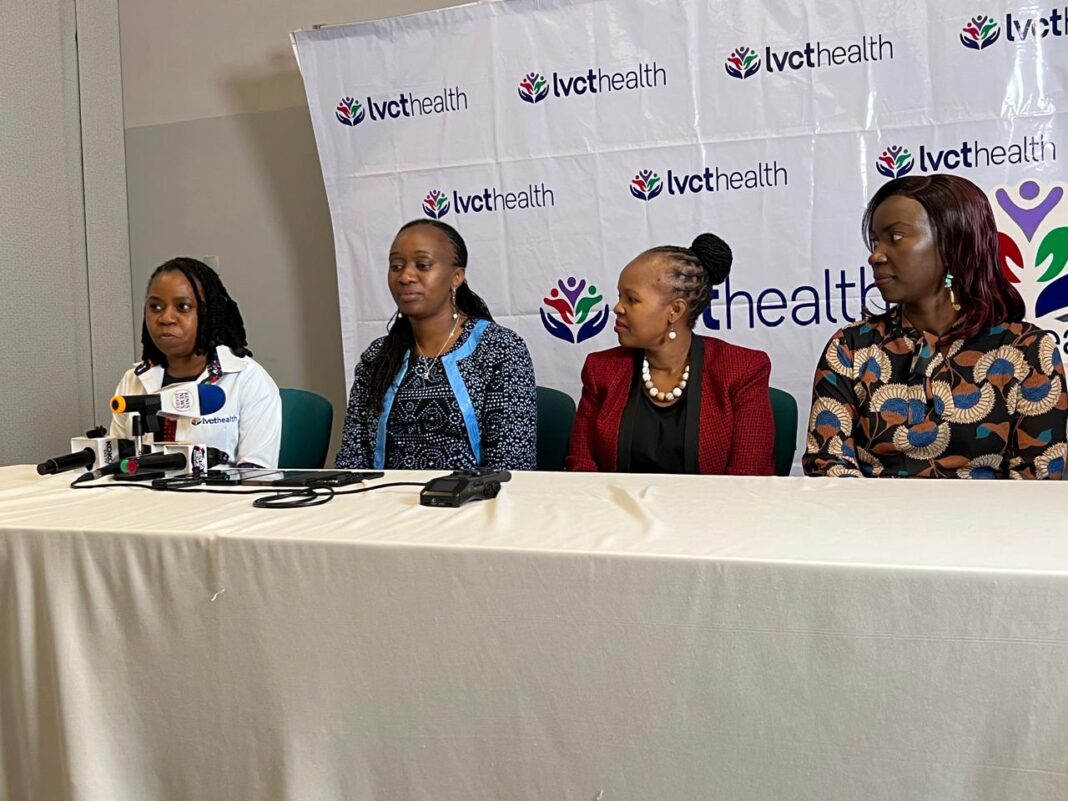
The Nairobi-based organisation recently unveiled a new brand identity alongside an expanded social enterprise model, signalling a shift in how it intends to operate in a changing health and development landscape. While the rebrand reflects its evolution beyond HIV-focused programming, the broader transformation is about finding new ways to sustain its work while responding to the interconnected health challenges facing Kenyan communities.
For an organisation that says it previously received more than 90 per cent of its funding from the United States government, the need to diversify its financial base is not simply a business decision. It is also a question of how local institutions can protect the continuity of health interventions when the international funding on which they depend becomes uncertain.
Dr Lilian Otiso, LVCT Health’s executive director, says the organisation had recognised the risks associated with depending heavily on a single source of funding even before recent disruptions in the global development financing landscape.
“We recognised that that was a risk,” Otiso said, explaining that the organisation had begun considering alternative funding models as part of its longer-term strategy.
The organisation launched a new strategy in 2022 that included plans to expand beyond Kenya, move beyond its traditional HIV programming and seek other sources of funding. The subsequent expansion of its social enterprise is therefore presented by its leadership as part of an ongoing transition rather than a sudden reaction to funding cuts.
The distinction matters because the challenge facing health organisations is not simply how to survive financially. It is how to remain capable of delivering essential services while the resources that have supported their work are changing.
For communities that depend on HIV prevention, treatment and testing programmes, maternal healthcare interventions and other community-based services, the sustainability of the organisations delivering those interventions has direct implications for access to care.
Turning years of health experience into a sustainable model
LVCT Health’s proposed response is to use the experience, research, data and technical expertise it has accumulated over more than 25 years to develop services that can generate revenue alongside its non-profit programmes.
Under the social enterprise model, the organisation intends to offer training, workplace wellness services, safeguarding support, research and evaluation, assistance with environmental, social and governance goals, and digital health innovations.
Rather than depending exclusively on grants, LVCT Health is seeking opportunities to provide these services to businesses, institutions and other organisations willing to pay for them.
Otiso says the idea is to turn the organisation’s existing intellectual property and evidence into market-facing products while maintaining its commitment to social impact.
“We have very skilled people who are enterprising, innovative. What can we actually develop, and can people pay for it?” she said, describing the thinking behind the model.
The approach represents an attempt to rethink the relationship between non-profit healthcare delivery and commercial activity. Instead of treating the knowledge developed through years of health programming solely as a resource for donor-funded projects, LVCT Health wants to explore whether that expertise can also support a more diversified financial base.
Its training institute, which Otiso said is accredited by the Technical and Vocational Education and Training Authority and the relevant accreditation body she referred to as META, is one of the existing components of the enterprise. The institute offers health-related training, including short courses and longer-term diploma programmes, to individuals and organisations.
Workplace wellness is another area of focus. The organisation has expanded its services from HIV-related workplace interventions to include non-communicable diseases and mental health support.
These services include training, counselling and direct support intended to help employers address the health needs of their workers. The organisation also offers safeguarding support to help workplaces develop policies and systems to address sexual exploitation and abuse.
LVCT Health is additionally positioning its research and evaluation expertise as a service for businesses and other institutions seeking evidence to inform their programmes. Its experience working with communities across different parts of Kenya is also expected to support organisations implementing social-impact and sustainability initiatives.
The final component involves the development and deployment of digital innovations using the organisation’s data, research and technical capabilities.
Together, these activities form the basis of a model in which revenue-generating services could help support the organisation’s wider mission.
However, Otiso acknowledges that the outcome is not guaranteed.
“Is it going to be enough? We don’t know. We are trying,” she said.
Her admission captures the uncertainty surrounding a model that many organisations may find attractive but whose ability to replace substantial donor contributions remains to be demonstrated.
The central test will be whether the new revenue streams can become sufficiently reliable to support the organisation’s operations while allowing it to continue prioritising communities whose health needs cannot always be met through commercially funded services.
When donor funding becomes a question of health access
The debate over financial sustainability is particularly significant for HIV programmes, which remain a central part of LVCT Health’s work even as the organisation expands into other areas.
Otiso cautioned against the assumption that HIV is no longer a major public health concern.
“It’s still not over, although many people think it is,” she said.
The organisation continues to implement programmes focused on HIV testing, treatment, prevention and preventing transmission from mothers to children. It also works with government, particularly county governments, to strengthen their capacity to deliver services through public health systems.
Otiso said LVCT Health is increasingly looking towards a role that includes providing technical support and helping introduce innovations that government institutions can adopt and sustain.
The organisation has also been involved in work supporting the introduction of injectable pre-exposure prophylaxis and other HIV prevention technologies.
This shift raises a wider question about the future of development-funded healthcare: how can programmes initially supported by external financing become embedded in public systems that can continue delivering services over time?
For LVCT Health, working more closely with government is part of the answer. The organisation wants counties to take greater responsibility for service delivery while it contributes technical expertise, community engagement and support for new interventions.
But the transition also requires financial stability. Developing new technologies, training health workers, engaging communities and supporting public health systems all require resources.
A social enterprise could provide one additional source of funding, but the organisation’s leadership has not suggested that commercial income will immediately replace donor financing.
Instead, the approach reflects an effort to diversify the resources available to support its work and reduce the risks associated with relying heavily on one funder.
Dr Anne Musuva, chief executive officer of the Kenya Healthcare Federation, sees the model as an important step towards greater sustainability in the health sector.
She said public-private partnerships are essential because no single institution can deliver universal health coverage independently.
Government provides policy direction, private sector actors contribute innovation and operational expertise, while civil society organisations, academia and development partners bring implementation experience and evidence.
Musuva said LVCT Health’s move towards a social enterprise could help it continue delivering essential services through research, mental health support and other interventions.
For her, the development also presents an opportunity to strengthen relationships between LVCT Health and other private sector organisations.
The broader implication is that locally led health organisations may need to build stronger relationships with businesses and domestic institutions as they seek to reduce their dependence on external grants.
Such partnerships could help mobilise additional resources and technical capacity. Their value, however, will ultimately depend on whether they translate into sustainable services and measurable improvements in people’s health.
Beyond HIV: The interconnected needs of vulnerable communities
LVCT Health’s expansion also reflects a recognition that the health challenges facing the communities it serves cannot be addressed through a single disease-focused approach.
Otiso said the organisation’s experience in HIV programming helped it identify other needs among vulnerable and marginalised populations.
A person living with HIV may also require maternal healthcare, mental health support, sexual and reproductive health services or assistance in responding to gender-based violence.
The organisation has therefore expanded its programming to include maternal and child health, sexual and reproductive health, gender-based violence and mental health.
This evolution is significant because healthcare needs frequently overlap, while services are often organised around separate programmes and funding streams.
An organisation working with communities over many years may develop relationships and trust that enable it to identify challenges extending beyond its original mandate.
LVCT Health is seeking to use that experience to provide a wider range of services without abandoning its existing HIV programmes.
The organisation’s approach also places emphasis on community engagement, with its leadership arguing that effective health interventions must respond to the realities of the people they are intended to serve.
Patriciah Jeckonia, the organisation’s programme manager for policy, prevention and the social enterprise, said LVCT Health wants to work with institutions that recognise the value of local leadership and locally developed solutions.
She said communities should be involved in designing interventions rather than simply receiving services developed elsewhere.
“Half the time they just need somebody to sit down with them, help them design it and roll it out,” Jeckonia said.
Dr Catherine Njigua, the organisation’s programme director, similarly emphasised the importance of developing solutions alongside communities.
She said this approach helps ensure that interventions are relevant to local circumstances and more acceptable to the people expected to use them.
Community participation is particularly important when health services involve sensitive issues such as HIV, sexual and reproductive health and gender-based violence, where trust, confidentiality and an understanding of local circumstances can influence whether people seek help.
Yet maintaining that community-centred approach while diversifying revenue will require careful decisions about priorities. Commercial opportunities may offer new resources, but the organisation will still need to ensure that its wider public health mission remains central to its work.
Maternal health exposes the limits of healthcare access
While funding sustainability is one part of the challenge, LVCT Health’s maternal health work illustrates why continued investment in healthcare systems remains necessary.
Kenya continues to face maternal health challenges linked to barriers within health facilities, access to essential commodities, financial constraints and whether women trust the healthcare system enough to seek care.
Otiso said the organisation has worked with communities and county governments to encourage pregnant women to attend antenatal care appointments and strengthen systems for identifying women who may struggle to reach health facilities.
The interventions include working with community health workers to encourage women to seek care and improve contact between communities and healthcare providers.
She said the organisation had observed improvements in antenatal care attendance in programmes where these approaches were implemented.
According to Otiso, four antenatal care contacts are considerably more common than completing the eight contacts recommended by the World Health Organization. She cited programme findings in which four-contact attendance increased to more than 90 per cent in some intervention settings, while eight-contact attendance also improved substantially.
These figures relate to the experiences described by the organisation and should not be interpreted as national coverage rates.
The distinction is important because progress in particular programmes does not necessarily mean that barriers to maternal healthcare have been resolved across the country.
For women living far from health facilities, attending antenatal appointments can involve transport difficulties, poor roads and other practical obstacles. In some areas, health worker strikes have also disrupted access to care.
Otiso said such disruptions can leave women without the services they need, particularly when emergencies arise.
The challenge, therefore, extends beyond encouraging women to seek care. It also involves ensuring that facilities can provide services when women arrive and that emergency referral and transport systems function effectively.
LVCT Health is working with county governments to strengthen systems for identifying women who may be cut off from services and improving emergency responses.
These efforts demonstrate why community-based health programmes and functional public health systems need to complement one another. Community mobilisation can encourage women to seek care, but its benefits may be limited if transport, staffing or facility readiness prevents them from receiving timely treatment.
For the organisation, sustaining this work requires both technical capacity and reliable resources.
Its proposed social enterprise may offer one avenue for strengthening that capacity, although its direct contribution to maternal health financing remains to be established.
Reaching young people where they are
Young people are another important focus of LVCT Health’s work, particularly in sexual and reproductive health and HIV prevention.
Jeckonia said the organisation uses digital platforms and peer-to-peer engagement to reach young people with information and connect them to services.
She said its digital platforms reach more than one million young people annually in Kenya and beyond.
These include a youth-focused website that provides information in accessible language, a free hotline through which young people can speak to specialists, an SMS platform with a WhatsApp component, and digital applications designed for education.
One application she mentioned is Himarika, which she said helps young people learn about different aspects of their lives.
The organisation also trains young people to share information with their peers in settings such as colleges and other places where young people naturally interact.
This model recognises that access to information is only one part of the challenge. Young people also need to know where to seek support, understand the services available to them and feel comfortable asking questions.
Jeckonia said the organisation’s peer-led approach has helped young people understand and take up services, including HIV self-testing.
Digital platforms can extend the reach of health information, but their usefulness ultimately depends on whether the information is accurate, accessible and connected to appropriate services.
For young people who need more personalised guidance, the organisation’s hotline and referral systems provide additional avenues for seeking assistance.
Maintaining these channels requires continued investment in digital tools, trained personnel and service networks. As LVCT Health explores new ways to finance its work, preserving access to these services will remain an important measure of whether its broader strategy can deliver meaningful public health benefits.
Can local resources sustain local solutions?
The social enterprise initiative comes with a wider appeal from LVCT Health’s leadership for Kenyan businesses, institutions and philanthropists to invest in locally led health solutions.
Otiso argued that organisations with established expertise, evidence and the capacity to implement interventions should be considered partners in addressing social challenges.
She also questioned why non-governmental organisations should not explore some of the revenue-generating approaches used by private businesses to sustain their operations.
Her argument reflects a growing concern about the vulnerability of development programmes when funding decisions are made outside the countries where services are delivered.
For local health organisations, diversification may help reduce exposure to sudden changes in donor priorities. But attracting commercial customers and building sustainable partnerships are not straightforward tasks.
A service that generates revenue must find customers willing to pay for it, compete with alternative providers and cover its operating costs. Meanwhile, the health needs of vulnerable populations may not generate sufficient commercial income to finance the services they require.
That tension makes it important to distinguish between generating income and securing long-term healthcare financing.
LVCT Health’s model seeks to combine its non-profit work with a social enterprise that can sell services and potentially contribute to the organisation’s sustainability. Whether the arrangement will generate sufficient income to offset declining or unpredictable grants remains an open question.
The organisation has not yet demonstrated that the model can replace its historical dependence on donor financing. Its leadership acknowledges that it is still learning which services can grow and how the different components can work together.
Nevertheless, the initiative offers a practical example of how an established Kenyan health organisation is attempting to respond to a changing funding environment without abandoning its existing mandate.
Otiso said the organisation intends to continue working with government, particularly county administrations, while supporting innovation and strengthening local capacity.
She also set out an ambition for LVCT Health to deliver services to more than 30 million people in Kenya and beyond in Africa by 2030.
Achieving that target will require more than a new brand or an expanded portfolio of commercial services. It will depend on the organisation’s ability to build sustainable partnerships, maintain public trust, demonstrate the effectiveness of its interventions and secure the resources needed to reach the people who depend on its work.
For Kenya’s health sector, the questions raised by LVCT Health’s transition extend beyond one organisation. As local institutions consider how to navigate uncertain development financing, the challenge is to find models that protect essential services while strengthening the ability of African organisations to develop, finance and deliver solutions rooted in their own communities.
The rebranding may be the most visible part of LVCT Health’s transformation. The more consequential test will be whether its new approach can help sustain the healthcare services that communities need long after the launch event has ended.