

Kenya is strengthening its position as a regional security partner by deepening cooperation with African military institutions and advancing digital capabilities, as cybersecurity, artificial intelligence and critical infrastructure protection become increasingly central to modern defence strategies.
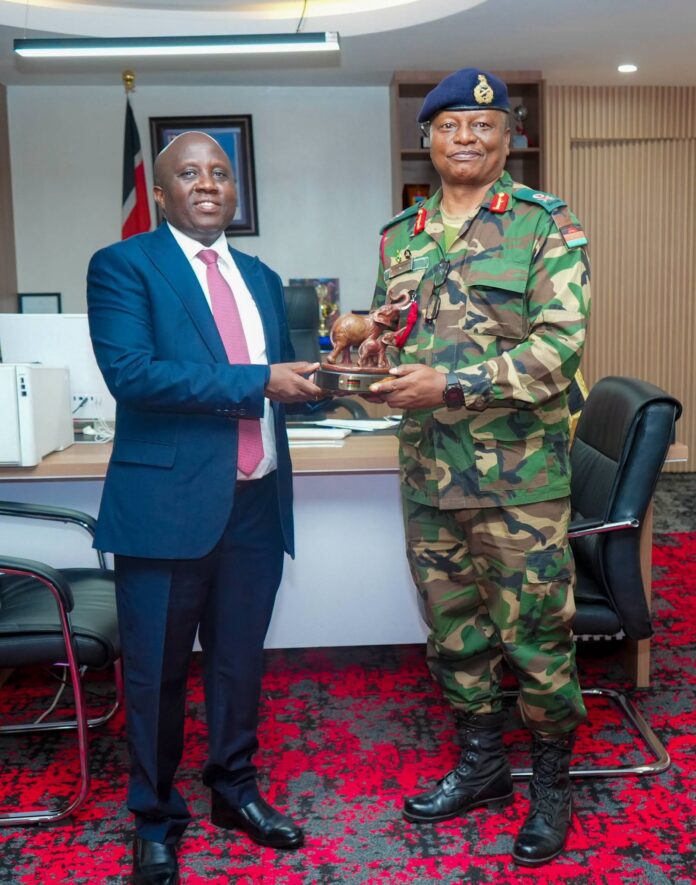
The country’s growing emphasis on technology-driven security was highlighted during a visit by a delegation from the Malawi Defence Force Command and Staff College, led by its Commandant, Major General Vincent Moyo, to Kenya’s State Department for ICT and the Digital Economy.
The delegation held discussions with Principal Secretary for ICT and the Digital Economy John Tanui and senior government and military officials on digital transformation, cybersecurity and the protection of critical national infrastructure.
The engagement reflects the expanding role of technology and cross-border knowledge-sharing in strengthening African defence capabilities, as militaries across the continent confront emerging threats that extend beyond conventional battlefields.
Kenya’s efforts to integrate digital systems into national security also demonstrate how regional military cooperation is increasingly linked to expertise in communications, data management, cyber defence and technological innovation.
Speaking during the meeting, Tanui called for sustained partnerships to strengthen Africa’s collective security and development.
He urged stakeholders to “continue to build bridges of knowledge, innovation, and strategic collaboration to ensure a safer, more prosperous, and digitally secure African continent.”
The discussions brought together representatives from the ICT department, its agencies and the Kenya Defence Forces, including Secretary Administration J.N. Kinama, Director of ICT Cyber Security Division Pius Cheruiyot and Lieutenant Colonel Wilson Kigotho.
The delegation received a briefing on the State Department’s institutional structure, the policy framework underpinning Kenya’s digital economy and the country’s experience in deploying technology for public service delivery and national resilience.
Areas covered included online government services, national cybersecurity strategies and data centre infrastructure, offering the visiting officers insights into how digital systems can support government operations and broader security objectives.
For Kenya, such engagements provide an opportunity to share its technological experience with regional partners while reinforcing its role in continental security cooperation.
Kinama said the convergence of cybersecurity, artificial intelligence and smart technologies had transformed national security into a multi-domain undertaking, linking the digital economy directly to defence strategy.
The discussions also examined the importance of cloud infrastructure, secure communications and data-driven decision-making in building resilient institutions capable of responding to evolving security threats.
These capabilities are becoming increasingly important as African countries seek to protect government networks, financial systems, communications infrastructure and other essential services from cyberattacks and disruptions.
The growing dependence on digital infrastructure means that military preparedness now requires expertise beyond conventional combat training. Defence institutions must also develop the capacity to identify cyber threats, safeguard sensitive information and maintain secure communications during emergencies.
The exchange therefore provided a platform for military and civilian officials to explore how digital innovation can contribute to stronger national defence systems and improved regional cooperation.
The Malawi Defence Force Command and Staff College delegation included participants from Malawi, Kenya, Tanzania, Zambia and Zimbabwe, underscoring the regional dimension of the engagement.
The participation of officers from several African countries highlights the value of professional military education and institutional exchanges in developing shared approaches to security challenges.
For Kenya, cooperation with regional defence institutions complements broader efforts to strengthen its military partnerships and contribute to stability in East Africa and beyond.
As security threats become increasingly interconnected, the ability to combine military expertise with digital innovation is emerging as an important measure of defence preparedness.
The engagement reinforces the need for African countries to invest in technical skills, secure infrastructure and collaborative training to improve their ability to respond to both traditional and emerging threats.
While the meeting focused primarily on digital transformation rather than operational military capabilities, it demonstrated how technology cooperation is becoming an increasingly important component of Kenya’s regional defence engagement.

