
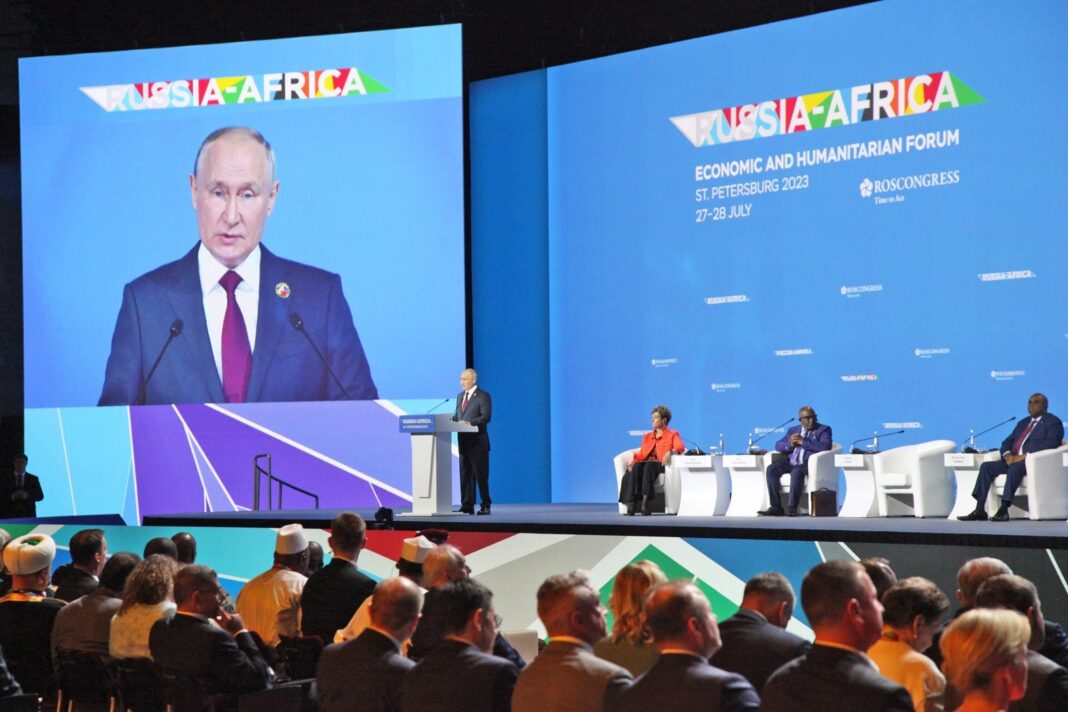

Russia’s renewed engagement with Africa is set to take centre stage in Moscow on October 29, as President Vladimir Putin and Burundi’s President Évariste Ndayishimiye, the current African Union (AU) chairperson, prepare to co-chair the Russia-Africa Summit plenary session, followed by a joint press conference.
The meeting comes amid intensifying competition among Russia, Western powers and China for influence across a continent endowed with critical minerals, strategic maritime routes, energy resources and one of the world’s fastest-growing populations.
For Moscow, the summit offers an opportunity to reinforce diplomatic partnerships, expand economic cooperation and demonstrate that Russia retains international relationships despite its confrontation with Western governments over the war in Ukraine and subsequent sanctions.
For African governments, the gathering presents another opportunity to negotiate investment, military cooperation, energy partnerships, agricultural supplies and diplomatic support while seeking to avoid excessive dependence on any single global power.
The central question is whether the summit will translate political declarations into tangible economic benefits for African countries.
A contest for Africa’s strategic attention
Africa has increasingly become a focal point of global geopolitical competition as major powers seek access to critical minerals, energy supplies, emerging markets and diplomatic support in international institutions.
Russia has pursued partnerships through diplomacy, defence cooperation, nuclear energy, mining and agricultural trade. Western governments, meanwhile, have promoted investment, trade arrangements, development financing and security cooperation, often framing their engagement around democratic governance, economic reform and institutional accountability.
China remains a major player through infrastructure financing, manufacturing, trade and industrial cooperation, while Gulf states, Türkiye, India and other emerging powers are expanding their commercial and diplomatic presence.
This growing competition gives African governments more potential partners, but it also increases the risk that external powers will prioritise their own strategic interests over Africa’s industrialisation and development needs.
The summit therefore provides an important test of whether Africa can convert international competition into better financing terms, technology transfer, local manufacturing, employment and access to global markets.
Theme and priorities: Moving Beyond Political Declarations
The summit’s impact will depend on the official agenda and the agreements reached by participating governments. Its broader significance lies in the push to strengthen Russia-Africa relations amid a changing international order.
Security cooperation is likely to remain an important dimension of Russia’s engagement, particularly in countries confronting insurgencies, terrorism and political instability. However, African governments must weigh the benefits of security assistance against questions of accountability, long-term dependence and the need to strengthen their own defence institutions.
Economic cooperation is equally important. African countries have an interest in expanding exports, securing affordable agricultural inputs, developing energy infrastructure and attracting investment into mineral processing rather than relying exclusively on the export of raw materials.
Cooperation in nuclear energy, education, scientific research and technology could also offer opportunities, provided agreements include clear financing arrangements, skills development and measurable benefits for local communities.
For Africa, the priority should be to ensure that summit commitments are backed by financing, implementation schedules and transparent monitoring.
Africa’s bargaining power in a multipolar world
The participation of the AU chairperson alongside Russia’s president gives the meeting a continental diplomatic dimension. However, the AU chairperson’s presence should not be confused with unanimous agreement among African governments on Russia’s policies or on the continent’s preferred international partnerships.
African states have different security concerns, economic interests and diplomatic positions. Some maintain close relations with Moscow, while others place greater emphasis on partnerships with Western countries, China or regional powers.
These differences make continental coordination essential. Through the African Continental Free Trade Area, regional economic communities and the African Union, governments can strengthen their negotiating positions and pursue common priorities on trade, debt, climate finance, infrastructure and critical minerals.
The objective should not be to replace dependence on Western partners with dependence on Russia or China. Instead, African countries can pursue diversified partnerships that expand their choices and strengthen their ability to negotiate favourable terms.
The summit also comes as African governments seek a stronger voice in global institutions, including debates over the reform of the United Nations Security Council, international financial institutions and the rules governing global trade and development finance.
For Moscow, stronger African diplomatic ties can reinforce its international outreach. For African leaders, engagement with Russia offers an additional channel for advancing national interests and asserting greater agency in global affairs.



