JUBA/GENEVA—From September 7 to 10, 2026, the UN Commission on Human Rights in South Sudan, an independent body mandated by the United Nations Human Rights Council, will make its 14th visit to the nation.
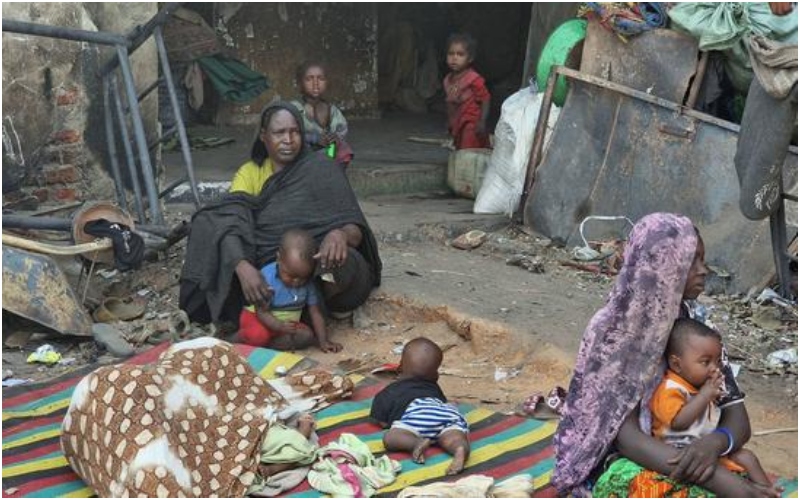
The visit takes place as South Sudan prepares for its first national elections since gaining independence in 2011 while dealing with a resurgence of armed conflict, escalating political tensions, and increasing threats to civilians and the peace process.
Along with Commissioners Barney Afako and Carlos Castresana Fernández, Chairperson Yasmin Sooka will oversee the mission. She will interact with government officials, political and security actors, civil society representatives, victims and survivors, international and humanitarian partners, jurists, and other pertinent stakeholders.
The commissioners were appointed by the President of the UN Human Rights Council; they are not UN staff and do not receive a salary for their work as Commissioners. They are supported by a Secretariat based in Juba, South Sudan.
A statement from the Commission indicated that the Revitalised Agreement on the Resolution of the Conflict in South Sudan (R-ARCSS) will continue to deteriorate, and that they will evaluate the changing human rights, humanitarian, political, and security situation, including the effects of resumed hostilities and displacement.
The Commission, first established in March 2016; it has been renewed annually. It will also look at events that have an impact on the significant political shift and the prerequisites for a democratic process that is inclusive, peaceful, and legitimate.
What activities will the UN Commissioners engage in during their visit
During the visit, the Commissioners will interact directly with impacted communities and obtain first-hand knowledge pertinent to the Commission’s mandate. The results will guide the Commission’s reporting to the UN Human Rights Council in Geneva as well as its initiatives to promote accountability, sustainable peace, and the prevention of atrocity crimes and human rights violations.
On September 10, 2026, the Commissioners will hold a press conference in Juba to share their initial findings and observations from the visit. Additional information about the time and location will be released separately.
The visit comes when the Women’s Bloc of South Sudan (WBSS) has called for clear, official information regarding electoral preparations and any reported campaign activities ahead of the forthcoming general election.
South Sudan nationals are expected to go to the polls on December 22, 2026, as the world’s youngest nation conducts its historic first-ever general election despite political pushback and funding shortfalls.
In a statement, Amer Manyok Deng Yak, the Chairperson of the Women’s Bloc of South Sudan (WBSS), expressed the appreciation of the country’s women to President Salva Kirr for what she termed his commitment and support toward the conduct of the forthcoming elections.
“However, any campaign or political activity should comply with the Constitution, electoral laws, and regulations issued by the relevant electoral authorities. We recognise that peaceful, credible, free, fair, just, and transparent elections are essential for strengthening democracy, peace, national unity, and stability in our country,” said Manyok.
South Sudan women call for a credible election process
Through the statement dated Thursday, September 3, 2026, Manyok maintained that as women of South Sudan, they want an electoral process in which every citizen can participate freely and safely, without fear, intimidation, violence, discrimination, or corruption.
“Women must have equal and meaningful opportunities to register, vote, campaign, and contest for leadership positions. Our elections must reflect the true will of the people of South Sudan,” she added.
Against this backdrop, the women’s bloc called upon all political leaders, political parties, electoral institutions, civil society organisations, security institutions, women, youth, and citizens to work together to protect peace, uphold justice, respect the rule of law, and ensure transparency throughout the entire electoral process.
“South Sudan belongs to all of us. Peaceful and credible elections are essential for national unity, democracy, stability, and a better future for our children and generations to come,” explained the chairperson.
The comments coincide with the African Union’s call for donors, foreign partners, and member states to assist in filling a budget deficit for South Sudan’s upcoming elections in December. The AU Commission has set October as the deadline for submitting tangible contributions.
The National Poll Commission (NEC) of South Sudan has estimated that approximately $250 million is required to hold the polls, while the government has only contributed roughly $27 million thus far. In order to prepare for the election, the government first set aside $21 million. Later, it added $6 million for voter and civic education.
What the United States expects from the South Sudan elections
But the AU appeal for donor support comes against the backdrop of a different position from Washington.
The United States said on August 31, 2026, that if South Sudan proceeds with elections, they should be held peacefully and financed from the country’s own public resources.
The contrasting positions highlight the financial and political challenges facing South Sudan as it prepares for the elections, its first general vote since independence in 2011.
The AU said credible elections would require sufficient political consensus, inclusivity, an open civic space, citizen security, effective dispute-resolution mechanisms and full participation by women, youth and displaced populations.
It also expressed deep concern over South Sudan’s deteriorating political and security situation, citing persistent disagreements among signatories to the 2018 peace agreement, the failure to convene a planned inter-party dialogue and armed confrontations in Jonglei, Upper Nile, and other areas.
The council reiterated that the transitional mandate must end in February 2027 without further extension.
The African Union makes its stand known on South Sudan’s polls
The AU urged the transitional government and all signatories to the peace agreement to resume direct political dialogue without preconditions, with support from the AU, its High-Level Ad Hoc Committee for South Sudan, and the Intergovernmental Authority on Development.
It also demanded an immediate cessation of hostilities and military mobilisation, saying there was no military solution to South Sudan’s political disputes.
On Wednesday, September 2, 2026, President Kiir approved constitutional reforms meant to eliminate significant legal barriers to the polling process.
In accordance with Article 85, Section 1 of the Transitional Constitution as modified, the amendment—known as the Transitional Constitution of the Republic of South Sudan, 2011 (Amendment No. 13) Act, 2026—was submitted for presidential approval.
In compliance with Articles 55, Sections 2 and 3 of the Transitional Constitution, the Transitional National Legislature passed the measure. The amendment significantly alters the nation’s constitutional framework, separating the National Population and Housing Census and the permanent constitution-making process from the holding of national elections.
Why South Sudan is currently on the brink of returning to a full-scale civil war
However, Manyok reiterated that, as the people of South Sudan, and especially as women, they remain committed to promoting peace, dialogue, unity, justice, transparency, and the meaningful participation of all citizens in shaping the future of our beloved nation.
“Our Message Is Simple: Peaceful elections, justice, transparency, equal participation, and respect for the will of the people. Together, let us build a peaceful, democratic, united, and prosperous South Sudan,” Manyok further said.
South Sudan is currently on the brink of returning to a full-scale civil war due to a severe political and military collapse. Following the 2025 arrest of First Vice President Riek Machar by President Kiir, the 2018 revitalised peace agreement disintegrated entirely.
Heavy, conventional warfare has re-erupted between the government’s South Sudan People’s Defence Forces (SSPDF) and Machar’s Sudan People’s Liberation Army-in-Opposition (SPLA-IO) across at least seven of the country’s ten states.