

Africa’s creative industry is increasingly emerging as a potential engine of youth employment, entrepreneurship and economic growth, as artificial intelligence (AI) opens new opportunities for young people to turn their artistic talents into commercially viable digital businesses.
The growing potential of the sector was highlighted at the 2026 Creative Africa Nexus Weekend (CANEX WKND) in Lagos, Nigeria, where nine African creators were recognised for developing innovative gaming, video and music projects through the CANEX Create-thon, powered by Gebeya.
The competition, organised under the African Export-Import Bank’s (Afreximbank) Creative Africa Nexus (CANEX) programme in partnership with Gebeya and the Afreximbank Innovation Lab, demonstrated how access to AI technology, digital skills and industry networks can help young Africans transform creative ideas into income-generating enterprises.
Held on November 6 at the Wole Soyinka Centre for Cultural and Creative Arts, the live pitch finale brought together emerging creators, technology experts, investors and industry leaders to explore how Africa can capture a greater share of the rapidly expanding global digital economy.
According to Gebeya, approximately 6,000 creators from 43 countries participated in the competition, submitting 792 games, music tracks and videos developed using its Dala Studio platform.
The top three participants in each category advanced to the final presentations, where they showcased their projects before a panel of industry judges.
The nine winners were recognised across three categories. In gaming, Feven Birhanu took first place, followed by Micheal Nomyongo and Angulu Paul Otoroza. In video, Racheal Ifeoma Ogugua emerged first, ahead of Hassan Ahmed and Temilorun Okediji. In music, Ndaya Victoria Mulidiki won the top position, followed by David AMA and Nadia Eman Ibrahim.
The competition offered a total prize pool of US$50,000, with first-, second- and third-place winners in each category receiving US$7,000, US$3,500 and US$1,500, respectively, alongside additional awards for qualifying creators from the top 20 African countries.
Speaking at the event, Temwa Gondwe, Afreximbank’s Director of Creatives and Diaspora, said Africa must move beyond being a consumer of digital content and technologies to becoming an owner and exporter of creative products.
“The question is not whether Africa will participate. The question is how much value Africa will create and own and retain,” Gondwe said.
He emphasised the need for affordable computing power, accessible creative tools, effective distribution channels and stronger intellectual property protection to enable African creators to compete internationally.
His remarks highlighted a major economic opportunity for Africa, where a growing youth population is increasingly turning to digital platforms, music, film, gaming, animation and other creative activities for employment and entrepreneurship.
With traditional employment opportunities remaining limited in many African economies, the creative sector offers an alternative pathway for young people to develop marketable skills, establish independent businesses and access international audiences.
AI-powered production tools could further lower the cost of entering the industry by reducing dependence on expensive equipment and specialised production infrastructure. Young filmmakers, musicians, game developers and digital storytellers can increasingly use technology to develop products that previously required substantial financial investment.
However, industry leaders argued that access to technology must be accompanied by commercial opportunities that allow creators to earn sustainable incomes.
Amadou Daffe, Chief Executive Officer and Co-Founder of Gebeya, challenged young Africans to move beyond experimenting with AI and focus on developing products and services that can generate revenue.
“Knowledge is in the pocket. The question is, what do you do with it?” Daffe said.
He highlighted the importance of developing locally relevant technology, including local-language capabilities and local-currency payment systems, to make digital creative platforms more accessible across African markets.
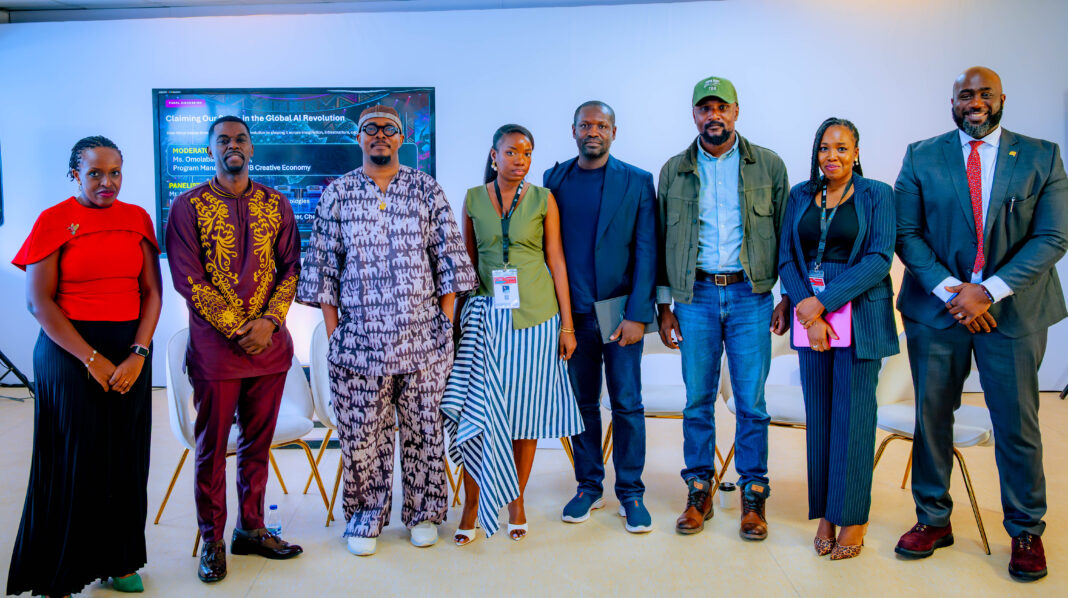
A panel discussion themed “Claiming Our Stake in the AI Revolution” further examined how African creators can use emerging technologies while protecting cultural identity, originality and ownership of their work.
The discussion, moderated by Omolabake Olagunju, Programme Manager at Co-creation HUB Creative Economy, brought together creative and technology leaders to examine the implications of AI for Africa’s cultural and digital industries.
Participants included Malik Afegbua, Founder of Slick City Media; Uchechi Arinze, Creative Director and Founder of CHéCHI; Ibrahim Tsado Yisa, Africa Director at Udu Technologies; and Oo Nwoye, Founder of TechCircle.
Discussions focused on intellectual property rights, algorithmic bias, cultural representation, storytelling and the cost of accessing digital tools, with participants stressing the importance of ensuring African stories and cultural expressions are adequately represented in global digital markets.
Emeka Onyia, Afreximbank’s Director of Digital Business and Innovation, said AI was lowering some of the equipment and production barriers facing creative entrepreneurs, although skills development and effective use of technology remained essential.
He described the Create-thon as an inaugural activity of the Afreximbank Innovation Lab, which seeks to bring together innovators and entrepreneurs to develop technologies and solutions that support African trade.
The initiative reflects Afreximbank’s broader strategy of strengthening Africa’s creative and cultural industries through CANEX by connecting talent with financing, technology, investors and international markets.
For Africa’s young population, the opportunity extends beyond winning competitions or producing digital content. It lies in building sustainable creative businesses that can employ musicians, software developers, animators, designers, filmmakers, marketers and other professionals across the value chain.
As the continent seeks to diversify its economies and address youth unemployment, the commercialisation of creative talent could become an important source of jobs, exports and foreign exchange earnings.
The challenge, however, will be ensuring that African creators have access not only to digital production tools but also to affordable financing, reliable internet infrastructure, intellectual property protection and distribution networks that enable them to retain a greater share of the value generated by their work.
Through initiatives such as CANEX Create-thon, Afreximbank and its partners are seeking to demonstrate that Africa’s creative talent can become more than a source of cultural influence: it can also power a new generation of businesses, jobs and economic opportunities.



