

Kenya has confirmed a second Ebola case linked to the deadly outbreak in the Democratic Republic of the Congo (DRC), prompting renewed calls for vigilance, contact tracing and infection prevention as health authorities work to prevent community transmission.
The patient, a 39-year-old man and relative of Kenya’s first Ebola victim, developed symptoms on October 13 while under quarantine. The first patient, a Kenyan who had been living in the DRC, died in hospital on October 5, two days after arriving in Nairobi via Uganda.
The World Health Organization (WHO) has commended Kenya’s response, particularly the identification and isolation of people who may have been exposed to the virus.
“I congratulate the Government for taking this important step to ensure that contacts are listed and quarantined,” WHO Representative Dr. Neema Rusibamayila Kimambo told UN News in Nairobi.
However, she warned that containing the outbreak requires cooperation beyond government agencies and health partners.
“We all have a role to play and if each one of us plays our part, then we should be able to contain the disease and stop community spread,” she said.
Contact tracing intensified
Kenyan health authorities have identified more than 40 contacts of the first patient, including airline passengers and crew, airport workers, baggage handlers, immigration officials, healthcare personnel and family members.
Most have been placed in quarantine, while some contacts considered at low risk are self-quarantining under medical supervision.
Authorities are also trying to locate six passengers who have been difficult to reach because they use foreign telephone numbers.
Dr. Kimambo praised the broad contact-tracing exercise, which covers people who may have encountered the patient during his journey or after his arrival in Kenya.
The second case emerged as the country continued strengthening its preparedness following the Ebola outbreak declared in the DRC in May. Neighbouring Uganda had also responded to an outbreak, which was officially declared over in late August.
WHO boosts preparedness
WHO has deployed additional expertise to support Kenya’s response, including a senior incident manager who participated in Uganda’s Ebola response.
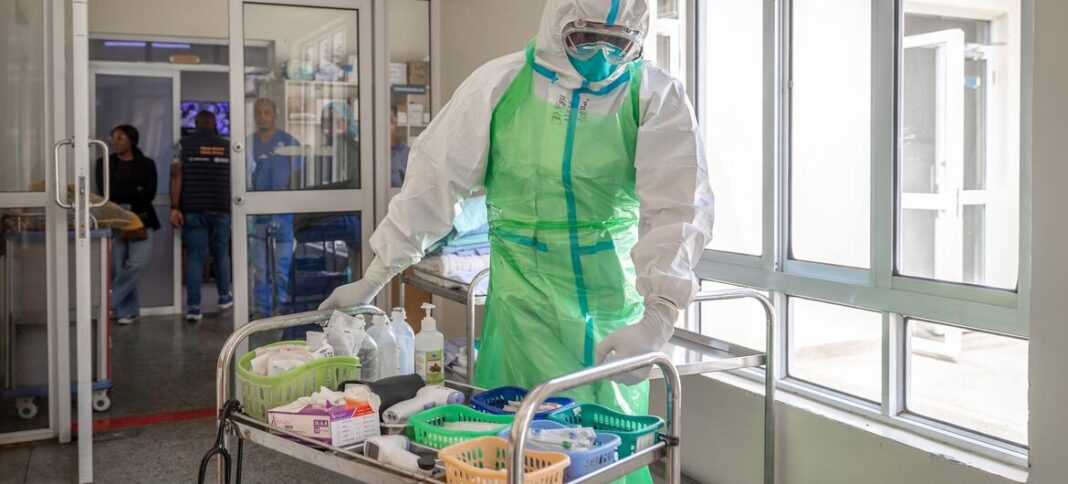
The agency is working with the government on surveillance, contact tracing, case management and infection prevention and control, particularly in quarantine facilities.
Since Kenya identified its first case, WHO has donated supplies worth approximately $70,000, including laboratory materials and equipment for infection prevention and control.
More than 4,000 health workers have also received training, including in screening procedures at ports of entry.
No travel restrictions needed
Despite the confirmed cases, Dr. Kimambo said there was no current need to impose travel restrictions or close national borders. She stressed, however, that appropriate screening at entry points remains essential to identify travellers who may pose a health risk.
Ebola spreads through direct contact with the bodily fluids of an infected person. Preventive measures include regular handwashing, using hand sanitiser and avoiding physical contact when infection is suspected.
Symptoms such as fever, vomiting and diarrhoea can resemble those of malaria and other illnesses, making prompt medical assessment important.
Dr. Kimambo urged Kenyans to remain calm while taking precautions and seeking medical attention if they develop symptoms.
“Let us not over panic and be very fearful because we do not have community spread,” she said, while urging the public to follow infection prevention measures.
Health authorities continue to prioritise surveillance and contact tracing to contain the cases and prevent further transmission.