
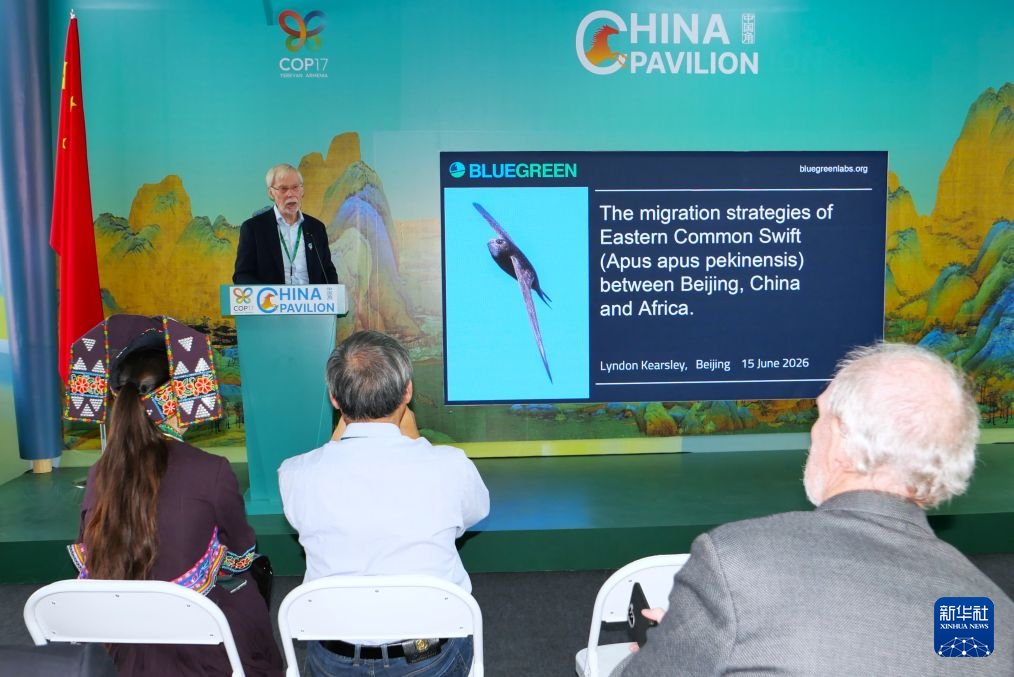

A 30,000-kilometre migration by the Beijing Swift is demonstrating how China and Africa are connected by nature, highlighting opportunities for scientific collaboration and joint action to protect biodiversity across continents.
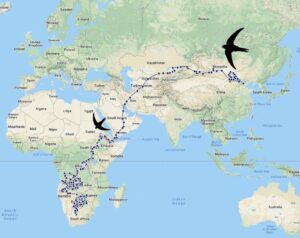
Every year, a tiny bird leaves Beijing’s historic Summer Palace and embarks on an extraordinary journey to southern Africa. Crossing vast landscapes, deserts and national borders, the Beijing Swift travels approximately 30,000 kilometres on its annual round trip, linking two regions whose ecological futures are more closely connected than they might appear.
Its journey carries a message that resonates far beyond the world of ornithology: China and Africa share not only economic and diplomatic interests but also a responsibility to protect the natural systems that sustain life.
As biodiversity loss, habitat destruction and climate change intensify, the bird has become a compelling illustration of why conservation must extend beyond national boundaries. Its survival depends on interconnected habitats across continents, making cooperation between Chinese and African scientists, conservation institutions and policymakers increasingly important.
Science connects two continents
The Beijing Swift’s remarkable migration became clearer through miniature tracking devices that enabled scientists to follow its movements across continents.
A study published in Movement Ecology in 2022 analysed migration tracks from 25 Beijing-breeding swifts, documenting their long-distance journeys to wintering grounds in southwestern Africa.
The research demonstrates how scientific innovation can deepen understanding of wildlife migration and help identify the habitats species need to survive.
For China and Africa, this presents an opportunity to translate scientific discoveries into a practical conservation partnership. Chinese researchers and technology developers can collaborate with African universities, wildlife agencies and conservation organisations to improve migration tracking, exchange research findings and monitor changes in habitats along the birds’ routes.
Such cooperation would strengthen the scientific evidence available to both regions while supporting conservation policies informed by shared data rather than isolated national observations.
From shared research to shared responsibility
The Beijing Swift’s migration reveals a fundamental challenge for biodiversity protection: a species can be protected in one country yet remain vulnerable elsewhere along its journey.
Nesting sites in Beijing, feeding grounds along the migration corridor and wintering habitats in southern Africa form part of a single ecological network. Damage to any of these environments can undermine conservation efforts elsewhere.
This creates a clear case for stronger China–Africa environmental cooperation, including joint research programmes, technical exchanges, university partnerships and collaboration between conservation agencies.
African institutions are essential partners in this process. Their knowledge of local ecosystems, seasonal conditions and conservation priorities can help shape research and ensure that international initiatives respond to environmental realities on the continent.
Cooperation should also strengthen African scientific capacity through researcher exchanges, training, access to appropriate tracking technologies and long-term investment in biodiversity monitoring.
The objective is not simply to study a bird travelling between continents, but to build lasting institutional partnerships capable of protecting migratory species and the ecosystems on which they depend.
Linking biodiversity to wider cooperation
The swift’s journey provides a natural bridge between China’s biodiversity research and Africa’s conservation priorities. It also reinforces the objectives of the Convention on Biological Diversity, which calls for stronger international action to protect ecosystems and halt biodiversity loss.
As China and African countries deepen cooperation across development, infrastructure, agriculture and trade, biodiversity offers another important area for practical collaboration. Joint environmental research can help ensure that economic development takes account of ecosystem protection, including habitats supporting migratory birds.
Conservation initiatives must also recognise the pressures facing local communities. Protecting nesting sites, maintaining healthy landscapes and safeguarding feeding grounds require public awareness, effective environmental management and the participation of people living alongside wildlife.
By bringing together scientific expertise, local knowledge and institutional resources, China and Africa can develop approaches that benefit both biodiversity and communities.
One bird, one shared future
Each year, the Beijing Swift leaves China, crosses continents and returns to its breeding grounds. Its journey connects distant places through an ecological relationship that no border can contain.
For China and Africa, the lesson is unmistakable. Biodiversity protection cannot succeed through isolated national efforts when wildlife depends on habitats across multiple countries.
The bird’s annual migration offers an opportunity to turn a remarkable natural phenomenon into a lasting platform for cooperation—one built on scientific exchange, shared responsibility and sustained conservation investment.
The Beijing Swift may be small, but its journey carries a message of continental significance: when China and Africa work together to protect nature, they help safeguard a shared ecological future.



