
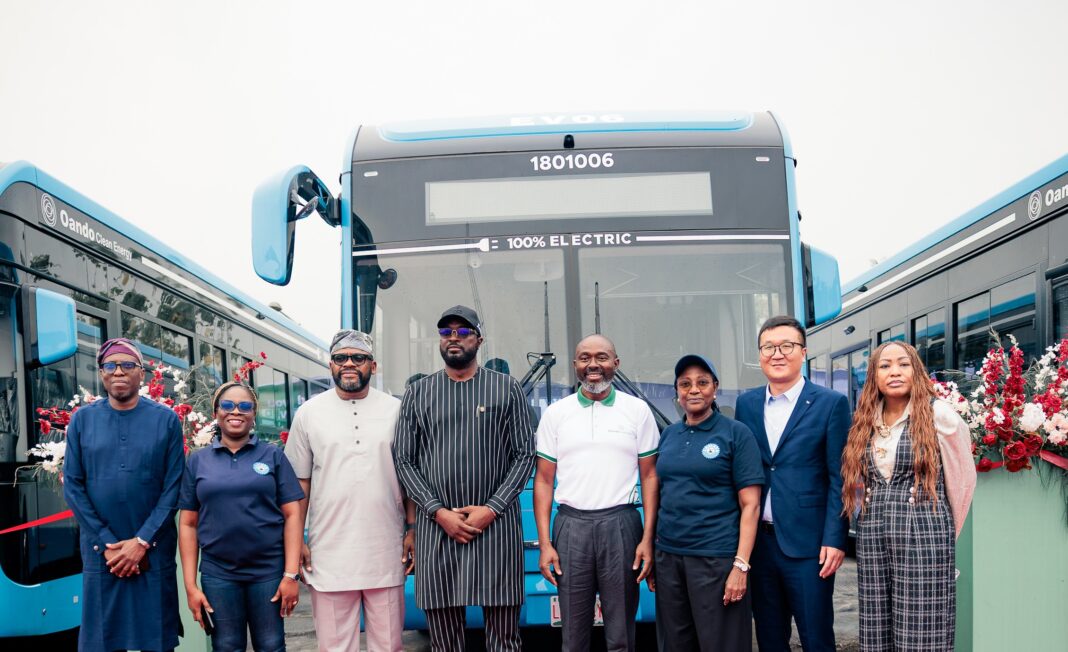

Nigeria is stepping up efforts to transition towards cleaner public transport, with Oando Clean Energy Limited (OCEL) expanding its electric bus deployment in Lagos as part of a broader strategy to accelerate electric mobility and develop a local electric vehicle (EV) industry.
The renewable energy subsidiary of Oando Energy Resources has partnered with the Lagos State Government and the Lagos Metropolitan Area Transport Authority (LAMATA) to move its electric mobility programme from a two-bus pilot phase to wider commercial deployment.
The expansion highlights the growing role of African energy companies in addressing transport emissions, reducing dependence on imported fossil fuels and developing sustainable urban mobility systems.
The initial two electric buses have transported approximately 788,000 passengers, covered 433,000 kilometres and avoided the consumption of about 216,000 litres of diesel, demonstrating the potential of electric mass transit in one of Africa’s busiest urban centres.
During the first nine months of 2026, the service recorded more than 212,000 passenger journeys, with average capacity utilisation of 73 per cent. The buses also maintained close to zero downtime, providing operational data that will inform the expansion of the programme.
Lagos State Commissioner for Transportation, Oluwaseun Osiyemi, said the initiative supports the state’s ambition to achieve net-zero emissions by 2050.
He said the introduction of electric buses represents a practical step towards reducing transport-related emissions, improving urban air quality and establishing a more sustainable public transport network.
LAMATA Managing Director Abimbola Akinajo said the programme’s success would ultimately depend on service reliability and the benefits delivered to commuters rather than simply the number of electric vehicles introduced.
For Oando, however, the Lagos project is also intended to demonstrate the commercial viability of electric mobility in African markets, where high vehicle acquisition costs, inadequate charging infrastructure and limited technical capacity have slowed EV adoption.
Oando Clean Energy Chief Executive Officer Ademola Ogunbanjo said the company was using operational experience from the pilot programme to move towards large-scale deployment.
The company is seeking to establish an integrated electric mobility ecosystem that extends beyond importing electric buses to include charging infrastructure, after-sales support, technical training, spare parts distribution and local vehicle assembly.
Ogunbanjo said OCEL had secured a licence to undertake local vehicle assembly, positioning the company to participate in the development of Nigeria’s emerging electric transport manufacturing industry.
The strategy reflects a wider opportunity for African countries to capture more value from the global transition to electric mobility by investing in vehicle assembly, maintenance services, battery-related technologies and supporting infrastructure.
Local assembly could also create employment opportunities, strengthen technical skills and reduce reliance on fully imported vehicles over the longer term.
The Bank of Industry has also backed the initiative as part of efforts to promote infrastructure investment and economic development.
Speaking on behalf of the bank’s Managing Director, Olasupo Olusi, its Divisional Head of Infrastructure Finance, Ibitoru Olutoyin Ubosi, said reliable and cleaner transport systems were essential to connecting people with employment, businesses, markets and economic opportunities.
Chinese electric vehicle manufacturer Yutong is supplying the buses and providing technical support, including charging solutions, mechanic training, after-sales services and spare parts.
Yutong West Africa Country Account Manager Damian Li said the deployment represented an opportunity to extend electric public transport technology into Nigeria’s urban transport network, building on the adoption of electric buses in Europe, South America and the Middle East.
The partnership also highlights the importance of international technology providers in supporting Africa’s transition to cleaner transport, particularly through technology transfer, technical training and the development of local maintenance capacity.
For commuters, the Yutong-built buses offer air conditioning, onboard Wi-Fi, 360-degree surveillance cameras, wheelchair accessibility and priority seating for elderly passengers.
Each bus has a capacity of up to 79 passengers, comprising 39 seated and 40 standing, making the vehicles suitable for high-volume urban transport operations.
The additional buses are expected to enter service in the fourth quarter of 2026, with LAMATA managing operations on behalf of the Lagos State Government.
Beyond Nigeria, the expansion comes as African cities increasingly confront the challenge of balancing rapid urbanisation, rising transport demand and the need to reduce carbon emissions.
Electric buses offer an opportunity to lower exposure to volatile diesel prices, improve urban air quality and modernise public transport. However, wider adoption across the continent will depend on affordable financing, reliable electricity supply, charging networks and policies that encourage investment in local EV industries.
Nigeria’s experience in Lagos could therefore provide an important reference point for other African economies seeking to move from electric vehicle pilot projects towards commercially sustainable public transport systems.



