

Africa Finance Corporation (AFC) plans to establish a dedicated mineral exploration investment company within the next 12 months, seeking to address a funding gap that has left much of the continent’s mineral potential undiscovered and constrained its ability to control strategic resources.
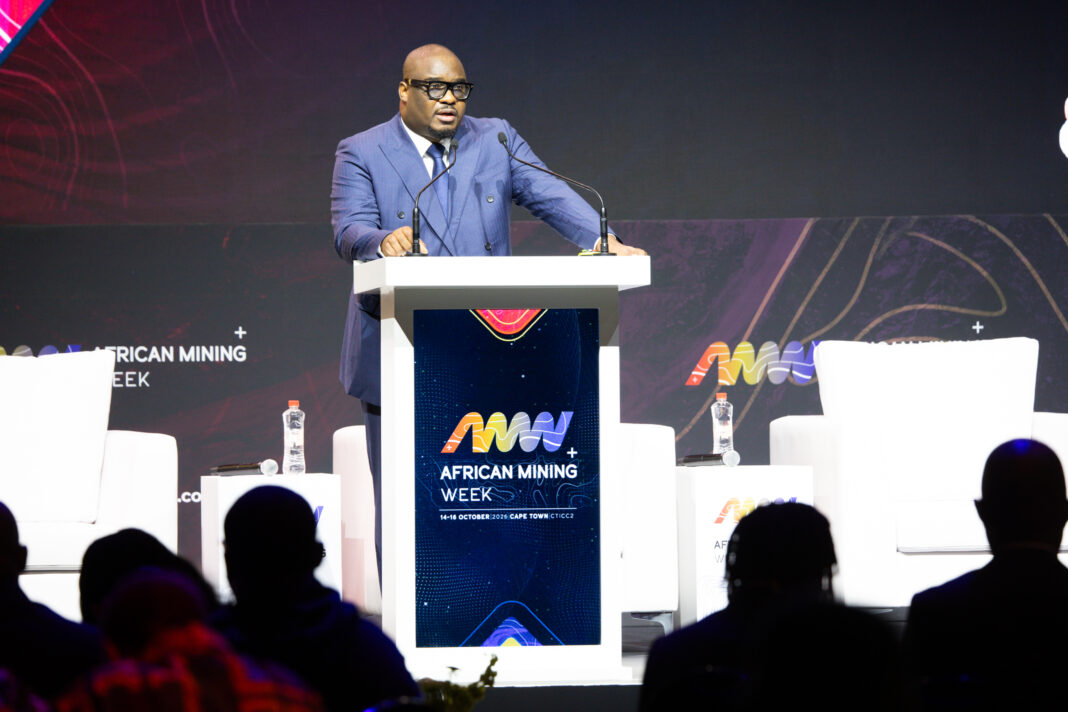
The pan-African multilateral financial institution announced the initiative at African Mining Week in Cape Town, positioning exploration financing as a critical step towards expanding Africa’s mineral reserves, attracting investment and strengthening domestic mineral value chains.
Franklin Edochie, AFC’s Deputy Director and Head of the Metals and Mining Desk, said the proposed investment vehicle would help finance early-stage exploration, where geological uncertainty and high upfront costs often discourage commercial lenders and private investors.
“If we don’t invest in African exploration, we risk losing control over where our resources end up,” Edochie said, stressing that discovering and defining new deposits is essential to building mineral processing and manufacturing industries on the continent.
Exploration is a strategic priority as global competition intensifies for copper, cobalt, lithium, graphite and other minerals required for electric vehicles, renewable energy technologies, power infrastructure and advanced manufacturing.
Africa holds significant deposits of several critical minerals, but converting geological potential into commercially viable reserves requires sustained investment in geological surveys, drilling, laboratory testing and feasibility studies. Without such financing, countries risk remaining exporters of raw ores while higher-value processing and manufacturing take place elsewhere.
Recent industry data underline the importance of the initiative. According to S&P Global Market Intelligence’s World Exploration Trends 2026 report, Africa’s mineral exploration budget rose by 11 per cent in 2025 to US$1.44 billion, accounting for about 10 per cent of global exploration spending. This increase came as worldwide budgets declined by 0.6 per cent to US$12.4 billion, marking the third consecutive annual decline.
Côte d’Ivoire emerged as Africa’s leading exploration destination, attracting US$186 million in 2025, an 82 per cent increase. The figures highlight growing investor interest in African mineral deposits, but also the need to sustain funding for early-stage discoveries, particularly as global exploration budgets remain under pressure.
The Democratic Republic of the Congo (DRC), one of the world’s most important sources of battery and industrial minerals, offers a major opportunity for further exploration. The US Geological Survey estimates that the country accounted for approximately 73 per cent of global mined cobalt production in 2025, reinforcing its strategic importance to battery supply chains.
Freddy Mwamba Kanyinku, Director General of the DRC’s Centre d’Expertise, d’Evaluation et de Certification (CEEC), said the country was expanding its geological mapping programme to improve knowledge of its mineral deposits and attract investors.
He said high-precision geological mapping had covered only 19 per cent of the country’s territory, leaving substantial areas requiring further investigation. Kanyinku also highlighted the procurement of advanced survey equipment to improve geological assessments and give investors clearer information about potential deposits.
“Eighty per cent of our land remains unexplored,” he said, pointing to opportunities for international investors, including partners from the United States.
For AFC, the proposed fund is expected to complement infrastructure investments in ports and power corridors, particularly those serving the Copperbelt, where mining and mineral processing require reliable electricity and efficient transport links.
The wider objective is to connect exploration with production, refining and manufacturing, enabling African economies to capture more value from their mineral wealth.
However, the fund’s impact will depend on its financing structure, the projects it supports and whether it can attract additional private capital. Transparent licensing, reliable geological data, environmental safeguards and predictable regulations will also be essential to converting discoveries into viable mining operations.
By financing exploration at an earlier stage, AFC aims to strengthen Africa’s position in global mineral supply chains while giving countries greater influence over how their resources are developed and commercialised.



