
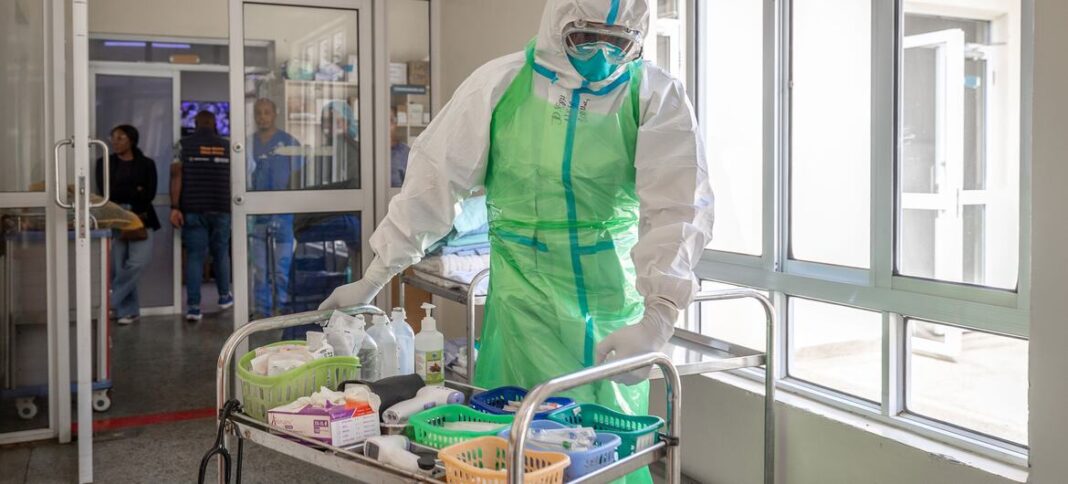

The Africa Centres for Disease Control and Prevention (Africa CDC) is set to convene African health ministers on October 28 as the deadly Ebola outbreak in the Democratic Republic of the Congo (DRC) and reported infections in neighbouring countries raise concerns over the continent’s preparedness to contain cross-border transmission.
Africa has recorded at least 9,582 confirmed Ebola cases across four countries — the DRC, Uganda, Kenya and Nigeria — based on the latest available reports as of October 20, 2026. The cumulative toll includes more than 4,600 confirmed deaths, with the DRC accounting for the overwhelming majority of infections. The figures are subject to revision as national authorities update their surveillance data.
The reported distribution is as follows:
- Democratic Republic of the Congo: 9,552 confirmed cases.
- Uganda: 20 confirmed cases, with the last confirmed patient discharged in July.
- Kenya: Nine confirmed cases, including one death.
- Nigeria: One confirmed case reported on October 20.
The tally combines the latest available country-level figures; reporting dates and surveillance updates may differ. Africa CDC declared the outbreak a Public Health Emergency of Continental Security on May 18, 2026. Five months into the response, the Bundibugyo virus outbreak continues to challenge health authorities, with the DRC remaining the epicentre of the crisis.
The October 28 virtual ministerial meeting will provide a platform for African governments to assess the evolving situation, strengthen coordination across borders, mobilise resources for affected countries and reinforce preparedness in states at risk of imported infections.
The emergence of cases outside the DRC underscores the importance of surveillance, rapid diagnosis and effective contact tracing. Kenya’s infections have been linked to an individual who travelled from the DRC, while Nigeria reported a confirmed case involving a woman who had travelled through Uganda and had also visited the DRC. Nigerian authorities are investigating the source of infection and tracing contacts.
“Ebola is crossing borders. Our response must move faster, with stronger coordination, greater solidarity and decisive political leadership. We have the expertise and the capacity on this continent. We must mobilise them together to stop this outbreak and save lives,” said Dr Jean Kaseya, Director General of Africa CDC.
The ministerial meeting is also expected to inform preparations for a Heads of State and Government Summit under the leadership of Burundi’s President Évariste Ndayishimiye, the Chairperson of the African Union.
The consultations come as health authorities confront the challenge of containing transmission while maintaining public confidence, protecting healthcare workers and ensuring that communities cooperate with surveillance and isolation measures.
Africa CDC is urging member states to strengthen vigilance at points of entry, improve disease surveillance, expand cross-border information-sharing and intensify community engagement. Protecting frontline health workers and ensuring timely access to diagnosis and care will also be central to containing further spread.
The latest developments highlight the need for a coordinated continental response that extends beyond countries already reporting infections. With international travel and cross-border movement continuing, rapid detection and cooperation among governments will be critical to preventing additional outbreaks.
Africa’s ability to contain the epidemic will depend on sustained political commitment, adequate resources and coordinated action by national health agencies, regional institutions and international partners.



