

Kenya’s Ebola response is receiving a US$1.5 million boost from the Africa Centres for Disease Control and Prevention (Africa CDC), including the deployment of 10 public health experts and diagnostic supplies as authorities work to contain the outbreak.
The continental health agency is also providing emergency operations equipment valued at approximately US$350,000 to strengthen Kenya’s capacity to coordinate public health emergencies.
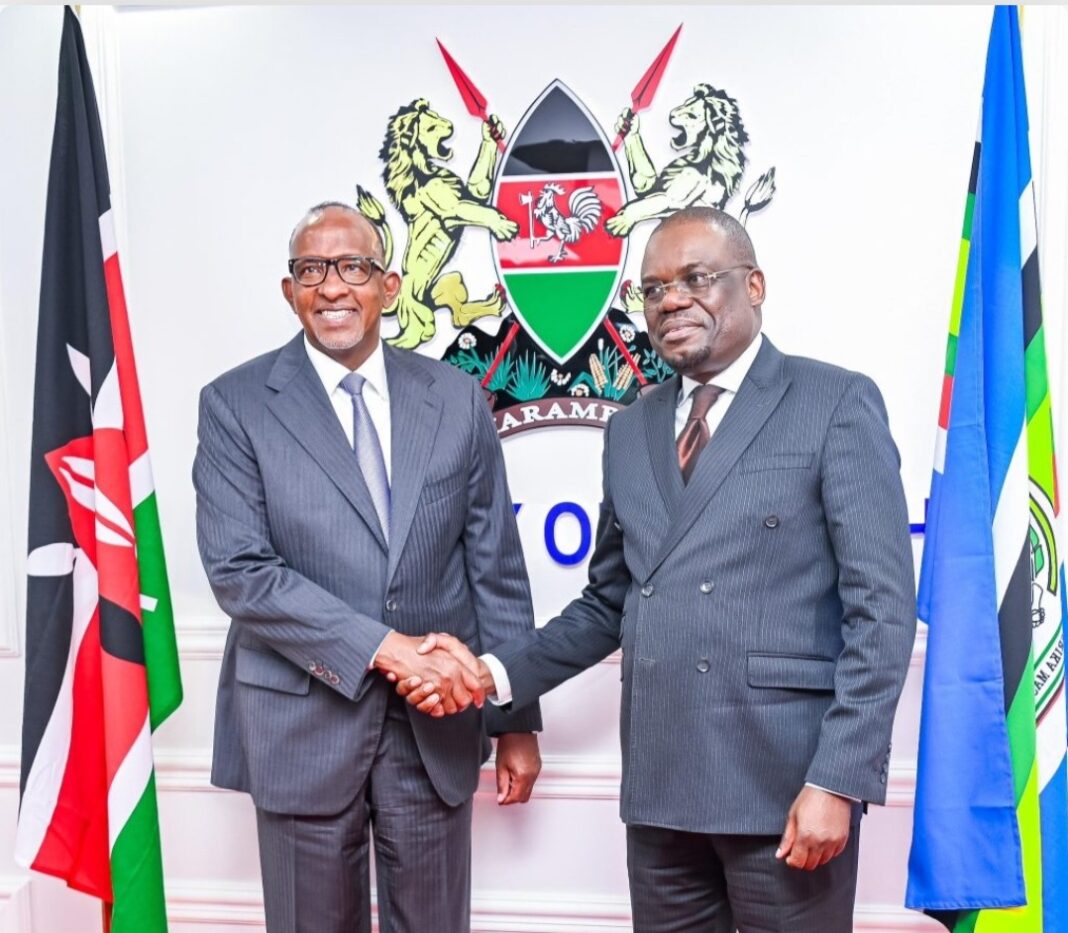
The support was announced on October 27, 2026, following a meeting in Nairobi between Africa CDC Director-General Dr Jean Kaseya and Health Cabinet Secretary Aden Duale, where the two leaders discussed efforts to contain the outbreak caused by the Bundibugyo virus.
The assistance combines technical expertise, laboratory supplies and operational support aimed at reinforcing the systems used to detect infections, trace contacts and manage suspected and confirmed cases.
Africa CDC said its support includes laboratory reagents and diagnostic test kits, alongside assistance for surveillance, contact tracing, case management and community engagement.
The intervention comes as the country seeks to strengthen its outbreak response and reduce the risk of further transmission, including across national borders.
Early detection and timely intervention remain central to containing Ebola outbreaks, as health authorities must identify potential infections, assess exposed individuals and respond quickly to emerging transmission risks.
The deployment of 10 African public health experts is expected to reinforce the personnel available to support these activities, while additional laboratory supplies will help strengthen diagnostic capacity.
The equipment worth US$350,000 is intended to enhance Kenya’s Public Health Emergency Operations Centre, which plays a central role in coordinating emergency response activities.
Africa CDC said the support reflects the importance of combining national leadership with continental cooperation when responding to infectious disease threats.
Dr Kaseya reaffirmed the agency’s commitment to working with the Kenyan government, noting that the country’s response has implications for public health security beyond its borders.
The agency also commended Kenya’s mobilisation of resources and coordination of containment measures, highlighting surveillance, early detection and timely interventions as important components of the response.
However, the effectiveness of the additional support will depend on how quickly resources reach frontline teams and how effectively surveillance, laboratory services and contact tracing operate together.
Community engagement will also remain important in helping residents understand public health guidance, report potential symptoms promptly and cooperate with health workers.
The announcement comes amid wider efforts to coordinate Africa’s response to the outbreak. Africa CDC convened an Extraordinary Meeting of African Ministers of Health for October 28, 2026, to assess the evolving situation, strengthen continental coordination and agree on measures to prevent further spread.
The meeting was intended to provide a platform for countries to align their response efforts and consider the regional implications of the outbreak.
Africa CDC and the Kenyan government emphasised that public health emergencies require coordinated action, sustained resource mobilisation and cooperation between countries.
For Kenya, the immediate challenge is to translate the additional financial, technical and operational assistance into effective action on the ground, while maintaining surveillance and strengthening the systems needed to identify and respond to potential infections.
The support also highlights the role of African institutions in mobilising expertise and resources to help member states manage outbreaks and protect populations across the continent.



