
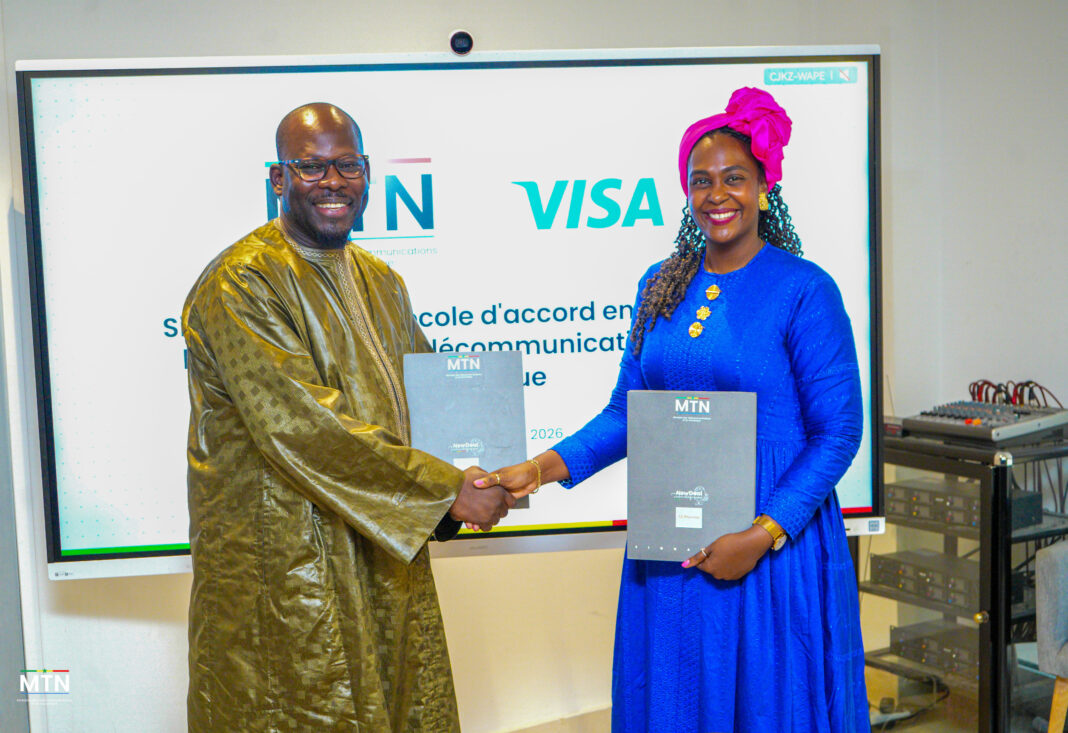

Visa and Senegal’s Ministry of Telecommunications and Digital Affairs have signed a two-year strategic partnership aimed at accelerating the country’s digital transformation, strengthening electronic payments and expanding access to digital financial services.
The Memorandum of Understanding (MoU) provides a framework for cooperation in digital payments, financial innovation, cybersecurity and regulatory matters, positioning Senegal among African countries seeking to modernise their financial ecosystems and reduce reliance on cash-based transactions.
The agreement comes as Africa’s digital payments sector continues to expand, driven by mobile money adoption, growing internet connectivity, fintech innovation and government efforts to digitise public services. However, challenges around financial inclusion, cybersecurity, interoperability and access to reliable payment infrastructure remain significant across the continent.
Under the agreement, Visa and the ministry will explore practical applications of digital payments, particularly person-to-government (P2G) and government-to-person (G2P) transactions. These systems could make it easier for citizens to pay government fees, taxes and service charges electronically while enabling public institutions to distribute social benefits and other payments directly to individuals.
The proposed cooperation is expected to identify opportunities where digital payment solutions can improve the efficiency, transparency and accessibility of public services.
For Senegal, the partnership is part of the broader implementation of its New Deal Technologique, the country’s digital transformation agenda, which seeks to strengthen digital infrastructure, expand access to technology and position the country as a competitive player in the digital economy.
“This strategic partnership with Visa marks a decisive step forward in our efforts to accelerate the New Deal Technologique. Now is the time for action: we must be fully operational and move from intent to tangible results by deploying practical, secure and inclusive solutions that directly address the everyday needs of Senegalese citizens,” said Samba Diouf, Minister of Telecommunications and Digital Affairs.
The agreement is the first partnership of its kind between Visa and a government institution in Senegal, creating a structured platform for public-private sector collaboration in developing the country’s digital financial ecosystem.
For Visa, the initiative offers an opportunity to contribute its international payments expertise to Senegal’s ambitions while supporting the development of a broader digital economy.

“We are proud to bring Visa’s expertise to bear in support of Senegal’s ambitions. Together with the Ministry, we aim to identify tangible opportunities to facilitate access to digital services and support the long-term development of the payments ecosystem in Senegal,” said Aminata Kane, Senior Vice President and Group Country Manager for Visa Western and Central Africa.
Beyond Senegal, the agreement highlights the growing importance of partnerships between African governments and international payment companies in developing secure and interoperable payment systems.
Across Africa, digital payments have become an increasingly important component of economic activity, supporting small businesses, cross-border commerce, financial inclusion and the delivery of public services. Mobile money platforms have transformed financial access in markets such as Kenya, Ghana, Senegal and Côte d’Ivoire, enabling millions of people to conduct transactions without depending entirely on traditional banking infrastructure.
The expansion of digital payment systems also presents opportunities for small and medium-sized enterprises (SMEs), which often face barriers accessing conventional financial services. Electronic payments can help businesses receive money more efficiently, maintain transaction records, reach new customers and participate in the growing digital marketplace.
However, the continent’s payments industry must address persistent challenges, including fragmented payment systems, high transaction costs, digital fraud, limited consumer protection and uneven access to financial services, particularly in rural communities.
Cybersecurity will therefore be an important component of the Visa-Senegal cooperation. As more government services and financial transactions move online, strengthening data protection, digital infrastructure and public confidence will be essential to sustaining adoption.
The partnership also reflects the growing recognition that Africa’s digital transformation requires more than expanding internet access. Governments must develop payment infrastructure that allows citizens, businesses and public institutions to transact securely and efficiently.
By combining Senegal’s national digital priorities with Visa’s technological expertise, the two-year cooperation framework seeks to identify solutions that can translate digital transformation commitments into practical economic benefits.
Its success will ultimately depend on the implementation of accessible, affordable and secure payment services that reach ordinary citizens and businesses, while strengthening Senegal’s position in Africa’s rapidly evolving digital payments market.



