
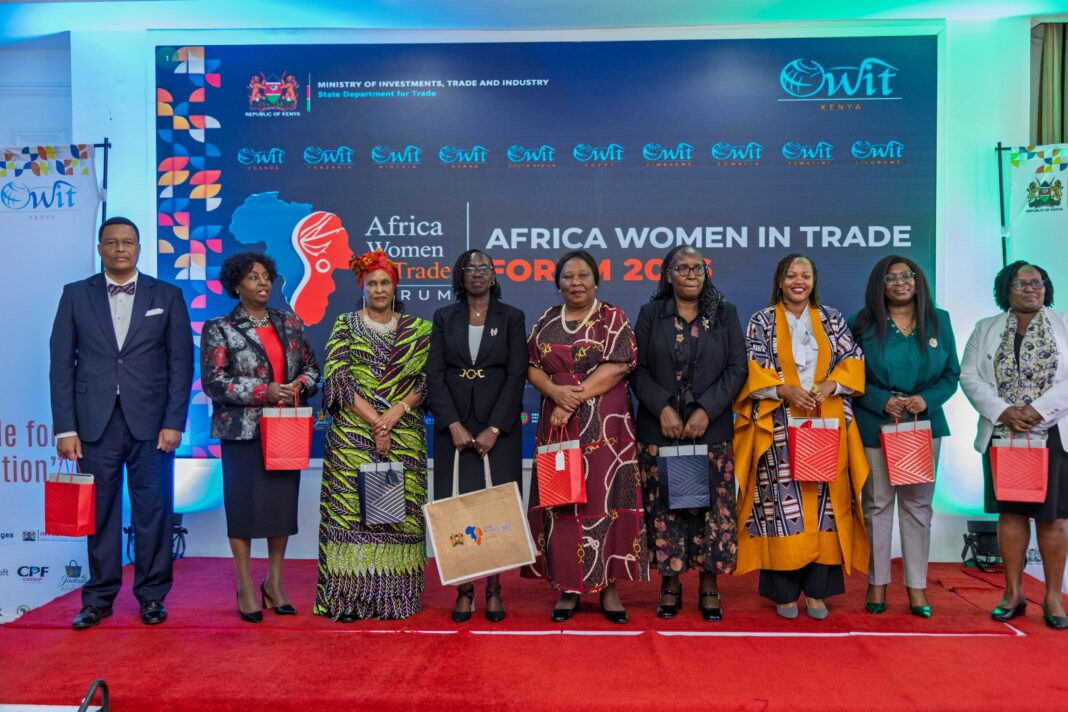

The Africa Women in Trade Forum (AWTF) 2026 has called for stronger access to finance, regional markets and trade information to help women-led enterprises expand across Africa and benefit from opportunities under the African Continental Free Trade Area (AfCFTA).
The second day of the forum focused on practical measures to help women entrepreneurs overcome barriers to cross-border trade, improve export readiness and grow businesses beyond their domestic markets.
Discussions at the Business Summit highlighted the need to translate AfCFTA’s ambition of creating a single African market into measurable commercial opportunities for women-owned businesses, particularly through improved access to buyers, simplified trade procedures and stronger business networks.
Principal Secretary for Trade Regina Ombam said expanding intra-African trade requires deliberate policies and institutional interventions to ensure women entrepreneurs participate meaningfully in the continent’s economic integration.
“Inclusive trade outcomes are not incidental; they must be intentionally engineered,” Ombam said.
Her remarks underscored the importance of moving beyond trade agreements and policy commitments towards practical systems that enable women-led enterprises to compete in regional markets.
For businesses seeking to export, access to market information, affordable financing, product certification and regulatory guidance remains critical to meeting the requirements of buyers across national borders.
The forum’s discussions examined how governments, financial institutions and development partners could strengthen support for women entrepreneurs seeking to enter new markets, improve production capacity and establish sustainable regional supply chains.
A roundtable on export readiness and cross-border trade explored product standards, regulatory compliance and the procedures businesses must navigate when selling goods in other African countries.
Participants highlighted the gap between government trade policies and the operational realities facing small and medium-sized enterprises, including the challenges of understanding customs requirements, meeting destination-market standards and identifying reliable distribution partners.
Closing this gap is essential if women-owned businesses are to move from informal or small-scale domestic operations into competitive regional enterprises.
For Kenya and other African economies, stronger participation by women-led firms in intra-African commerce could help diversify exports, strengthen value chains and expand employment opportunities.
The AfCFTA provides a framework for reducing trade barriers and facilitating commerce across participating African countries. However, the forum’s discussions pointed to the need for accessible information, coordinated institutional support and business-friendly systems to help smaller firms take advantage of the agreement.
Financing was another central issue, given the importance of working capital and investment in meeting larger orders, improving product quality and supporting expansion into new markets. Women entrepreneurs also need stronger connections to buyers, suppliers and business networks to convert market access into sustained revenue growth.
Representing the Chief Guest, Kenya’s First Lady Rachel Ruto, Joyful Woman Chief Executive Officer Elizabeth Koskei challenged stakeholders to prioritise measurable outcomes, particularly business expansion and job creation.
Her call placed emphasis on assessing the effectiveness of trade-support initiatives through tangible results rather than the number of programmes or policy commitments announced.
For financial institutions and development partners, this means ensuring that support translates into enterprises securing capital, winning contracts, increasing sales and employing more people.
The participation of Maendeleo ya Wanawake Chairperson Regina Mwikali, alongside government agencies, financial institutions, development partners, traders from across Africa and officials from the State Department for Trade, reflected the need for collaboration across the public and private sectors.
Such partnerships will be important in helping women entrepreneurs navigate trade regulations, identify export opportunities and build the capacity needed to compete in regional and international markets.
As African countries seek to increase trade within the continent, the forum highlighted a key economic challenge: ensuring women-owned businesses can access the finance, information and institutional support necessary to participate in expanding markets.
The success of AfCFTA will depend not only on the removal of trade barriers but also on whether businesses traditionally excluded from regional commerce can secure contracts, scale production and create jobs.
For women entrepreneurs, the next step is turning the opportunities identified at AWTF 2026 into stronger commercial networks, increased exports and sustainable business growth across Africa.



