

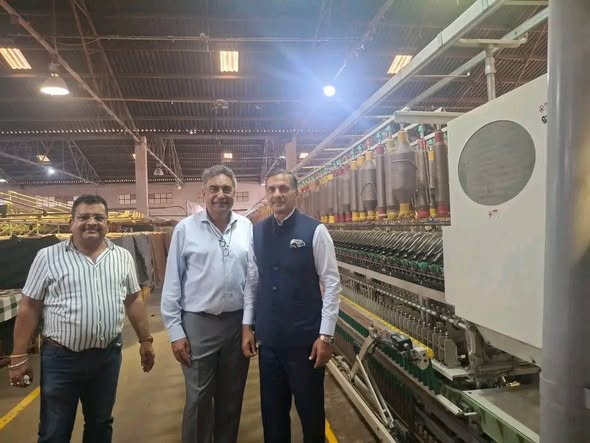
Bedi Investments Limited is emerging as one of Kenya’s established textile manufacturers with a growing regional footprint in the production, knitting and supply of military and institutional uniforms, highlighting the potential of Kenya’s textile industry to serve a much larger African market.
The Nakuru-based company has gained experience supplying military and institutional clothing to countries in East Africa, including Uganda, South Sudan and Burundi, positioning it alongside Rivatex East Africa and Thika Textile Mills as part of a small group of Kenyan manufacturers capable of producing specialized uniforms for regional security agencies.
Bedi’s regional business is particularly significant because military uniforms require specialised fabrics, consistent quality, technical specifications and reliable production capacity. Developing these capabilities gives Kenyan manufacturers an opportunity to compete in a market that extends beyond ordinary apparel into defence, security and institutional procurement.
Bedi is also among the suppliers of uniforms for the Uganda People’s Defence Forces (UPDF), a role that has contributed to the company’s growing profile in the regional military clothing market.

Ugandan President Yoweri Kaguta Museveni has visited Bedi Investments, underscoring the company’s links with Uganda’s military uniform supply chain. The visit also illustrates the increasingly regional nature of Kenya’s textile manufacturing sector, where factories are seeking markets beyond domestic government and commercial buyers.

In March 2026, the Indian High Commissioner also visited Bedi Investments in Nakuru, providing another indication of the interest surrounding the company and Kenya’s manufacturing capabilities.
The company’s regional expansion comes at a time when Kenya is attempting to rebuild its textile and apparel industry and reduce its dependence on imported fabrics and clothing.
The National Police Service has now provided another major opportunity for the domestic industry after confirming that Bedi Investments was awarded the contract to manufacture and stitch the new Kenya Police Service General Duty uniforms.
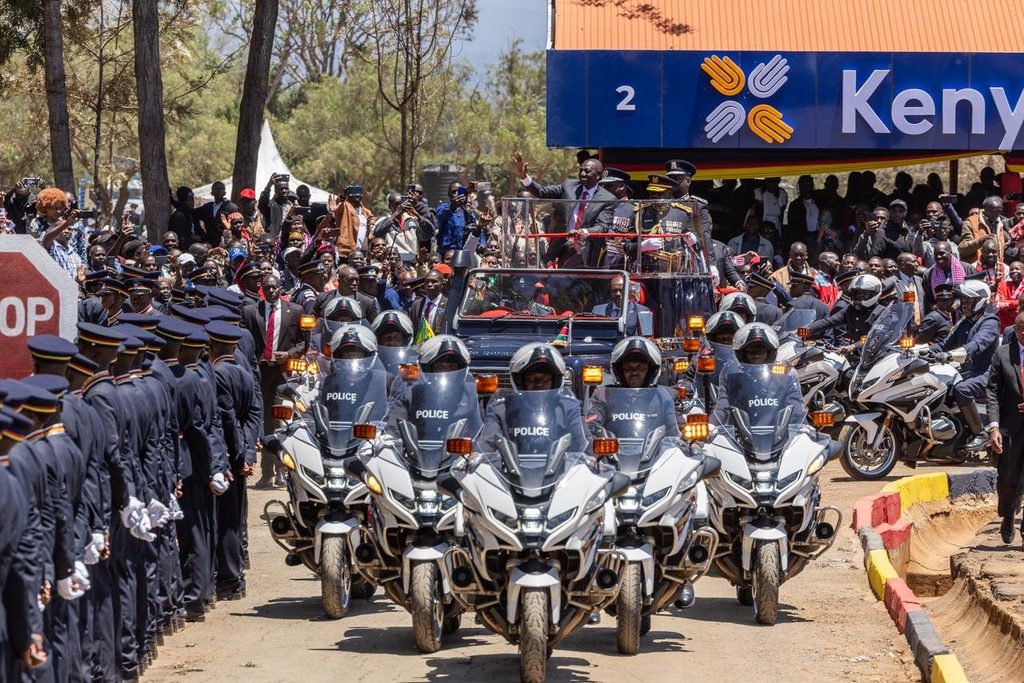
The clarification followed reports that had linked Nalitex Limited to the procurement.According to the NPS, four Kenyan textile manufacturers with previous experience supplying police uniform material — Bedi Investments, Rivatex East Africa, Thika Textile Mills and Sunflag Textiles & Knitwear Mills — were invited to submit samples.
Only Bedi Investments and Rivatex submitted samples within the stipulated period. Following evaluation and public participation, the sample produced by Bedi was selected and approved through the relevant security structures.
The subsequent procurement was undertaken under the Public Procurement and Asset Disposal Act and applicable regulations, with Bedi eventually awarded the contract.
The NPS said Nalitex did not participate in the procurement, was not awarded the contract and was not engaged as a subcontractor.
The police-uniform contract therefore places Bedi at the intersection of two important developments: Kenya’s efforts to increase local procurement and the growing need for African countries to develop domestic and regional textile manufacturing capacity.
Bedi’s significance lies in its ability to participate in more than one stage of the textile value chain. The company describes its operations as an integrated textile manufacturing business, while its manufacturing arm, Bedi EPZ, produces apparel for international markets.
This type of vertical integration is important because Africa’s textile challenge is not simply a shortage of garment factories. The continent produces substantial quantities of cotton but captures a relatively small share of the value generated from turning cotton into yarn, fabric and finished clothing.
The International Trade Centre estimates that Africa exports textile products worth about $15.5 billion annually while importing textiles, apparel and footwear valued at approximately $23.1 billion.
Kenya has demonstrated that textile and apparel manufacturing can create large numbers of jobs. The World Bank has previously estimated the country’s textile and apparel sector could support about 155,000 jobs, while recent industry developments have continued to underline its export and employment potential.
However, the industry remains exposed to imported fabrics, high energy and financing costs, inadequate local cotton production and competition from large Asian textile producers.
The answer should not simply be to protect Kenyan factories from imports. Kenya needs to make its manufacturers more competitive by investing in modern spinning and weaving equipment, expanding cotton production, improving irrigation, developing technical skills and ensuring reliable and affordable electricity.
Government procurement can also provide an anchor for industrialization ,Police, military, prisons, schools, hospitals and other public institutions purchase large quantities of uniforms and protective clothing. Where Kenyan manufacturers can meet required standards competitively, such procurement can provide predictable demand that enables factories to retain workers, invest in machinery and expand production.
African governments have spent years negotiating and signing trade agreements, but manufacturers still encounter border delays, different standards, cumbersome customs procedures and non-tariff barriers that make it difficult to move products across the continent.
The textile industry provides a particularly strong case for AfCFTA implementation because no single African country needs to produce every component of a finished garment.
Kenya can produce specialised fabrics and garments; cotton-producing countries can supply raw materials; other African economies can specialise in spinning, dyeing, accessories, footwear, logistics or final assembly.
Such regional value chains could enable African manufacturers to achieve economies of scale and compete more effectively with Asian producers.
Research on the African textile and apparel industry under AfCFTA has highlighted the importance of developing continental value chains, supported by investment, industrial policies and effective rules of origin.
For Kenya, companies such as Bedi Investments could become important participants in these emerging value chains.
Its experience supplying military uniforms to Uganda, South Sudan and Burundi demonstrates the type of regional market that Kenyan manufacturers can already serve. Rather than seeing these countries only as export destinations, Kenya could develop deeper industrial partnerships with them.
Instead of individual countries importing uniforms from Europe or Asia, African governments could increasingly procure from manufacturers within the continent, provided they meet quality, price and security requirements.
That would retain more of the value of public expenditure within Africa while creating employment in cotton farming, textile production, garment manufacturing, transport and logistics.
The opportunity is particularly urgent as African textile exporters face uncertainty in traditional external markets. Kenya’s textile industry has historically benefited from preferential access to the United States, while recent changes in the global trading environment have increased pressure on African manufacturers to diversify their markets.



