
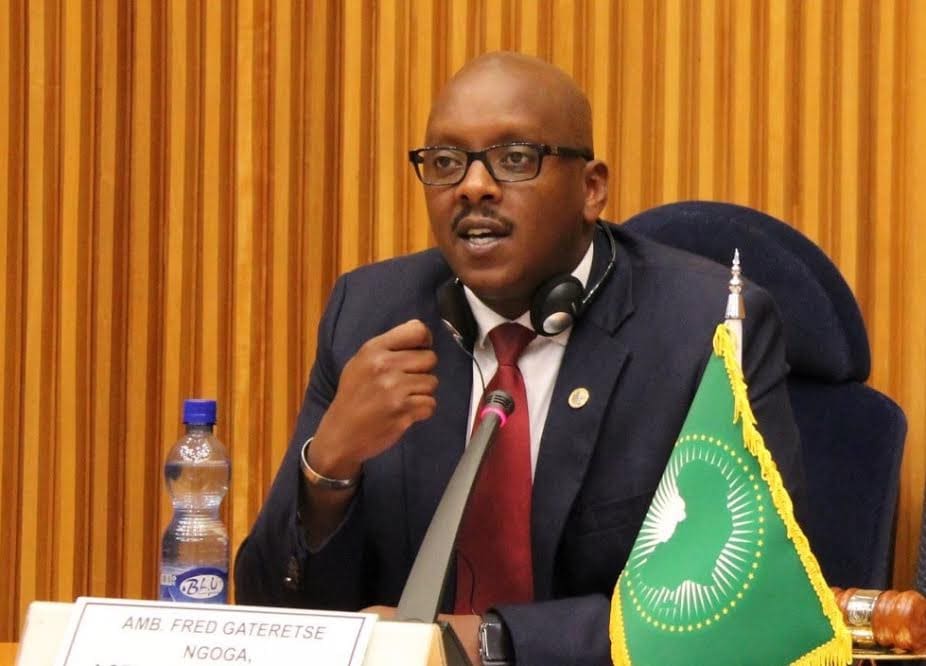

The dramatic departure of a senior Burundian diplomat from the African Union Commission after he questioned Kenya’s treatment of Burundian traders has exposed a deeper crisis facing East African integration; how united can the East African Community be when officials and citizens fear consequences for publicly criticising another member state?
Ambassador Fred Gateretse Ngoga’s exit from the African Union Commission comes at a sensitive moment for the region, following anxiety among Burundian traders in Kenya after the government intensified action against undocumented foreign nationals operating small-scale businesses.
Ngoga, a senior African Union official who had served the continental body for 17 years, publicly questioned why Burundians appeared to be among those most affected by the crackdown. His intervention triggered debate about the treatment of East Africans living and conducting business outside their home countries.
He subsequently announced on X that he was leaving the African Union Commission after 17 years of service, although the post was later deleted.
The circumstances surrounding his departure have since become disputed. The African Union Commission’s position, as reported by Kenyan media, is that Ngoga did not voluntarily resign but was summarily dismissed for gross misconduct. No detailed public explanation has clarified whether his comments about Kenya’s treatment of Burundians were directly connected to the disciplinary action.
The timing has nevertheless raised uncomfortable questions about the freedom available to diplomats and senior regional officials to publicly challenge the policies of fellow African states.
For the EAC, Ngoga’s departure could become more than an individual employment dispute. It has exposed political fragility beneath the language of regional integration.
The EAC was established on the principle that East Africans should increasingly regard the region as a shared economic and social space rather than a collection of tightly separated national markets. Its Common Market, which came into force in 2010, provides for the free movement of goods, persons, labour, services and capital, as well as the rights of establishment and residence.
It is also founded on non-discrimination and equal treatment of citizens from other Partner States.
Yet recent events in Kenya demonstrate the tension between those regional commitments and domestic political pressures.
Kenya’s crackdown on undocumented foreign traders followed concerns among local business operators about competition from foreigners. The government faced backlash after President William Ruto directed action against foreign nationals operating small businesses without the required documentation.
Authorities subsequently announced a 90-day period for affected foreign nationals to regularise their immigration status, work permits, business registrations and licences. The government has insisted that the exercise is intended to ensure compliance with the law and is not designed to encourage xenophobia or harassment.
But confidence among some Burundians had already been shaken.Hundreds reportedly sought assistance and travel documents from their embassy in Nairobi amid fears about their future in Kenya. Some considered leaving despite assurances that undocumented East Africans would be protected during the regularisation period.

The incident has created an important test for the EAC’s labour and migration framework.
Under the EAC Common Market Protocol, citizens of Partner States have the right to move across the region, while workers are entitled to seek employment and accept job offers in other member states without discrimination based on nationality.
Workers are also entitled to equal treatment in employment conditions and access to social security benefits available to workers in the host country.
However, free movement does not mean East Africans are exempt from national immigration and employment laws.
The EAC framework requires workers moving to another Partner State to comply with immigration procedures and relevant national laws. Workers employed for more than 90 days generally require appropriate work authorisation, while short-term employment may require a special pass. Permit systems and administrative procedures also continue to differ among Partner States.
The more complicated issue concerns self-employment and business ownership.
The Common Market Protocol guarantees EAC nationals the right of establishment, allowing them to pursue legitimate economic activities as self-employed persons and establish and manage businesses in other Partner States. Partner States are required to avoid discrimination based on nationality, although businesses remain subject to national laws and regulations.
This distinction is at the centre of the current controversy.
Kenya has the right to enforce immigration, licensing and business regulations. But if enforcement is perceived as selectively affecting citizens of particular EAC countries, the political consequences could extend far beyond Nairobi.
That is why Ngoga’s forced departure—or resignation, depending on which account ultimately proves accurate—has become symbolically important.
If diplomats and regional officials believe they cannot publicly question the treatment of their citizens in another African country without risking professional consequences, regional institutions may lose an important mechanism for addressing tensions before they escalate into diplomatic disputes.
EAC unity cannot depend solely on treaties, summits and declarations. It must also be measured by how member states respond when citizens complain about unequal treatment.
The Ngoga episode therefore presents East Africa with an uncomfortable question: Is regional integration strong enough to accommodate criticism among member states, or is unity increasingly being interpreted as silence?
For millions of East Africans crossing borders in search of jobs, trade and investment opportunities, the answer could determine whether the EAC Common Market remains a practical economic reality—or simply an ambitious promise on paper.



