
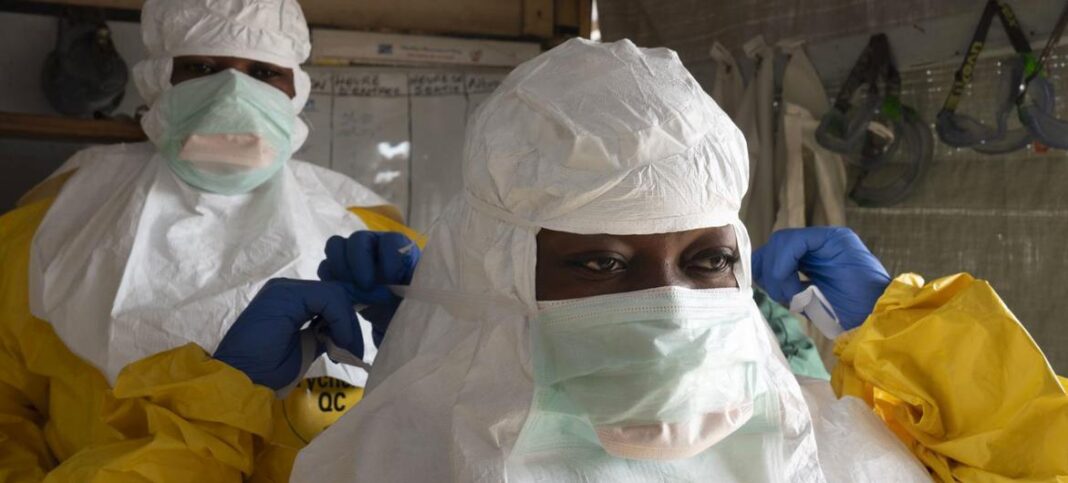

The Ebola outbreak in the Democratic Republic of Congo (DRC) has surpassed 10,000 confirmed cases, raising concerns over cross-border transmission as Kenya and Nigeria report infections linked to the wider regional outbreak.
The DRC had recorded 10,060 confirmed cases and 4,887 deaths by October 25, according to figures published by the US Centers for Disease Control and Prevention (CDC). The outbreak, driven by the Bundibugyo virus, continues to spread across affected communities despite ongoing containment efforts.
The outbreak, which began in May 2026, has spread across eight provinces in the DRC, putting pressure on health facilities and increasing the need for surveillance, contact tracing and coordinated emergency responses across national borders.
The emergence of cases outside the DRC has heightened concern among public health authorities, particularly in countries connected through regional travel and transport networks.
Cross-border spread raises regional concerns
Kenya reported nine confirmed cases linked to an imported infection involving a traveller who arrived in Nairobi after travelling from the DRC through Uganda. By October 26, two deaths had been reported in the Kenyan cluster, according to the European Centre for Disease Prevention and Control (ECDC).
All nine cases were linked to the initial imported infection, with the additional cases involving family members and healthcare workers. Authorities have been tracing contacts and implementing isolation and infection-control measures.
Nigeria also reported an imported case in October involving a patient with a travel history to Uganda. The case prompted investigations and contact tracing as authorities sought to establish the source of infection and prevent further transmission.
Uganda, which reported 20 confirmed cases during the earlier phase of the outbreak, has since been declared Ebola-free, according to the ECDC. However, the movement of infected individuals across borders demonstrates the importance of maintaining surveillance even after outbreaks have been brought under control.
The World Health Organization (WHO) has called for stronger cross-border coordination, screening at points of entry, timely diagnosis and rapid response capacity. It has also advised against imposing restrictions on travel to or trade with affected countries
Death toll highlights gaps in early detection
The scale of the outbreak in the DRC highlights persistent challenges in identifying infections early and ensuring patients receive timely treatment.
WHO reported that, as of October 20, 4,687 deaths had been recorded among 9,704 confirmed cases. More than 2,500 patients had recovered by that reporting date, although the figures continue to change as health authorities update their records.
A significant proportion of deaths has occurred in communities rather than treatment centres, pointing to difficulties in early case detection and access to appropriate medical care.
The outbreak has also compounded an existing humanitarian emergency in eastern Congo, where conflict, displacement and disrupted economic activity have left vulnerable households struggling to obtain food and essential services.
Food insecurity and limited access to healthcare can complicate outbreak response efforts, particularly when communities must balance isolation requirements with the need to secure basic necessities.
The World Food Programme has been supporting humanitarian operations in affected areas through food assistance and logistics. Sustaining these operations remains important to helping families meet their immediate needs while enabling public health teams to implement containment measures.
Vaccine trial offers hope against Bundibugyo strain
Amid the growing outbreak, scientists have launched a clinical trial to assess whether vaccine candidates can protect against the Bundibugyo virus.
The TUMAINI trial was launched in Bunia, in Ituri province, on October 23, with the first participants enrolled. The Phase 2/3 study aims to generate evidence on the safety and effectiveness of vaccine candidates against the strain responsible for the current epidemic.
One candidate being evaluated is Ervebo, a vaccine already licensed for protection against Ebola caused by the Zaire ebolavirus. Its effectiveness against the Bundibugyo virus has not been established, making clinical research necessary before its potential use against this strain can be determined.
The WHO is supporting the trial alongside research partners, providing technical, scientific and operational assistance.
However, the trial is not an immediate solution to the current outbreak. Its findings will be needed to establish whether the vaccine candidates offer meaningful protection against the Bundibugyo virus.
Coordinated response remains critical
With confirmed cases reported in the DRC, Kenya and Nigeria, the outbreak has reinforced the need for African countries to strengthen preparedness beyond national borders.
Health authorities must maintain effective laboratory testing, contact tracing, infection prevention measures and the capacity to isolate suspected cases rapidly. Coordination between neighbouring countries is also essential to track contacts and respond to infections associated with cross-border movement.
The experience of previous Ebola outbreaks has demonstrated the importance of early detection, community engagement and access to treatment in limiting transmission.
While vaccine research offers a potential longer-term tool, containing the current outbreak will depend on sustained public health operations, adequate funding and cooperation between governments and international partners.
As the DRC’s caseload passes 10,000, the challenge for Africa is to prevent further cross-border transmission while supporting affected communities and accelerating scientific research against the Bundibugyo virus.