
Kenya has turned a major concern in its fight against Ebola virus. The Ministry of Health announced on November 11, that every patient who tested positive for the virus has recovered, bringing a tense, month-long public health scare to a close, and kicking off a mandatory 42-day countdown before the country can officially be declared Ebola-free.
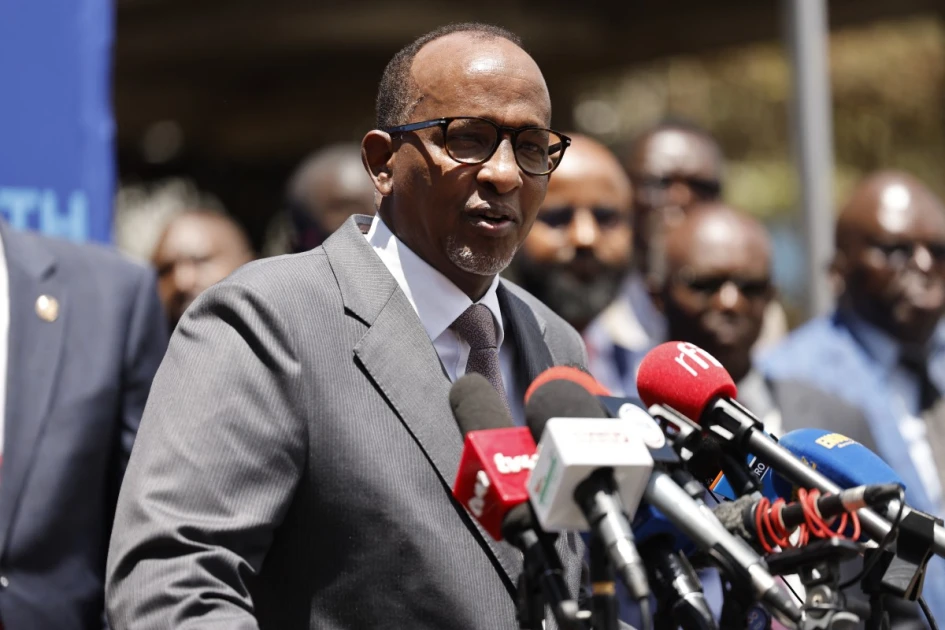
Health Cabinet Secretary Aden Duale shared that all seven surviving patients have been discharged from the hospital and are back home. He also confirmed that everyone who came into contact with the virus has completed the necessary medical checkups and been given a clean bill of health.
Alongside the welcome recovery news, Duale used the briefing to draw a hard line on quarantine policy, firmly ruling out any possibility of turning Kenya into a quarantine holding ground for foreign nations. The declaration deals a direct blow to plans by the United States to quarantine travelers arriving from Ebola-affected countries like the Democratic Republic of Congo (DRC) at a controversial facility at the Laikipia Air Base in Nanyuki.
”Let me make it clear that Kenya will not serve as a quarantine centre for any jurisdiction. Travellers from another country will not be hosted in Kenya to meet another country’s entry requirement,” Duale stated firmly, adding that he could not comment on the specific fate of the Nanyuki site because the matter remains before the courts
Walking the press through the domestic recovery timeline, Duale highlighted just how significant these discharges are for the country. “On November 3rd, 5 patients were discharged. The first Kenyans ever to recover from this disease and on November 6, the 6th patient went home,” he said during his address.
With the seventh and final patient walking out of care on Wednesday, the Cabinet Secretary shared an update. “Today with the discharge of the last patient we can confirm and tell the world that 7 patients have recovered and all contacts have completed their follow-up monitoring,” Duale announced.
The virus was first detected in Kenya on October 3, triggering an immediate, all-hands-on-deck response from the Ministry of Health. Looking back on the past few weeks, health officials expressed pride in how quickly and effectively their teams managed to contain the outbreak before it could spread through local communities. In total, the country recorded nine confirmed infections; while seven people fought off the illness and survived, two patients sadly lost their lives.
A massive part of keeping the outbreak under control came down to thorough, old-fashioned detective work by health workers. According to Duale, teams achieved a 100 percent success rate in contact tracing, tracking down all 135 people who had crossed paths with the initial imported case.
To keep everyone safe, those contacts were placed in quarantine and released in staggered waves once they cleared the standard 21-day monitoring period without showing symptoms. The first group of 20 people went home on October 26, followed by another batch of 46 on November 3, with the rest cleared shortly after.
Even though there are no active cases left in the country, health officials are not letting their guard down. Screening teams will stay stationed at all 26 border points and entry hubs—where more than 760,000 travelers have already been checked—while emergency operations centers and rapid response teams remain on standby across the nation just in case.
Despite the intense behind-the-scenes effort to stamp out the virus, daily life and business in Kenya never ground to a halt. The Ministry reassured the public and international visitors that the country remains completely open, with no restrictions on travel, trade, or public gatherings.