
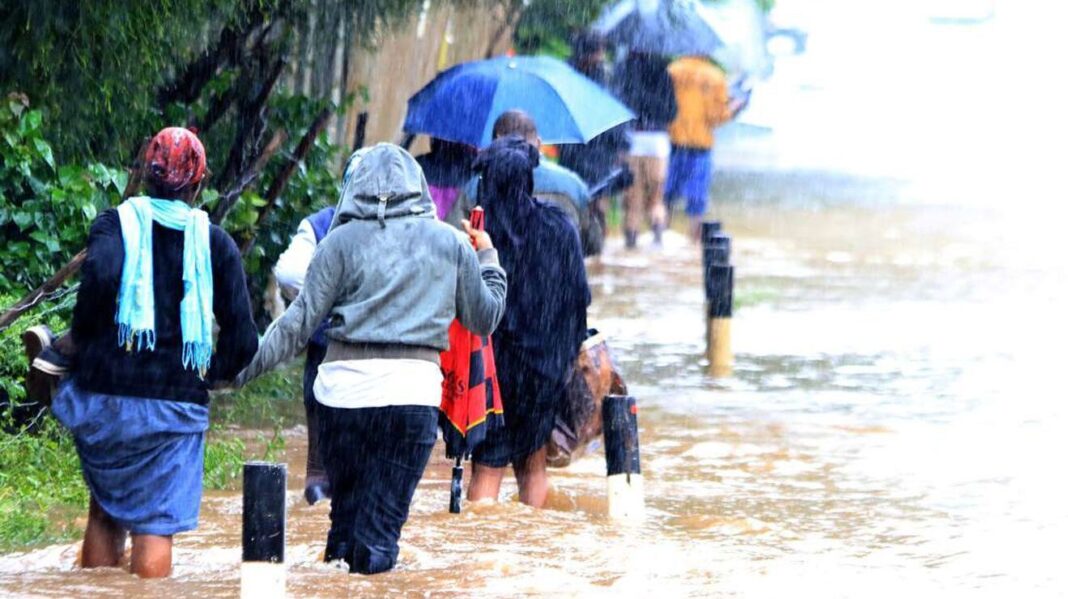

For millions of Kenyans, the word El Niño carries memories that have little to do with weather forecasts and everything to do with flooded homes, impassable roads, swollen rivers and families forced to leave everything behind. Now, as Kenya approaches the final months of 2026, authorities are once again sounding the alarm, but this time they are hoping an early warning will give the country something it has often lacked during extreme weather: time.
Kenya is preparing for what meteorological authorities describe as an increasingly strong El Niño event, with the greatest concern centred on the October-November-December rainfall season. The latest outlook from the Kenya Meteorological Service points to above-normal rainfall across large parts of the country, with the possibility of prolonged rains, intense storms, flash floods and landslides. Reports on the latest forecast indicate that the wetter conditions could begin developing from the final week of September and intensify during October, with some impacts potentially continuing into early 2027.
That warning is arriving at a particularly sensitive moment. Across much of Kenya, people are still dealing with the consequences of unpredictable weather, while farmers are watching the skies for signs of relief after dry conditions in some agricultural areas. The coming rains could therefore be both a blessing and a threat, potentially restoring water supplies and supporting crops, but becoming destructive if rainfall arrives too heavily or too quickly.
Meteorologists are particularly concerned about areas where rivers, drainage systems and infrastructure are already under pressure. A national risk assessment has identified 18 counties as being at heightened risk from the anticipated El Niño, with flooding, landslides, disease outbreaks, infrastructure damage and displacement among the major concerns. Nairobi, Mombasa and Kisumu are also considered vulnerable urban centres because of drainage challenges, rapid development and the concentration of people and infrastructure in flood-prone areas.
The warning is not, however, that Kenya is about to be swallowed by rain overnight. In fact, the immediate weather picture is considerably more complicated. The latest short-term forecast shows most parts of the country remaining generally dry, while light rainfall is expected in selected areas. Counties mentioned in the current forecast include parts of the central region, eastern Kenya and the Coast, including Nyeri, Embu, Kirinyaga, Murang’a, Kiambu, Nyandarua, Tharaka-Nithi, Meru, Kitui, Machakos, Mombasa, Kwale, Kilifi and Taita Taveta.
That distinction matters. The El Niño warning is primarily about the months ahead, rather than a claim that every Kenyan county is experiencing dangerous rainfall today. It is a warning to prepare before the weather changes.
And the government says preparations are already underway. The national government has activated an El Niño preparedness and response structure, with an ad hoc Cabinet committee tasked with coordinating preparations across ministries, agencies and counties. Officials have repeatedly stressed that the goal is to act before communities are cut off, homes are flooded or emergency services become overwhelmed.
At the county level, preparations are becoming increasingly visible. Mombasa, for example, has begun strengthening its disaster preparedness as authorities anticipate enhanced rainfall during the October-to-December season. The coastal region is among those expected to experience above-average rainfall, while high temperatures could add another layer of difficulty.
Nairobi is also preparing for a potentially difficult season. Governor Johnson Sakaja has urged residents living in flood-prone areas to consider moving to safer locations before the heavy rains begin rather than waiting until flooding makes evacuation dangerous. That message reflects a growing recognition among authorities that early evacuation can save lives when drainage systems and roads are overwhelmed.
For ordinary families, however, the biggest question is simple: what does the warning actually mean? It means households in flood-prone areas should not wait for water to enter their homes before deciding what to do. Important documents, medicines, phones, chargers and other essential belongings should be kept where they can be moved quickly. Families should know where they would go if evacuation becomes necessary and should pay close attention to official weather alerts.
Farmers face a different calculation. Heavy rainfall can replenish soil moisture and improve agricultural prospects, but excessive rain can destroy crops, wash away fertile soil and damage roads used to transport produce. In counties vulnerable to landslides and river flooding, farmers and communities will need to watch local warnings closely rather than assuming that more rain automatically means better harvests.
There is also a less visible danger: disease. The Ministry of Health has stepped up preparations for the expected El Niño season, warning that flooding and displacement can create conditions favourable for disease outbreaks and other public-health emergencies. The ministry is coordinating with counties, emergency agencies, humanitarian organisations and development partners under a health-sector contingency plan designed to strengthen early detection and response.
For Kenya, then, the real test will not be whether meteorologists successfully predicted the rain. The forecast is already giving the country something precious: advance notice. The real test will be what happens after the first heavy clouds gather.
Will drainage channels be clear? Will families living beside rivers receive warnings early enough? Will evacuation centres be ready? Will roads and bridges be monitored? Will hospitals have the supplies they need? And perhaps most importantly, will people take the warnings seriously before the water begins rising?
Those questions matter because extreme rainfall does not wait for government meetings, budgets or emergency declarations. When a river breaks its banks at night, preparation is measured in minutes.
Kenya now has several weeks to turn forecasts into action. The country has been here before, and the memories of previous floods remain fresh for many communities. This time, the warning has come early. The rain may eventually become the headline. But for now, the bigger story is whether Kenya can make preparation the headline first.



