


Nigeria has confirmed an imported case of Ebola Bundibugyo virus disease in Abuja, raising concerns over cross-border transmission as health authorities across Africa intensify surveillance and preparedness measures.
The Federal Ministry of Health and Social Welfare said the patient is a woman who recently travelled from Uganda to Nigeria. Her symptoms began on October 7, four days after arriving in the country, and she sought treatment at a private health facility in Abuja on October 11.

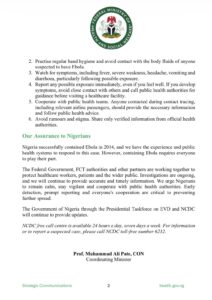
Laboratory tests confirmed the infection on October 20, prompting authorities to strengthen contact tracing, isolation and infection prevention measures to limit the risk of further transmission.
The woman is currently in isolation and receiving medical care. Investigations are underway to establish the likely source of infection and reconstruct her travel and exposure history.
According to the ministry, health officials have identified 44 contacts who are being monitored for possible symptoms. Authorities are also reinforcing infection prevention and control measures at the private health facility where the patient initially sought treatment.
Nigeria’s confirmation makes it the fifth country to detect the virus since an outbreak was declared in the Democratic Republic of the Congo (DRC) on May 15, 2026.
The development underscores the challenges facing African health authorities in containing infectious diseases that can cross international borders through human movement, particularly when cases are detected after symptoms develop.
Nigeria activates emergency response
The Nigeria Centre for Disease Control and Prevention has activated its incident management system to coordinate the response, including case investigation, contact tracing and surveillance.
Early identification of suspected cases, rapid laboratory testing and timely monitoring of exposed individuals remain central to preventing onward transmission. Health officials are also prioritising infection prevention measures to protect healthcare workers and patients.
The World Health Organization (WHO), working with national authorities and partners, is supporting response operations through technical assistance, case investigations, contact tracing and infection prevention and control.
Support also includes the provision of essential supplies, including personal protective equipment for healthcare workers.
WHO has urged countries across the region to maintain heightened readiness as the outbreak in the DRC continues to evolve. It has called for stronger disease surveillance, rapid investigation of alerts and adequate laboratory capacity to safely test suspected cases.
Governments have also been advised to keep emergency response and clinical teams ready for immediate deployment, reinforce infection prevention measures in public and private health facilities, and pre-position essential medical supplies.
Community engagement is another critical component of the response, particularly in encouraging people to seek medical attention promptly and cooperate with health authorities during contact tracing.
Regional surveillance under pressure
Nigeria’s imported case highlights the importance of coordinated regional surveillance as African countries seek to prevent isolated infections from developing into wider outbreaks.
Kenya has also reported nine cases linked to an imported infection in recent weeks, according to the information provided by health authorities. The developments underline the need for countries to maintain effective systems for detecting and responding to cases regardless of where infections originate.
WHO has called on governments to strengthen monitoring at airports and other points of entry, investigate alerts rapidly and maintain response plans that can be activated when suspected infections are identified.
The agency has stressed that sustained preparedness is essential to detect cases early, prevent further transmission and protect health workers and communities.
Although border surveillance can help identify travellers who may require assessment, it must be supported by functioning laboratories, trained medical personnel, reliable reporting systems and effective contact tracing.
WHO advises against travel restrictions
Despite the confirmation in Nigeria, WHO has advised countries against imposing travel or trade restrictions on affected countries in response to the outbreak.
The organisation continues to monitor developments and verify travel and trade measures introduced by governments. Its assessment of the public health risk is also being updated as new information becomes available.
For Nigeria, the immediate priority is to establish the extent of potential exposure, monitor identified contacts and prevent additional infections. The effectiveness of these measures will depend on how quickly health teams can identify people at risk and interrupt possible chains of transmission.
The latest case also reinforces the need for African countries to maintain cross-border information sharing and coordinated emergency responses as public health authorities continue to confront the evolving Ebola outbreak.



