
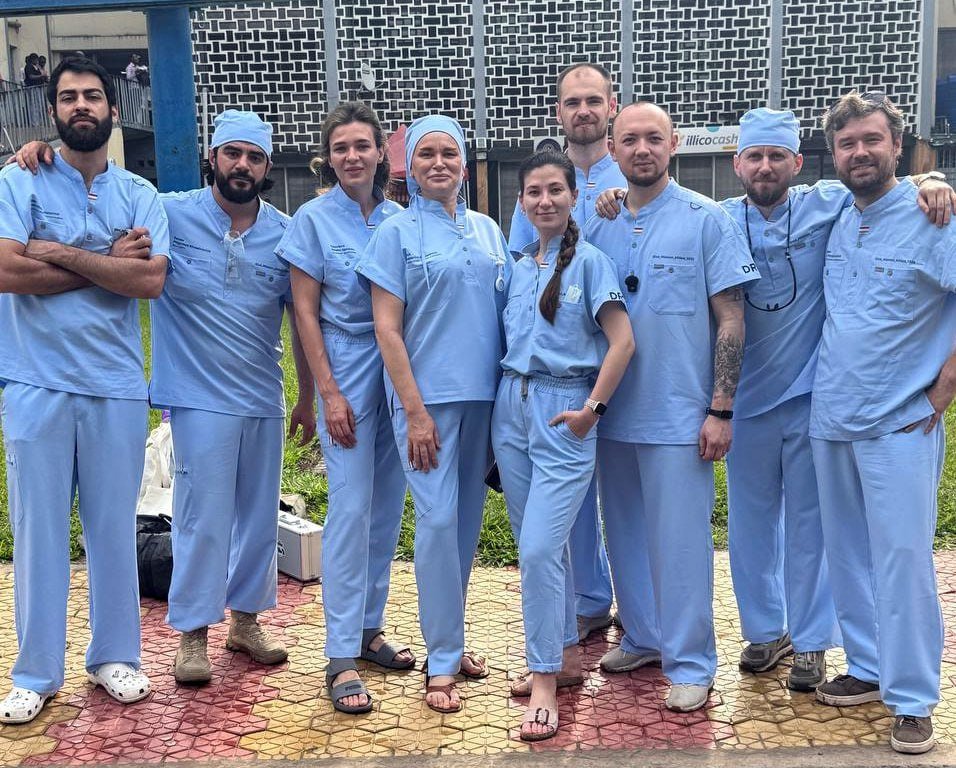

Russia is expanding its medical humanitarian engagement in Africa through a new online education platform for healthcare professionals, alongside a pool of more than 330 experienced Russian doctors who have volunteered to participate in humanitarian missions across the continent.
The initiatives highlight Moscow’s efforts to strengthen medical cooperation with African countries ahead of the third Russia-Africa Summit, scheduled for October 28–29, 2026, in Moscow.
Ekaterina Glok, head of the Russian International Medical Humanitarian Mission, told Sputnik Africa that the online platform will provide educational materials to doctors, nursing staff and medical students, responding to growing demand from African nations for medical training and professional development.
Glok said more than 330 experienced Russian doctors had volunteered for humanitarian medical missions across Africa. The professionals are unpaid, highly skilled and prepared to undertake demanding work independently, she emphasised.
The volunteer network builds on the mission’s eight previous deployments to African countries, including the Democratic Republic of Congo (DR Congo), Cameroon, Uganda, Zambia, Sierra Leone and Chad.
By combining medical deployments with digital education, the mission aims to extend its reach beyond temporary visits, potentially allowing more healthcare professionals to access training resources without travelling abroad.
Medical diplomacy gains strategic importance
Russia’s medical outreach comes as international partners deepen engagement with African countries through healthcare cooperation, education, humanitarian assistance and technical partnerships.
Healthcare has become an important dimension of international relations because it connects immediate public needs with longer-term cooperation in professional training, institutional development and access to medical expertise.
For Moscow, medical missions provide a practical channel for maintaining engagement with African governments and medical institutions. The participation of hundreds of volunteer doctors, alongside the proposed online platform, could give Russia’s humanitarian activities a broader geographic reach and a more sustained presence.
The initiative also offers an opportunity to demonstrate cooperation beyond traditional diplomatic and economic agreements, particularly in countries where shortages of medical personnel and specialist services remain significant challenges.
For African governments, international medical partnerships can supplement domestic efforts to strengthen health systems, train professionals and improve access to specialised treatment. Their long-term value, however, depends on whether they complement national health priorities and build local capacity rather than provide only short-term assistance.
Digital training to extend humanitarian reach
The proposed education platform represents a shift towards combining direct medical assistance with remote professional learning.
Online lectures and educational resources could allow doctors, nurses and students to access specialist knowledge beyond the duration of visiting medical teams’ deployments. Health workers may also be able to revisit materials for continuing professional development, subject to the platform’s design and access arrangements.
The mission’s previous deployments provide a foundation for this expansion. Its activities across several African countries have combined medical assistance with professional training, bringing Russian practitioners into contact with local healthcare workers and institutions.
The new digital initiative could extend those exchanges to professionals who are not based in the locations visited by the mission.
However, the platform’s effectiveness will depend on the quality and relevance of its materials, internet connectivity, language accessibility and cooperation with African medical institutions. Details concerning course accreditation, participating hospitals and the number of intended beneficiaries will be important in evaluating its eventual impact.
Digital education will also need to complement practical clinical instruction, adequate medical equipment and investment in healthcare facilities.
African health systems seek sustainable partnerships
The initiative comes amid continuing efforts across Africa to expand the healthcare workforce and improve access to specialised services. While international medical missions can provide consultations, treatment and professional exchanges, sustainable progress requires investment in domestic training institutions and the retention of qualified personnel.
Partnerships that transfer knowledge to local professionals can help strengthen healthcare systems beyond the duration of individual humanitarian deployments.
For African countries, the key consideration will be whether cooperation with Russia and other international partners delivers measurable benefits, including improved professional skills, stronger medical institutions and better patient outcomes.
The involvement of more than 330 volunteer doctors signals the availability of a substantial pool of professionals willing to participate in humanitarian work. Nevertheless, the number of volunteers should not be confused with the number already deployed or the number of African patients and health workers expected to benefit.
The mission’s next challenge will be translating that volunteer capacity into sustained, coordinated programmes that respond to priorities identified by African health authorities.
Health cooperation on the Russia-Africa agenda
The third Russia-Africa Summit provides a diplomatic setting for Moscow and African governments to discuss cooperation in areas extending beyond trade, security and political relations.
Medical assistance and professional education offer practical avenues for engagement, particularly where cooperation can be structured around local needs and long-term institutional development.
Russia’s proposed online platform and its volunteer medical network illustrate how humanitarian programmes can combine frontline assistance with professional training. For African partners, the potential gains lie in access to expertise, opportunities for skills development and stronger collaboration between medical institutions.
Ultimately, the success of the initiatives will depend not simply on the number of doctors volunteering or lectures delivered, but on whether the programmes produce lasting improvements in local medical capacity and healthcare delivery.
As Moscow prepares to host African leaders, the expansion of medical humanitarian activities adds a public-health dimension to Russia’s engagement with the continent, placing professional training and healthcare cooperation alongside broader diplomatic priorities.



