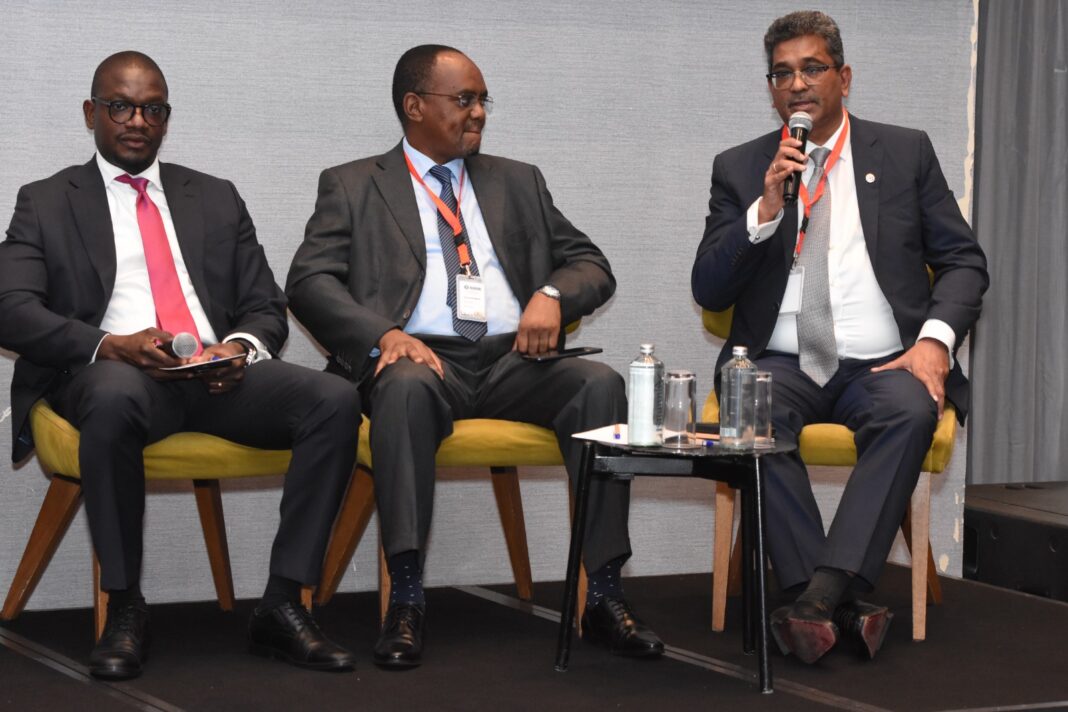

Investors are eyeing opportunities across the continent, but bureaucratic delays, fragmented regulations and costly financing are slowing projects that could create jobs and grow businesses.
For an investor looking to establish a factory, expand a business or build infrastructure in Africa, securing capital may be only the beginning. Navigating government approvals, regulations and multiple agencies can turn an investment opportunity into a lengthy process, delaying projects, jobs and economic growth.
Despite growing interest from international and regional investors, Africa continues to struggle to translate investment commitments into operational businesses, with bureaucratic hurdles and fragmented regulatory systems slowing the movement of capital across borders.
The challenge is increasingly shifting from attracting investors to getting their money into the economy, where it can finance businesses, create employment and support communities.
Sandy O. Okoth, director of the Investment Deal Room at Invest Kenya, said the biggest obstacle facing investors was not necessarily the availability of capital but government coordination and the business environment.
Invest Kenya’s deal room is tracking an investment pipeline estimated at $20 billion across different sectors, with investors requiring government facilitation to move projects towards financial close and operations.
Okoth said the authority had established mechanisms to escalate investor concerns to senior government officials and relevant ministries to accelerate decisions that could otherwise delay investments.
The initiative is intended to give investors a central point through which they can resolve government-related challenges, reducing the time spent navigating different agencies before projects can take off.
The authority is targeting 25 deals to reach significant milestones by the end of the year, having already recorded 23, according to Okoth.
The investments span sectors including manufacturing, agriculture, energy, real estate and financial services, with investors coming from the Middle East, China, Europe, the United States and Canada.
Kenya is positioning itself as a gateway to the East African Community and wider African markets, hoping to attract companies seeking to establish regional operations.
But the ability to attract investment will depend on whether businesses can move beyond initial interest and establish operations without unnecessary delays.
Jean Kambuni, deputy director of capital markets at the Nairobi International Financial Centre, said partnerships with other international financial centres could help businesses access markets across different jurisdictions.
NIFC has established partnerships with financial centres including Qatar and Casablanca, with discussions focusing on cooperation and frameworks that could allow businesses to operate across markets through regulatory passporting arrangements.
The proposed framework would initially target non-regulated activities, while financial regulators work towards harmonising compliance requirements and regulatory standards.
For businesses seeking to expand across multiple African markets, differences in regulations and compliance requirements can increase the cost and complexity of doing business.
Regional investment, however, is already showing signs of growth.
Kenneth Miriti, chairman of the ICC Kenya Banking Commission, cited the Kenya Pipeline Company initial public offering, which was reportedly 105 per cent oversubscribed, with participation from investors across East Africa.
He also cited a $20 million green bond issued for water infrastructure in Tanga, Tanzania, which attracted subscriptions of 103 per cent of the amount offered, with domestic and institutional investors providing the bulk of the financing.
The examples demonstrate that African investors are willing to finance opportunities beyond their domestic markets, but expanding such investments will require more efficient financial systems and stronger regional integration.
Joseph Alain Saraka, vice-president of Africa Finance Corporation, said development finance institutions were working with governments to establish partnerships and structure projects to make them commercially viable and attractive to investors.
He said cross-border infrastructure investments, including roads and electricity transmission networks, could help connect markets and facilitate investment across African economies.
For businesses, infrastructure connectivity is critical to accessing customers, transporting goods and expanding operations beyond domestic markets.
Chris Diaz, executive chairman of Adili Group, noted that , investment partnerships should focus on manufacturing, value addition and entrepreneurship to ensure capital generates employment and economic growth.
Adding that , African industries needed competitive financing conditions, including affordable interest rates and longer repayment periods, to build businesses capable of competing regionally.
The challenge comes as African countries seek to deepen trade and investment under the African Continental Free Trade Area, which is expected to expand opportunities by reducing barriers between markets.
However, business leaders said regional integration would require more than agreements. Governments must improve investment facilitation, financial connectivity and the ease of doing business if investors are to turn opportunities into operational projects.
Ultimately, the measure of Africa’s investment drive will not be the amount of capital pledged, but how much reaches businesses, creates jobs, expands industries and improves livelihoods across the continent.