
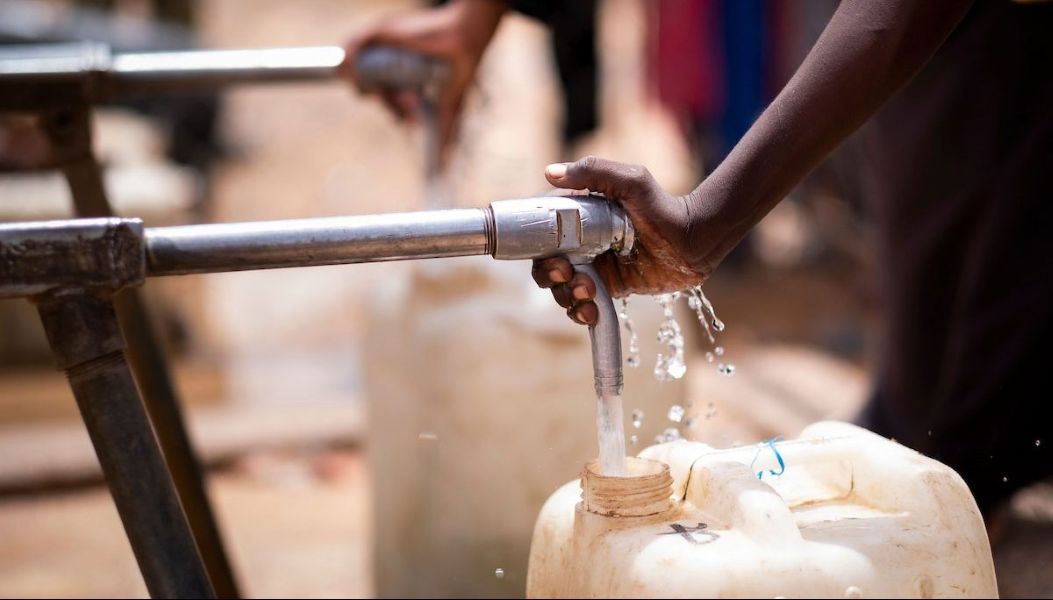

The East African Community (EAC) has urged Partner States to prioritise collecting and using water and sanitation statistics to guide investment and improve access to essential services across the region.
According to the EAC Facts and Figures 2026 report, 70 per cent of households across the Community could access safe drinking water within a 30-minute collection journey in 2025, up from 69 per cent in 2022.
The regional bloc says reliable data is critical in identifying underserved communities, directing infrastructure investment and improving the delivery of water and sanitation services, particularly in rural areas.
In a goodwill message marking the 2026 African Statistics Day on November 18, the EAC Secretariat called on Partner States to strengthen national statistical systems and ensure that water and sanitation data informs development planning.
This year’s continental theme, “Institutionalising Water and Sanitation Statistics for Sustainable and Climate-Resilient Development in Africa,” highlights the importance of accurate and consistent information in addressing service delivery challenges and building resilience to climate change.
The EAC report shows that access to safe drinking water within a 30-minute collection journey among rural households improved from 62 per cent in 2022 to 67 per cent in 2025. In South Sudan, the proportion increased from 34 per cent to 44 per cent over the same period.
However, significant disparities remain between urban and rural communities. In 2025, 87 per cent of urban households across the EAC could collect safe drinking water within 30 minutes, compared with 67 per cent of rural households.
The gap was more pronounced in the Democratic Republic of the Congo, where 90 per cent of urban households had access within the stipulated time, against 43 per cent of rural households.
The figures highlight the uneven distribution of water infrastructure and the need for targeted investment in rural communities, where households often travel longer distances to access drinking water.
The Secretariat, however, noted that collection time alone does not establish whether a household has access to safely managed drinking water. Such services must come from an improved source located on the household’s premises, be available when needed and meet safety standards for faecal and priority chemical contamination.
Progress has also been recorded in sanitation services. The EAC Health Statistics Report 2025 shows that the proportion of the population using safely managed sanitation services increased between 2020 and 2025.
Rwanda recorded an increase from 48 per cent to 67.7 per cent, while Tanzania’s share rose from 26.9 per cent to 39 per cent. Uganda also registered progress, with coverage increasing from 19 per cent to 32 per cent.
Safely managed sanitation requires access to an improved toilet for household use, with human waste safely disposed of on site or transported for treatment.
The EAC Secretariat said stronger coordination between national statistical offices and institutions responsible for water and sanitation would be necessary to sustain progress.
It called for clearer institutional responsibilities and adequate resources to improve data collection, analysis and dissemination.
Combining household survey findings with records from water utilities and water-quality testing could help governments identify whether communities need new water infrastructure, repairs to existing systems or interventions to address contamination.
The Secretariat also emphasised the regional importance of reliable water statistics, given the shared rivers, lakes and ecosystems that connect EAC Partner States.
“ For the East African Community, the theme holds particular significance given our shared water resources and the interconnected nature of our economies and ecosystems,” the Secretariat said.
It noted that declining water levels in shared rivers and lakes could disrupt supplies across national borders, while flooding upstream could compromise water quality in downstream communities.
Improved regional data-sharing on water levels, quality and service delivery would enable neighbouring countries to identify emerging risks and coordinate responses to water-related challenges.
The Secretariat commended institutions, researchers and data users contributing to the development of official statistics across the region, reaffirming its commitment to working with Partner States and development partners to strengthen statistical capacity and harmonise data collection methods.
The initiative is expected to support progress towards EAC Vision 2050, the African Union’s Agenda 2063 and Sustainable Development Goal 6, which seeks to ensure universal access to clean water and sanitation.



