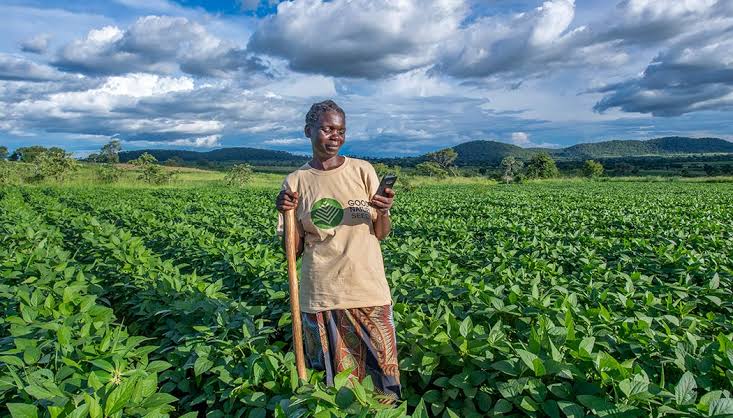

The Zambian Government has received digital agriculture technologies and climate-smart farming solutions developed under a seven-year European Union-funded project aimed at improving productivity and resilience among smallholder farmers.
The tools and knowledge products were developed through the Sustainable Intensification of Smallholder Farming Systems (SIFAZ) project, implemented by the Ministry of Agriculture, the Food and Agriculture Organization of the United Nations (FAO) and the International Maize and Wheat Improvement Center (CIMMYT), with European Union funding.
During the official handover, FAO transferred the Mulimi360 e-Extension Platform, Sustainable Intensification Practices (SIPs), extension manuals, training materials and policy recommendations to the government.
The technologies are expected to strengthen agricultural extension services, improve access to reliable farming information and support evidence-based policymaking across Zambia’s agricultural sector.
More than 62,000 smallholder farmers benefited from the project through improved farming technologies, agronomic knowledge and advisory services. Women accounted for nearly 60 per cent of the beneficiaries, highlighting the project’s contribution to inclusive agricultural development.
The project also recorded improvements in farm productivity. Participating farmers achieved average maize yields of 3.7 tonnes per hectare, compared with the national average of approximately 2.3 tonnes per hectare.
A key component of the initiative was the promotion of sustainable intensification practices, which encourage farmers to improve soil health, use agricultural inputs more efficiently and increase production while protecting natural resources.
The Mulimi360 e-Extension Platform is another major outcome. The digital system provides a framework for the Ministry of Agriculture to deliver agricultural advisory services, climate information, market intelligence and agribusiness support to farmers.
Speaking during the handover, FAO representative in Zambia Suze Percy Filippini said the project had expanded farmers’ access to improved technologies and knowledge, helping strengthen productivity and resilience at farm level.
She said sustainable intensification could help narrow Zambia’s agricultural yield gap, improve food security and build a more climate-resilient farming sector.
Paolo Sergio, Head of Partnerships at the European Union Delegation to Zambia and COMESA, said the handover would ensure that the project’s systems, technologies and knowledge remain available to national institutions beyond its implementation period.
Agriculture Minister Moses F. Moyo said digital technologies were becoming increasingly important in modernising agricultural extension services and improving farmers’ access to timely information.
He said Mulimi360 integrates digital advisory services, agricultural data and agribusiness support tools, providing a foundation for a more efficient and data-driven extension system.
The European Union invested more than ZMW724 million in the SIFAZ project, supporting agricultural innovation, extension services and climate-resilient farming.
The handover is expected to strengthen Zambia’s efforts to modernise agriculture, improve smallholder incomes and build a more productive and sustainable food system.