

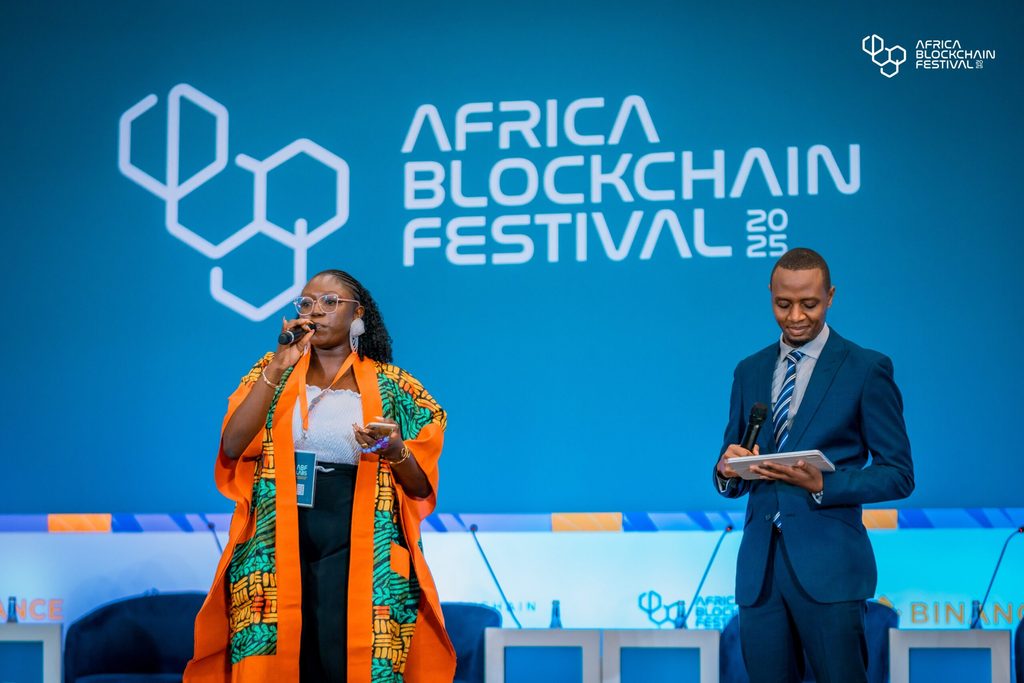
Kenya will host the Africa Blockchain Festival (ABF) 2026 in Nairobi in October, bringing together technology entrepreneurs, investors, policymakers, regulators, and developers as blockchain and cryptocurrency use across Africa expands beyond trading into payments, finance, and digital infrastructure.
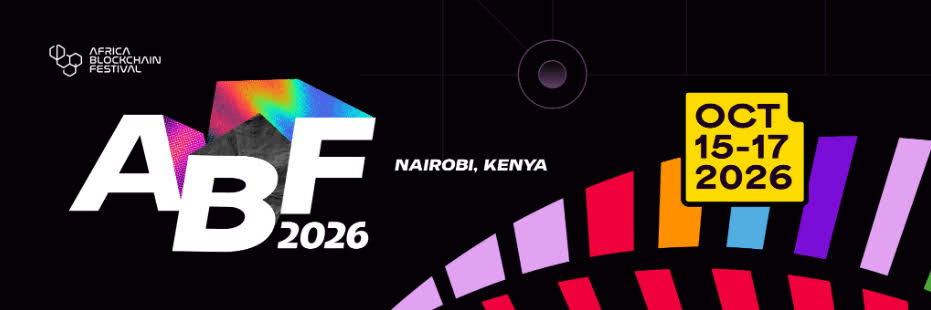
The three-day festival is scheduled for October 15–17 at the Sarit Expo Centre. It will coincide with the World Token Summit, with discussions expected to focus on blockchain infrastructure, tokenisation, stablecoins, artificial intelligence, digital finance, cybersecurity, and decentralized applications.
The Nairobi event comes as cryptocurrency activity across Africa continues to grow, driven increasingly by demand for cross-border payments, dollar-linked savings, financial inclusion and alternatives to conventional financial systems.
Recent data from blockchain analytics firm Chainalysis shows that Sub-Saharan Africa received more than $205 billion in on-chain cryptocurrency value between July 2024 and June 2025, representing growth of about 52 per cent from the previous year.
The region was the world’s third-fastest-growing cryptocurrency market during the period, behind Asia-Pacific and Latin America, highlighting the increasing role of African consumers and businesses in the global digital-asset economy.
Nigeria remains the region’s largest cryptocurrency market, receiving more than $92.1 billion in on-chain value during the 12 months. Ethiopia, Kenya and Ghana, alongside South Africa, were among the region’s leading markets.
Nigeria also ranked sixth globally in Chainalysis’ 2025 Global Crypto Adoption Index, while Ethiopia placed 12th. The rankings point to a broader shift in cryptocurrency adoption towards emerging markets, where digital assets are increasingly being used for remittances, payments, savings and business transactions.
The expansion is also attracting investment into Africa’s blockchain ecosystem. According to the 2025 African Blockchain Report by CV VC and Absa Group, African blockchain startups raised $90.1 million across 28 deals in 2025, accounting for 5.3 per cent of venture funding on the continent.
Although the amount remains modest compared with other technology sectors, the investment indicates growing interest in blockchain applications beyond speculative cryptocurrency trading.
Stablecoins have emerged as one of the most significant areas of adoption. Digital tokens designed to maintain a stable value against currencies such as the US dollar are increasingly being used for cross-border payments, trade settlement and access to dollar-denominated value.
Chainalysis has identified regular multi-million-dollar stablecoin transactions supporting trade flows between Africa, the Middle East and Asia. Their growing use reflects challenges faced by businesses and individuals dealing with volatile local currencies, expensive international transfers and limited access to foreign exchange.
The Nairobi festival is expected to examine how these developments could affect Africa’s financial systems and digital economy, including the use of blockchain for payments, tokenised assets and decentralised financial services.
Olubunmi Fabanwo, co-founder and chief executive officer of Africa Blockchain Festival, said the discussion should extend beyond cryptocurrency to the wider applications of blockchain technology.
“Blockchain gives Africa an opportunity to build the digital foundations that future generations deserve,” Fabanwo said, pointing to potential applications in financial inclusion, public services and trade.
The convergence with the World Token Summit is expected to bring greater attention to tokenisation and the broader digital-asset market, particularly as governments and financial institutions assess how blockchain-based systems can be integrated into existing economic structures.
Ahmed Refaie, founder of the World Token Summit, said the events would provide an opportunity for governments, investors and technology companies to discuss Africa’s digital economy and the role of blockchain in future economic activity.
Kenya’s position as host comes as Nairobi strengthens its role as a regional technology and fintech centre. The country has one of Africa’s most established mobile-money ecosystems and has attracted technology companies, financial-technology startups and international investors.
However, the growth of digital assets is also creating regulatory challenges for governments across the continent. Authorities are increasingly focusing on consumer protection, anti-money-laundering requirements, taxation, stablecoins and the licensing and supervision of virtual-asset service providers.
South Africa has emerged as one of the continent’s more advanced regulatory markets, while Nigeria has been developing a more structured framework for cryptocurrency businesses. Other African countries are also examining regulatory approaches as adoption increases.
The regulatory debate centres on how governments can allow technological innovation while reducing risks associated with fraud, money laundering, market volatility, consumer losses and the use of digital assets outside established financial controls.
The Nairobi meeting is therefore likely to provide a forum for policymakers and industry players to examine whether existing regulatory frameworks are keeping pace with technological developments.
The festival will also feature policy discussions, investor meetings, startup presentations, technical sessions and exhibitions, according to organisers.
With cryptocurrency adoption accelerating and blockchain investment continuing to develop, the October gathering comes at a critical point for Africa’s digital economy.
The central question is increasingly moving beyond whether Africans will adopt blockchain and cryptocurrency. It is whether African countries can develop the companies, regulatory systems, payment networks and digital infrastructure needed to participate more substantially in the global digital-asset economy.
For Kenya and other African economies, the growth of blockchain presents both an opportunity to expand digital financial services and a challenge to build regulatory systems capable of managing a rapidly evolving industry.