

Small and medium-sized enterprises (SMEs) are central to Africa’s economies, but limited access to finance, markets, digital tools and reliable logistics continues to prevent many from fully benefiting from international trade.
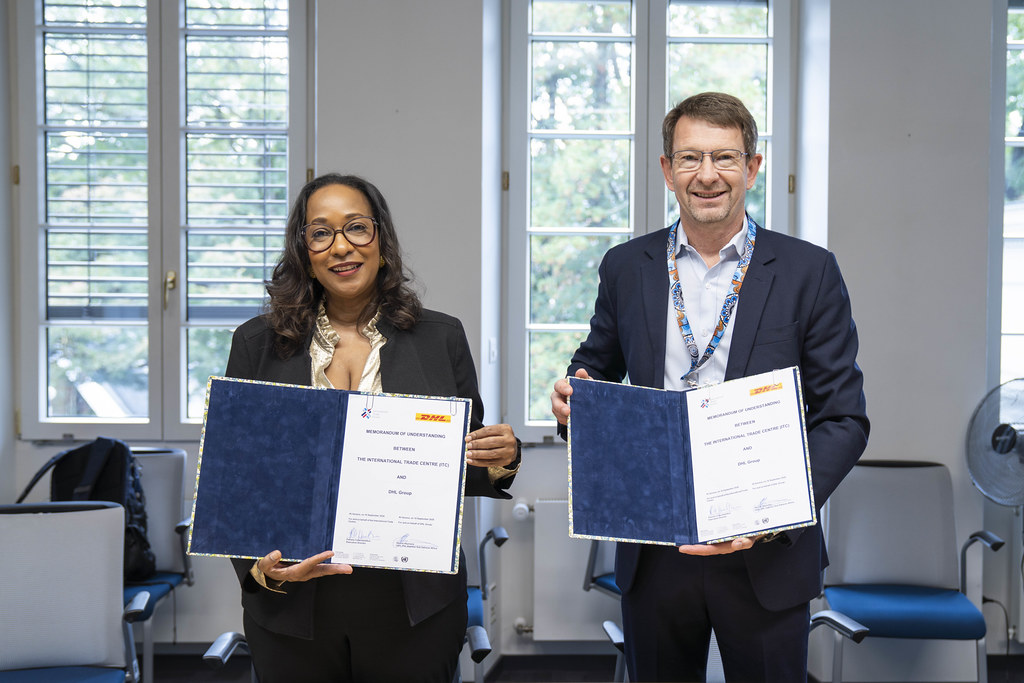
Against this backdrop, the International Trade Centre (ITC) and DHL have renewed their partnership to help SMEs, particularly women-led businesses, overcome barriers to cross-border trade and connect with new markets.
The two organisations signed a memorandum of understanding to deepen their long-standing collaboration, combining ITC’s expertise in market intelligence, SME development and inclusive trade with DHL’s global logistics network and technical capabilities.
The partnership comes as businesses worldwide continue to face challenges in moving goods across borders, navigating complex trade procedures and building the capacity required to compete in international markets.
SMEs account for about 90% of businesses globally and provide roughly 70% of employment, while contributing around 70% of global GDP. Despite their economic importance, many smaller firms remain less integrated into international trade than larger companies, with businesses in developing economies facing additional constraints.
In Africa, these challenges can be particularly significant for smaller businesses seeking to move beyond domestic markets. High logistics costs, limited access to trade information and finance, inadequate digital capabilities and difficulties navigating customs and regulatory requirements can raise the cost of exporting and limit market access.
The ITC-DHL partnership will seek to address some of these constraints by supporting SMEs with cross-border trade, including exports, supply-chain management and logistics.
The organisations will also work with business support organisations and ITC SheTrades Hubs to strengthen services available to small businesses and women entrepreneurs.
Another component will focus on advocacy, with the two partners seeking to amplify the concerns of SMEs and women-led businesses in global trade discussions and among governments, private-sector organisations and other decision-makers.
The collaboration builds on more than a decade of joint initiatives, including DHL GoTrade, ITC SheTrades and the ITC ecomConnect programme.
According to the organisations, these programmes have reached small businesses in more than 60 countries across Africa, ASEAN, Latin America and the Caribbean.
The initiatives have combined business training with practical assistance, including shipping support for SMEs and women-led businesses, while also creating opportunities for entrepreneurs to participate in discussions on international trade.
The partnership has also had an African focus. In July 2025, DHL participated as a private-sector champion at the inaugural ITC Global SME Ministerial Meeting in Johannesburg, South Africa, which brought together stakeholders to discuss ways of strengthening the environment in which SMEs operate.
ITC Executive Director Pamela Coke-Hamilton said the challenge for many small businesses was not necessarily producing goods that could compete in the market, but getting those products to customers.
She said the deeper collaboration with DHL would help more SMEs, particularly women-led businesses, overcome last-mile logistics challenges, reach new markets and have their concerns represented in trade policymaking.
Hennie Heymans, CEO of DHL Express Sub-Saharan Africa, said SMEs remained the backbone of economies worldwide but continued to have a disproportionately low participation in international trade.
He identified access to knowledge, finance, digital capabilities and logistics support as some of the factors that can prevent smaller companies from expanding internationally.
For African SMEs, improving these areas could be important as the continent seeks to expand intra-African trade and increase the participation of smaller businesses in global value chains.
The African Continental Free Trade Area (AfCFTA) has created a framework for businesses to access a much larger continental market, but the ability of SMEs to take advantage of that opportunity depends partly on whether practical barriers to cross-border commerce can be reduced.
The renewed ITC-DHL partnership therefore places logistics and business support alongside market intelligence and trade capacity as key components of helping smaller companies move from local markets into regional and international trade.
For millions of African entrepreneurs, the challenge is increasingly not simply producing goods and services, but having the financing, information, digital tools and infrastructure needed to get them to customers efficiently across borders.



