
The global transition away from fossil fuels is gaining momentum, but for developing countries, the challenge is no longer simply finding cleaner sources of energy. It is building the infrastructure and securing the financing needed to make renewable electricity accessible, reliable and affordable.
This challenge took centre stage at COP31 in Antalya, Türkiye, where countries explored pathways towards cleaner energy systems while confronting the financial and infrastructure barriers threatening to slow the transition.
A major concern emerging from the discussions is the growing mismatch between investments in renewable energy generation and the electricity networks required to distribute that power to homes, businesses and industries.
According to the United Nations Economic Commission for Europe (UNECE), approximately 2,500 gigawatts of power generation and other energy projects are currently waiting for grid connections worldwide, meaning that some renewable energy facilities cannot deliver electricity despite having the capacity to generate it.
Dario Liguti, Director of the Energy, Housing and Land Management Division at UNECE, said countries must prioritise expanding electricity networks while upgrading existing infrastructure to accommodate increasing renewable energy production.
The challenge illustrates a critical weakness in the global energy transition: installing solar panels and wind turbines is not enough if electricity cannot reach the communities that need it.
The discussions unfolded on Energy and Transport Day at COP31, three years after countries agreed at COP28 in Dubai to transition away from coal, oil and gas.
Brazil, which led COP30, presented a roadmap intended to help countries translate that commitment into national transition plans.
The roadmap, first released on 3 November and formally presented at COP31, examines fossil fuel demand, production and supply, alongside the economic consequences of reducing dependence on these energy sources.
It recognises that countries face different challenges. Economies dependent on oil and gas revenues must prepare for changes in employment, industries and public finances, while fuel-importing countries need alternatives that reduce their exposure to volatile international energy markets.
Ana Toni, Chief Executive Officer of Brazil’s COP30 Presidency, said the framework provides indicators to help countries assess their readiness, identify barriers and determine the next steps towards transitioning away from fossil fuels.
“Start now from wherever you are. Start now. Don’t wait,” she urged.
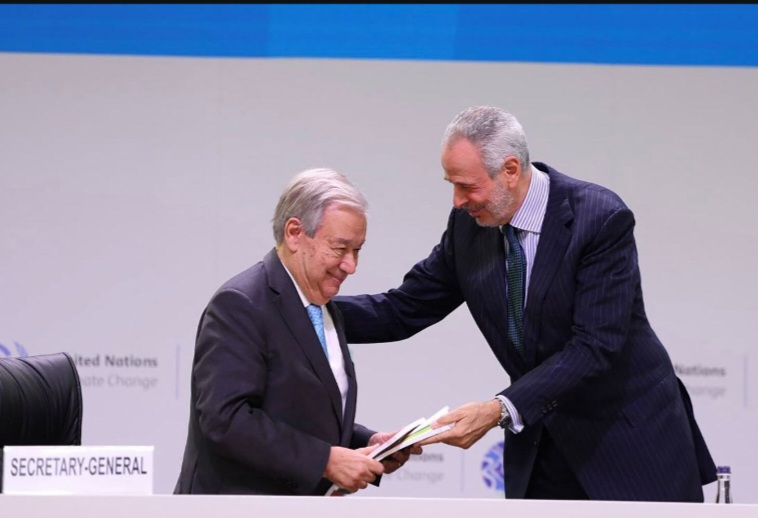
The roadmap is voluntary and does not establish a new binding international climate agreement. However, United Nations Secretary-General António Guterres called on governments to develop national plans with clear timelines, financing requirements and measurable progress by 2028.
He warned that continued dependence on imported fossil fuels was exposing economies to rising costs and geopolitical disruptions.
Since the latest escalation in the Middle East began, the European Union alone has incurred more than €100 billion in additional fossil fuel import costs, while petrol and diesel prices have increased across 130 countries, according to Guterres.
He argued that shifting suppliers would not eliminate the underlying vulnerability because disruptions in one part of the world could drive energy prices higher elsewhere.
For countries seeking greater energy security, renewable energy offers an opportunity to reduce exposure to international fuel markets by expanding domestic electricity production.
COP31 host Türkiye is advancing its own electrification ambitions through the 35-by-35 Global Electrification Pledge, which seeks to increase electricity’s share of global energy consumption from slightly above 20 per cent to 35 per cent by 2035.
The initiative envisions greater adoption of electric buses, electric heating systems and industrial processes powered by electricity. However, achieving its full climate benefits will depend on ensuring that electricity increasingly comes from clean energy sources.
For developing economies, particularly in sub-Saharan Africa, the transition presents an additional challenge: access to affordable capital.
More than half a billion people in the region still lack electricity, limiting opportunities for industrial development, manufacturing, improved public services and reliable transport systems.
Olli-Pekka Kuusela, a researcher at the United Nations University World Institute for Development Economics Research (UNU-WIDER), said although solar and wind technologies have become considerably cheaper, the initial investment required remains a significant obstacle for poorer countries.
He noted that developing economies often face higher borrowing costs, making renewable energy projects more expensive to finance even when the technologies themselves are increasingly competitive.
“With the cleaner technologies, like solar and wind, the upfront investment costs can be a bit significant,” he said, emphasising the importance of affordable access to capital.
Development banks could help address this challenge by providing lower-interest financing, enabling countries to invest in renewable energy infrastructure without placing additional pressure on already constrained public finances.
Beyond expanding electricity access, countries must also ensure that their energy systems can withstand climate-related disruptions.
Research conducted by Kuusela in Zambia highlighted the vulnerability of electricity systems heavily dependent on hydropower. Severe drought reduced electricity generation, resulting in blackouts and power rationing.
Expanding solar energy and strengthening electricity connections with neighbouring countries could help diversify supply and reduce the risk of similar disruptions.
The United Nations is also pursuing infrastructure investment through its Global Grids Accelerator, which seeks to mobilise financing and accelerate the expansion and modernisation of electricity networks.
Together, these discussions expose a wider challenge facing the global energy transition. While renewable technologies are becoming increasingly available, the ability of countries to finance, connect and maintain the infrastructure required to deliver electricity remains uneven.
For Africa, the implications extend beyond climate commitments. Reliable and affordable electricity is essential for industrialisation, economic diversification, public transport and the delivery of essential services.
As countries work towards reducing fossil fuel dependence, the success of the transition will therefore depend not only on how quickly renewable energy capacity expands, but also on whether developing economies can access the investment, technology and infrastructure needed to benefit from it.
At COP31, the message was increasingly clear: the world cannot achieve a meaningful energy transition by generating clean electricity alone. It must also build the systems that make that electricity accessible to everyone.