
Parliamentary leaders from the East African Community have renewed calls for stronger legislative cooperation, institutional accountability, and financial discipline as the region seeks to deepen integration and translate EAC policies into tangible benefits for citizens.
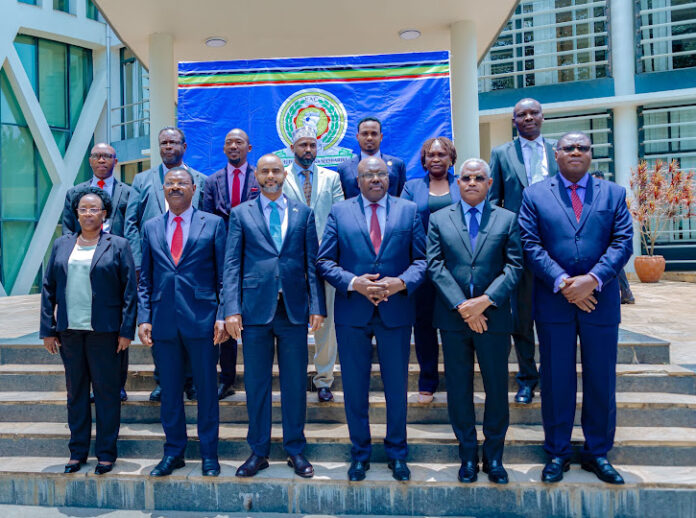
The call came as the Bureau of Speakers of EAC national legislatures and the East African Legislative Assembly (EALA) concluded their 21st Ordinary Meeting at the EAC headquarters in Arusha on October 2, 2026.
The meeting brought together parliamentary leaders at a critical stage in the community’s integration agenda, with discussions focusing on strengthening parliamentary diplomacy, formalizing the Speakers’ Bureau, financing the bloc, and preparing for the next EALA Assembly.
The Speakers’ meeting followed technical discussions by clerks and secretaries-general, who worked on institutional and policy issues ahead of the high-level session.
The Bureau is an important parliamentary platform through which EAC national legislatures and EALA coordinate their roles in legislation, oversight, and representation in support of regional integration. The EAC Treaty requires EALA to liaise with national assemblies on matters relating to the Community.
Push for institutional accountability
Kenya’s National Assembly Speaker, Rt. Hon. Moses Wetang’ula, called for stronger implementation of decisions reached by the Bureau, arguing that parliamentary resolutions must translate into measurable action.
He said the Clerks and parliamentary administrations should develop an action matrix assigning responsibilities and timelines to decisions adopted by the Speakers.
The emphasis on implementation comes as the EAC attempts to move beyond policy declarations towards practical integration, including the removal of barriers to trade and greater coordination among Partner States.
Recent EAC discussions on intra-regional trade have focused on removing non-tariff barriers and improving the movement of goods and services across borders.
The speakers also backed efforts to formalize the Bureau as an official EAC organ.
Under the resolutions adopted in Arusha, EALA Speaker Rt. Hon. Joseph Ntakirutimana was tasked with introducing a legislative proposal seeking to give the Bureau formal legal status within the EAC institutional architecture.
Uganda’s speaker was also tasked with engaging the chairperson of the EAC Summit of Heads of State on the proposed institutionalization.
The move builds on previous efforts by the Speakers to secure formal recognition of the Bureau. Kenya’s Parliament has previously reported that EAC Speakers agreed to continue engaging Heads of State on the establishment of the Bureau as an EAC organ.
New rules for the Speakers’ Bureau
A major outcome of the Arusha meeting was the adoption of the Bureau’s Rules of Procedure following technical reviews by parliamentary legal experts and Clerks.
The rules are expected to provide a clearer framework for meetings, quorum, leadership rotation and decision-making.
For the EAC, formalising the parliamentary structure could strengthen coordination between national legislatures and EALA while giving parliamentary diplomacy a more predictable institutional framework.
The process also comes as the Community continues to expand its institutional structures following the admission of new Partner States and the widening of its geographical and economic footprint.
Financial pressures remain
Financial sustainability was another major issue before the Speakers.The meeting reviewed the financial position of the EAC and raised concern over low levels of contributions by Partner States and accumulated arrears.
According to the meeting report, contributions for the 2026/27 financial year stood at only 17 per cent, while outstanding financial obligations were reported at more than $125 million.
The Speakers committed to engaging their respective governments and finance ministries to accelerate payment of outstanding contributions.
The issue is significant because the effectiveness of regional institutions depends heavily on predictable financing. Delayed contributions can affect programmes, staffing, infrastructure and implementation of regional decisions.
The EAC has also been pursuing reforms to its financing arrangements, including a formula combining equal and assessed contributions.
Parliamentary diplomacy and sports
The Bureau also approved preparations for the 16th EAC Inter-Parliamentary Games, scheduled to take place in Arusha from December 4 to 15, 2026.
The event will be hosted by EALA under the theme “Umoja Wetu, Utajiri Wetu” and will bring together parliamentarians and staff from partner state legislatures.
The Bureau approved an operational budget of $134,900, with participating legislatures expected to share the cost.
A digital registration system developed by a Kenyan ICT officer will also be deployed for the games, reflecting the growing use of technology in regional parliamentary activities.
The annual games are regarded as an avenue for people-to-people diplomacy, with previous editions being used to strengthen relationships among lawmakers and officials from EAC Partner States.
Somalia retains leadership
The Bureau resolved that Somalia will retain the chairmanship for another year, with Burundi preparing for a subsequent transition.
Somalia’s Speaker, Abdulkadir Mohamed Nur, emphasised the need for parliamentary cooperation to produce practical benefits for East Africans rather than remaining limited to institutional dialogue.
Somalia’s participation is particularly significant given its relatively recent entry into the EAC. The country joined the Community as a full member in 2024, extending the bloc’s reach into the Horn of Africa.
The speakers also agreed to maintain engagement with the Democratic Republic of Congo to strengthen its participation in Bureau activities.
EALA elections and next Assembly
The Bureau scheduled an extraordinary meeting in Nairobi for October 29, 2026, preceded by a meeting of Clerks on October 27 and 28.
The meeting will focus on preparations for the election of members of the 6th EALA Assembly, whose term is scheduled to begin in December 2027, as well as remuneration arrangements.
The next phase of parliamentary cooperation will unfold against the backdrop of the 153rd Assembly of the Inter-Parliamentary Union, which Tanzania is hosting in Arusha from October 5 to 9.
The convergence of the EAC Speakers’ meeting and the global parliamentary gathering places Arusha at the centre of international parliamentary diplomacy this month.
For the EAC, however, the larger challenge remains translating parliamentary cooperation into stronger regional integration.
The decisions reached in Arusha on institutional reform, financing, accountability and parliamentary diplomacy could determine how effectively national legislatures contribute to the Community’s wider agenda.
As East Africa pursues deeper economic integration, the Speakers’ message was clear: regional integration will require not only agreements among governments but also stronger parliamentary institutions capable of overseeing their implementation and ensuring that the benefits reach citizens.

