
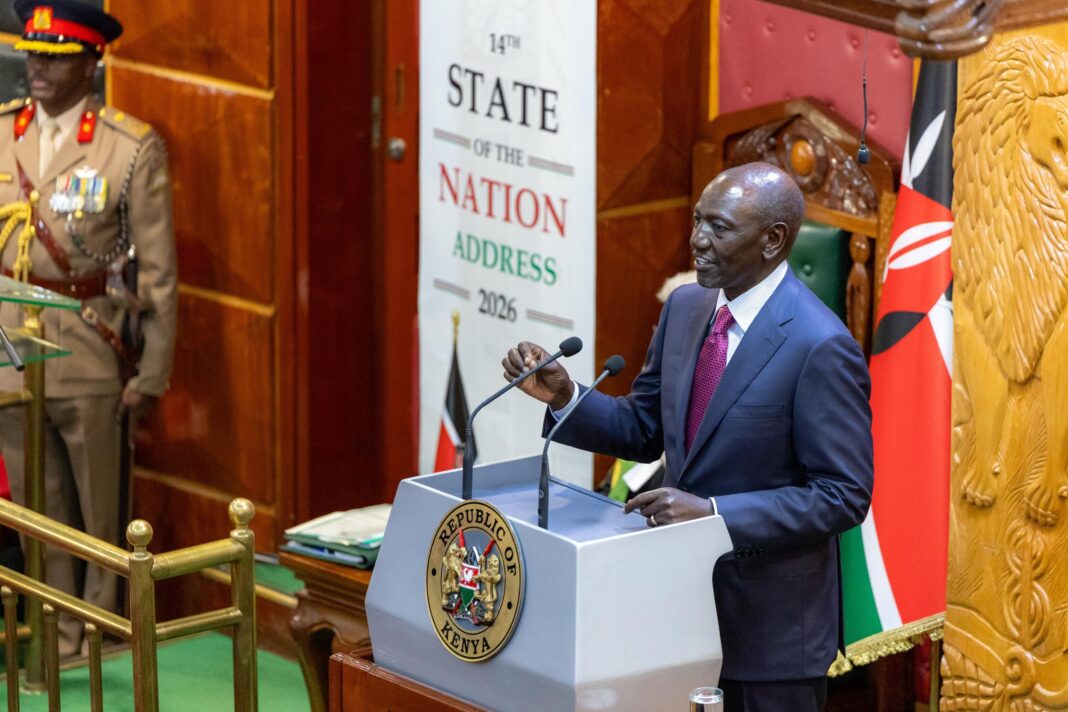

President William Ruto has unveiled an ambitious KSh5 trillion economic transformation programme to be implemented over the next decade, placing infrastructure investment, job creation, tax relief and expanded access to public services at the centre of his administration’s development agenda.
Delivering his State of the Nation Address to a joint sitting of Parliament on November 18, 2026, President Ruto said Kenya must move beyond economic stabilisation and focus on building a productive economy capable of generating sustainable employment, attracting investment and improving living standards.
The proposed transformation programme, estimated to require KSh5 trillion over ten years, represents one of the administration’s most significant long-term economic ambitions. However, its success will depend on how effectively the government mobilises financing, manages public resources and translates major investments into tangible benefits for ordinary Kenyans.
“Our transformation programme is estimated to require KSh5 trillion over the next 10 years,” Ruto told Parliament, stressing the need to mobilise long-term capital without undermining debt sustainability or placing an unsustainable burden on taxpayers.
National Infrastructure Fund takes centre stage
A major pillar of the financing strategy is the National Infrastructure Fund (NIF), which the President said has already been capitalised with KSh340 billion.
The Fund, established through legislation signed into law on March 9, 2026, is intended to mobilise additional investment from pension funds, institutional investors, development finance institutions and other partners.
According to Ruto, proceeds from the divestiture of mature public assets will help provide a financing foundation for strategic infrastructure projects, including roads, airports, railways, energy, water and irrigation.
He also highlighted the proposed Sovereign Wealth Fund as a mechanism for preserving and investing national wealth for future generations.
The President, however, acknowledged the importance of accountability and responsible investment, stating, “Every investment must be justified by the economic and social value it creates.”
The proposed financing model signals an effort to reduce reliance on conventional public expenditure and sovereign borrowing by drawing on domestic savings and institutional capital. Nevertheless, the use of pension funds and proceeds from public asset divestiture will require transparent governance, rigorous project appraisal and clear safeguards to protect public interest.
Massive infrastructure expansion planned
Transport infrastructure remains central to the administration’s economic strategy.Ruto announced that approximately 7,000 kilometres of roads are currently under construction, while the government aims to tarmac 28,000 kilometres of roads and dual 2,500 kilometres of highways over the next decade.
Among the strategic projects highlighted were the more than 750-kilometre Isiolo–Wajir–Mandera corridor, the Mau Mau roads, the Kenol–Marua dual carriageway, the Lake Victoria Ring Road and the Rironi–Naivasha–Nakuru–Mau Summit highway.
The government is also advancing plans for the dualling of the Nairobi–Mombasa highway.The President argued that these investments should be judged not simply by kilometres completed but by their contribution to economic productivity.
Better roads, he said, would reduce the cost of transporting agricultural produce and manufactured goods, connect businesses to markets and improve access to hospitals, schools and employment opportunities.
For businesses, improved transport networks could lower logistics costs and strengthen regional trade. For farmers and manufacturers, the expected benefit is more reliable access to markets and reduced costs of moving goods.
However, the scale of the infrastructure programme raises important questions about project prioritisation, financing costs, procurement transparency and the government’s ability to complete projects within budget and on schedule.
Tax relief proposals target workers and businesses
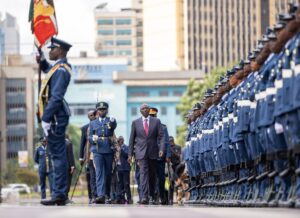
In a move aimed at easing household and business pressures, Ruto announced proposed tax measures that could provide relief to low-income workers and reduce the cost of selected transactions and imports.
The proposals include exempting workers earning KSh32,333 or less per month from Pay As You Earn (PAYE), removing stamp duty on land transactions valued at KSh1 million or less, and eliminating the 25 per cent import duty on mobile phones.
If implemented, the measures could increase disposable income among lower-paid workers, make smaller property transactions more affordable and reduce the cost of accessing digital devices.
The President also announced that the government had approved the settlement of 28,726 verified pending bills worth KSh27.8 billion, covering claims dating back to 2005 and valued at KSh50 million or below.
In addition, he said KSh18 billion owed to public universities and another KSh16 billion owed to public and private hospitals under the former National Hospital Insurance Fund had been approved for payment. The payments were undergoing Treasury processes, with disbursement expected in the coming weeks.
Clearing these obligations could improve cash flow for businesses, universities and healthcare institutions, potentially supporting employment and service delivery.
The tax measures remain proposals and will require the relevant legal and administrative processes before taking effect.
Jobs, youth enterprise and economic opportunity
The president presented employment creation as another major measure of the country’s economic transformation. He highlighted opportunities generated through the digital economy, overseas employment, affordable housing and support for small enterprises.
The NYOTA programme was also presented as a key intervention for young entrepreneurs. Ruto said the government was working with partners to support another 200,000 beneficiaries with KSh50,000 each.
He further highlighted the NYOTA–AGPO Digital Training Programme, a free ten-week initiative intended to equip young entrepreneurs, women and persons with disabilities with business and digital skills while helping them access government procurement opportunities.
The broader objective, according to the President, is to move beyond temporary support and enable small businesses to grow, secure markets and employ more people.
The challenge will be ensuring that these programmes create sustainable enterprises rather than short-term interventions whose benefits disappear once initial funding is exhausted.
Healthcare and education remain major priorities
Ruto also defended the government’s expansion of healthcare financing through the Social Health Authority (SHA).He told Parliament that registration had increased from approximately 8 million people under the former NHIF to 33.7 million under SHA.
To illustrate the impact, he cited the case of Veronica Wambui, a small-scale farmer from Gatundu who underwent a kidney transplant at Kenyatta University Teaching, Referral and Research Hospital in May 2025.
According to the president, her monthly SHA contribution was KSh840, while the cost of investigations, transplant and medication exceeded KSh966,000, excluding dialysis. He said SHA covered the bill in full.
The example was used to demonstrate the potential value of pooled healthcare financing in protecting households from overwhelming medical expenses.
On education, Ruto highlighted increased government spending, teacher recruitment and classroom construction as part of efforts to strengthen access and improve learning conditions.
These commitments will ultimately be judged by the quality, affordability and reliability of services delivered to families across the country.
Equity and regional development
A recurring theme in the address was the President’s emphasis on equitable development across all 47 counties.He argued that national growth should not be concentrated in regions that already possess strong infrastructure, institutions and access to markets.
“A Kenyan living in Mandera must have the same claim to national development as one living in Nairobi,” he told Parliament.
The president described this principle as Usawa ni Sawa, arguing that every citizen deserves equal consideration and a fair opportunity to participate in the economy.
He also cited KSh16.8 billion appropriated through the Equalisation Fund for projects in marginalised areas, including water, roads, healthcare and electricity.
The government’s challenge will be ensuring that equitable development is reflected in actual investment, employment and access to essential services in historically underserved regions.
Accountability and the test of delivery
The President acknowledged that the success of the transformation programme would depend on responsible public administration and the protection of national resources.
He highlighted reforms involving digital government services, electronic government procurement, the Treasury Single Account and legislation governing conflicts of interest and public institutions.
On corruption, he stated, “Corruption increases the cost of doing business, discourages investment and denies honest citizens a fair opportunity to succeed.”
The statement places public accountability at the centre of the government’s economic ambitions. Investors, businesses and taxpayers will be looking for evidence that public funds are spent efficiently, procurement processes are transparent and major projects deliver measurable returns.
Ruto also called for a more substantive national debate on economic policy, urging political leaders and citizens to assess proposals against evidence, available resources and actual results.
As Kenya approaches the end of the Vision 2030 period, he invited citizens from all 47 counties to participate in developing a national development charter that would guide the country’s next phase of economic transformation.
The bigger economic question
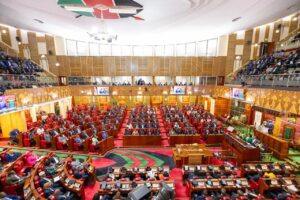
Ruto’s address presented a far-reaching vision: mobilising KSh5 trillion, expanding national infrastructure, supporting businesses, creating jobs, improving healthcare and education, and spreading economic opportunity across the country.
Yet the central question is no longer simply whether Kenya has ambitious development plans. It is whether the government can finance and execute them without increasing fiscal pressure, weakening public accountability or leaving ordinary households behind.
The KSh340 billion National Infrastructure Fund provides an important starting point, but the proposed KSh5 trillion programme will require sustained investment, credible institutions and disciplined project management.
For Kenyan businesses, the priorities will be reliable infrastructure, affordable energy, predictable taxation, access to finance and a stable operating environment. For households, the real measure will be whether incomes rise, essential services become more affordable and employment opportunities expand.
As the President put it: “Our task is far from complete, but our purpose remains clear: To make everyday life more affordable and productive effort more rewarding.”
Ultimately, the credibility of the economic transformation agenda will be determined not by the scale of the figures announced in Parliament, but by whether they translate into productive industries, sustainable jobs, stronger businesses and a measurable improvement in the lives of Kenyans.



