
Low pay, job insecurity and workloads blamed as one in three plans to quit the profession.
Nearly two-thirds of Kenyan journalists are showing moderate to severe symptoms of depression, according to a new survey by the Kenya Union of Journalists (KUJ) and the Media Council of Kenya (MCK), which warns the problem is eroding newsroom performance and threatening press freedom.
The State of Journalists’ Welfare Survey sampled 120 journalists across ranks and media houses. It found that 65 percent show moderate-to-severe depressive symptoms, including thoughts of self-harm and suicidal ideation. Only 25 percent have sought professional mental health support in the past two years.
The survey links the distress largely to poor pay, job insecurity, heavy workloads, long hours and a lack of fulfilment at work.
**Pay and job security**
Journalists earn an average of KES 63,000 a month, but 52 percent earn less than KES 50,000. The national average monthly wage is KES 86,000.
Some 55 percent of journalists lack job security, working as correspondents, freelancers or contributors. Nearly half (48 percent) have gone more than three years without a pay review, and over half have gone more than two years. Eighty-two percent receive no allowances or bonuses.
Journalists work about 8.5 hours a day on average, and more than 65 percent say their workloads have grown over the past five years without matching increases in pay or allowances.
**Exodus risk**
Dissatisfaction is driving many to look elsewhere. The survey found 89 percent are actively seeking a job outside their current workplace, while a third plan to leave journalism altogether at the earliest opportunity. The report warns this poses a serious turnover risk, threatening press freedom and citizens’ right to access information.
**Reactions**
Speaking at the launch, KUJ Secretary-General Eric Oduor said the findings paint a sad picture of the labour environment in the industry and called for immediate action.
“We cannot expect a journalist who is not properly remunerated to play the watchdog role, speak truth to power and serve the common good of the society,” he said, adding that he hoped the survey would be the foundation for lasting solutions.
MCK CEO David Omwoyo said the findings allow stakeholders to move the conversation from individual experiences to an informed, industry-wide discussion. The survey’s value, he said, would be measured by the changes it brings to newsrooms and the profession.
Susan Mang’eni, Principal Secretary in the State Department for MSMEs Development, urged journalists to promote economic growth through their reporting, saying their financial wellbeing is tied to the country’s economic progress. “The government is not an enemy,” she said.
**Retirement planning**
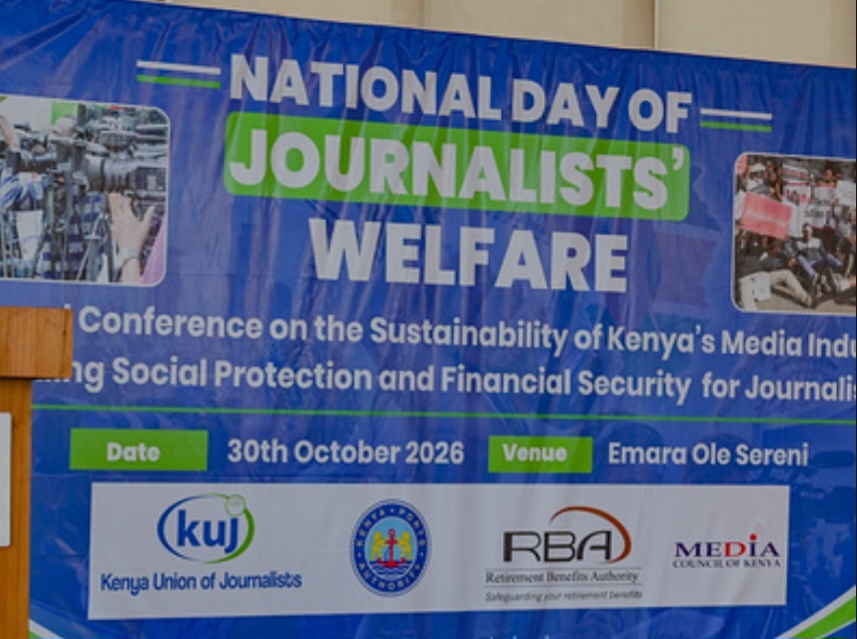
The Retirement Benefits Authority (RBA), which partnered with KUJ to organise the National Day of Journalists’ Welfare, encouraged journalists to save even on modest incomes. RBA Chief Executive Charles Machira said young journalists’ greatest advantage is time rather than a large salary, and that retirement security includes preparing for healthcare costs.
The RBA also pledged to support KUJ and the industry in establishing a Press Pension Scheme for non-permanent journalists, including freelancers, correspondents and contributors.
KUJ, established in the early 1950s, is one of Kenya’s oldest trade unions and represents journalists and other media workers.