
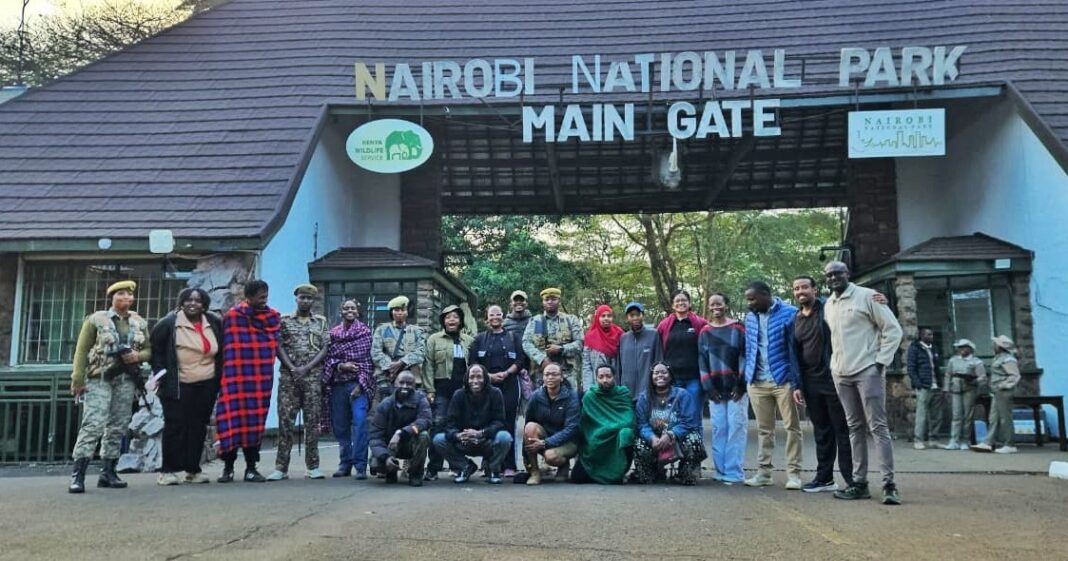

Thirteen emerging filmmakers from five African countries have embarked on a week-long filmmaking and mentorship programme aimed at strengthening the role of creative storytelling in promoting wildlife conservation and tourism across the continent.
The participants, drawn from Kenya, Tanzania, Uganda, the Democratic Republic of Congo (DRC) and South Sudan, are taking part in an intensive wildlife filmmaking bootcamp organised through a collaboration between the Kenya Wildlife Service (KWS) and Nuru Film Institute.
Running under the theme “This Is Our Wild”, and the campaign message “Explore, Experience, Conserve,” the initiative seeks to equip young African creatives with the technical skills and storytelling experience needed to bring wildlife and conservation issues closer to audiences.
The programme comes at a time when African countries are increasingly recognising the importance of creative industries in supporting tourism, strengthening environmental awareness and generating economic opportunities around their natural heritage.
With Africa home to some of the world’s most diverse wildlife populations, protected landscapes and ecosystems, filmmakers have an important role to play in shaping how these resources are understood, valued and protected.
Through documentaries, short films and digital storytelling, wildlife filmmakers can highlight the continent’s natural attractions while drawing attention to the growing threats facing ecosystems, including habitat destruction, poaching, climate change and human-wildlife conflict.
The bootcamp will provide participants with hands-on training and mentorship from six accomplished industry professionals whose work has featured on leading international platforms, including National Geographic and the BBC.
Among the mentors is award-winning Kenyan filmmaker Faith Musembi, founder of Nuru Film Institute, whose production credits include National Geographic productions LION (2026) and QUEENS (2024).
Her involvement brings industry experience to the programme while offering emerging African filmmakers an opportunity to learn from professionals who have worked on internationally recognised wildlife productions.
The training begins with masterclasses covering filmmaking techniques and editing, before participants move into practical field assignments at Nairobi National Park and the Nairobi Safari Walk.
These locations will provide a natural setting for the filmmakers to apply their skills, explore wildlife narratives and understand how to translate conservation experiences into compelling visual stories.
Nairobi National Park, located close to Kenya’s capital, offers a particularly important backdrop for the initiative. Its unique position alongside a major urban centre demonstrates how wildlife conservation can coexist with urban development while providing opportunities for tourism, education and research.
The Nairobi Safari Walk will also expose participants to different approaches to wildlife interpretation, conservation education and public engagement.
Over the course of the week, the filmmakers will work in teams to produce three short films exploring wildlife and conservation through fresh perspectives.
The productions are expected to demonstrate how young African creatives can use visual storytelling to communicate the importance of protecting biodiversity, preserving natural habitats and supporting communities that live alongside wildlife.
The completed films will be showcased at a special screening at the end of the bootcamp, providing participants with an opportunity to present their work and demonstrate the skills acquired during the programme.
For Kenya, the initiative also reflects a broader effort to position wildlife filmmaking as part of the country’s growing creative and tourism economy.
KWS says it is keen to create more opportunities for young filmmakers to learn, develop their talents and tell stories that support conservation.
By opening its parks and facilities to creative professionals, the agency is seeking to expand the economic value of wildlife beyond traditional tourism activities such as game drives, accommodation and guided safaris.
Wildlife filmmaking can create additional opportunities for photographers, editors, cinematographers, sound technicians, producers and digital content creators. It can also help destinations reach international audiences through television productions, streaming platforms and online distribution channels.
For African tourism destinations competing for international visitors, authentic wildlife storytelling offers an opportunity to showcase experiences that go beyond conventional travel marketing.
Films that capture the relationship between wildlife, landscapes and local communities can encourage responsible tourism while building greater appreciation for the need to conserve natural resources.
Equally important is the opportunity for African filmmakers to take greater control of narratives about their continent’s wildlife. Local creatives bring cultural understanding, community perspectives and first-hand experiences that can enrich international conservation productions.
The five-country representation also gives the bootcamp a regional dimension, encouraging the exchange of ideas and experiences among young filmmakers working in different conservation environments.
From Kenya’s savannah ecosystems and Tanzania’s wildlife landscapes to Uganda’s biodiversity and the forests of the DRC, the region offers diverse stories with relevance to conservation efforts across national borders.
Ultimately, the success of wildlife conservation depends not only on government policies, protected areas and enforcement but also on public awareness and community participation.
By equipping young filmmakers with professional skills, the KWS-Nuru Film Institute initiative seeks to turn Africa’s natural heritage into powerful stories that inspire audiences to explore, appreciate and protect wildlife.
Under the message “This Is Our Wild: Explore, Experience, Conserve,” the bootcamp highlights the growing connection between filmmaking, tourism development and environmental protection, while giving the next generation of African storytellers an opportunity to shape the future of conservation narratives.



