
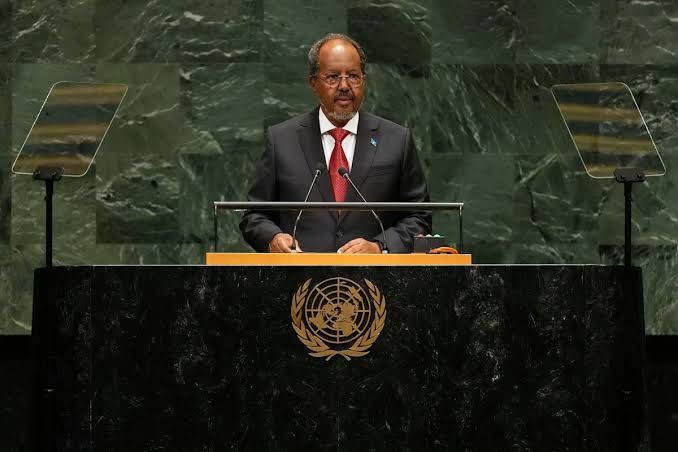

The United Nations has formally ended its political mission in Somalia after more than three decades of engagement, marking a significant shift in the international community’s approach to supporting the country’s security, governance and post-conflict recovery.
The closure of the United Nations Transitional Assistance Mission in Somalia (UNTMIS) on October 31, 2026, follows a two-year transition process initiated at the request of the Federal Government of Somalia and endorsed by the UN Security Council.
The decision reflects Somalia’s desire to assume greater responsibility for its political affairs, state-building agenda and national institutions, with the United Nations transferring the mission’s responsibilities to Somali government institutions and other UN agencies.
Under Security Council resolutions 2753 (2024) and 2809 (2025), the transition was designed to gradually reduce the UN’s dedicated political presence while strengthening the capacity of Somali institutions to manage governance, reconciliation, constitutional reforms and security-sector development.
The closure brings to an end a political engagement that evolved from the UN Political Office for Somalia (UNPOS), established in 1995, to the UN Assistance Mission in Somalia (UNSOM) in 2013 and subsequently UNTMIS in November 2024.
According to the United Nations, the transition was intended to preserve the gains made in peacebuilding and institutional development while allowing Somalia to exercise greater national ownership of its recovery programme.
United Nations in Somalia+2
The decision also reflects a broader shift in the UN’s engagement, moving away from a dedicated political mission towards a model in which Somalia’s government takes the lead, supported by development agencies, humanitarian organisations and international security partners.
Staff relocation and a new UN operating structure
Following the official conclusion of UNTMIS, reports indicate that UN personnel were relocated from Mogadishu’s Halane compound to Nairobi, Kenya, using UN-chartered flights on Sunday.
The reported relocation marks the physical departure of the dedicated political mission from Mogadishu. However, the exact number of personnel involved and whether the flights formed part of a previously scheduled withdrawal have not been independently confirmed.
The closure does not mean the United Nations is abandoning Somalia. UN agencies, funds and programmes will continue operating in the country, while the United Nations Support Office in Somalia (UNSOS) maintains logistical support for African Union forces and Somali security personnel.
UN Resident Coordinator George Conway will lead the UN Country Team’s continued engagement, focusing on development, humanitarian assistance and supporting Somalia’s national priorities.
Security remains the biggest test
One of the immediate priorities following UNTMIS’ departure will be strengthening Somalia’s security institutions and sustaining the fight against Al-Shabaab, the militant group that continues to threaten government-controlled areas and disrupt economic activities.
The African Union Support and Stabilization Mission in Somalia (AUSSOM) remains central to this effort, working alongside Somali National Army and police units to support security operations and stabilisation efforts.
Under Security Council Resolution 2809 (2025), AUSSOM’s mandate runs until December 31, 2026, with authorisation for up to 11,826 uniformed personnel, including police officers.
The UN is also expected to maintain logistical assistance through UNSOS, including supplies, transportation, medical evacuation and other operational support for African Union and Somali security forces.
However, securing sustainable funding for AUSSOM and improving the capacity of Somali forces to independently defend liberated territories will be critical to preventing security setbacks.
The political environment also requires urgent attention. Disagreements between the federal government and opposition groups over constitutional amendments, electoral arrangements and the timing of elections have raised concerns about political stability.
The absence of an agreed replacement for UNTMIS’ political mediation role increases the importance of dialogue among Somalia’s political leadership, federal member states and opposition groups.
AP News+2
Humanitarian crisis requires continued international support
Beyond security, Somalia faces an equally urgent humanitarian challenge driven by prolonged drought, conflict, displacement, food insecurity and declining international aid funding.
UN agencies warned in May 2026 that approximately six million people were experiencing critical levels of food insecurity, while 1.9 million children were affected by acute malnutrition, including 493,000 facing severe acute malnutrition.
The 2026 Humanitarian Needs and Response Plan estimates that 4.8 million people require humanitarian assistance, with partners targeting 2.4 million of the most vulnerable for support.
The plan seeks US$852 million to finance humanitarian operations, including food assistance, healthcare, nutrition, water and sanitation services.
United Nations in Somalia+2
The continued presence of agencies such as the World Food Programme, UNICEF, the Food and Agriculture Organization and the Office for the Coordination of Humanitarian Affairs will therefore be essential.
Their work must increasingly connect emergency relief with longer-term development programmes, particularly in water infrastructure, agricultural production, healthcare, education and livelihood restoration.
For Somalia, the end of UNTMIS represents both an opportunity and a major responsibility. Greater national ownership can strengthen government accountability and institutional independence, but it must be accompanied by political consensus, effective security arrangements and sustained international financing.
The next phase will ultimately be judged not by the departure of UN political personnel from Mogadishu, but by whether Somalia can consolidate its institutions, contain Al-Shabaab, restore economic confidence and deliver essential services to millions of citizens facing humanitarian hardship.
The United Nations has closed its political mission, but its wider partnership with Somalia remains critical to the country’s long-term stability and recovery.
Editorial note: The reported evacuation to Nairobi is distinguished from the officially confirmed closure of UNTMIS because the personnel figures and specific flight arrangements remain unverified.



