
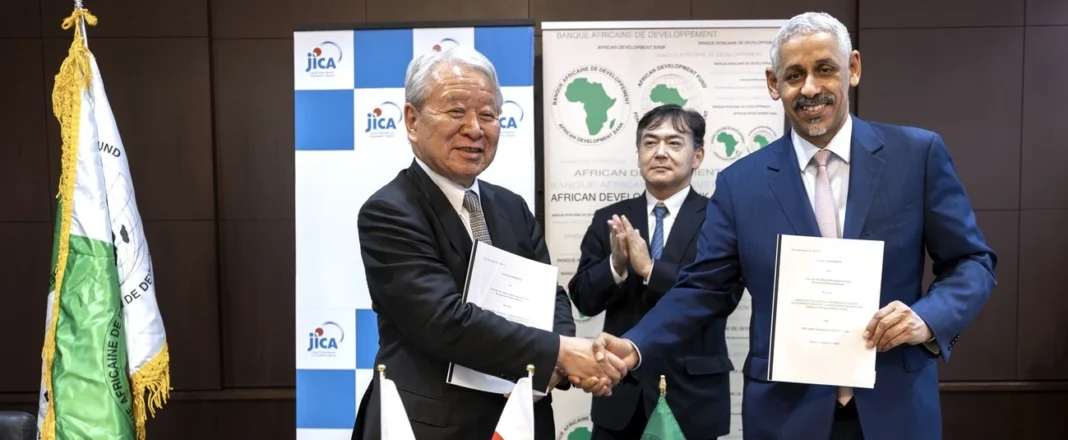

Japan has committed $583.4 million to the African Development Fund (ADF), providing a fresh boost to development financing across Africa while renewing calls for governments to mobilise more domestic capital to reduce dependence on foreign borrowing and donor support.
The financing, provided through the Japan International Cooperation Agency (JICA), is expected to expand access to affordable, long-term funding for low-income African countries facing mounting infrastructure demands, rising debt obligations and limited fiscal space.
The African Development Bank Group (AfDB) and JICA signed a JPY 86.6 billion (approximately $583.4 million) concessional loan agreement in Tokyo on November 13, supporting the Fund’s seventeenth replenishment (ADF-17).
The agreement underscores the importance of international development partnerships in closing Africa’s financing gap. However, it also raises a critical question about how African countries can increasingly finance their own development by tapping into domestic savings, institutional investments and local financial markets.
Bank Group President Dr Sidi Ould Tah and JICA President Dr Akihiko Tanaka signed the agreement, which represents Japan’s largest-ever official development assistance financing support to the African Development Fund.
“This financing demonstrates the strength of the partnership between JICA and the African Development Bank Group, and our shared commitment to Africa’s development,” Tanaka said.
He noted that the commitment reflects Japan’s confidence in ADF-17’s ability to help African countries address interconnected development challenges while promoting resilient, inclusive and sustainable economic growth.
The Japanese financing fulfils a pledge made by the Ministry of Finance during the ADF-17 replenishment pledging session in December 2025. It complements Japan’s other contributions to the Fund, including grants and compensation under the Multilateral Debt Relief Initiative, bringing its overall support to approximately $600 million.
ADF-17 mobilised a record $11 billion from 44 development partners, highlighting the continued role of international cooperation in financing Africa’s development priorities.
However, external development financing alone cannot meet the continent’s growing demand for roads, ports, electricity, water infrastructure, industrial facilities and agricultural investments.
Africa therefore faces an urgent need to develop stronger domestic financing systems that can channel its own financial resources into productive economic activities.
One of the biggest opportunities lies in unlocking institutional savings held by pension funds, insurance companies, sovereign wealth funds and other long-term investors.
These institutions manage substantial pools of capital that could be directed towards infrastructure development through carefully structured infrastructure bonds, green bonds and other investment instruments.
Rather than relying predominantly on foreign loans to finance major projects, governments could create opportunities for domestic pension funds and insurance companies to invest in commercially viable infrastructure, including electricity generation, transport networks, affordable housing and industrial parks.
This would allow African savings to finance African development while providing institutional investors with long-term investment opportunities.
Strengthening domestic capital markets
Developing local capital markets is another important step towards reducing Africa’s dependence on external financing.
African governments can expand the issuance of infrastructure bonds denominated in local currencies, allowing citizens, commercial banks, pension funds and other institutional investors to participate in financing national development priorities.
Local-currency financing would also help reduce exposure to exchange-rate fluctuations associated with borrowing in foreign currencies, although governments must still manage interest costs, inflation and repayment risks.
Kenya, Nigeria, South Africa and other countries with established domestic financial markets have opportunities to deepen the participation of institutional investors in long-term infrastructure financing.
Regional integration could further expand these opportunities by connecting African stock exchanges, development finance institutions and financial regulators.
Stronger cross-border investment frameworks would allow savings accumulated in one African market to support viable infrastructure and industrial projects in another, particularly in countries with limited access to affordable capital.
Improving revenue collection and attracting private investment
Beyond capital markets, African governments need to strengthen domestic revenue mobilisation by widening tax bases, improving tax administration, addressing illicit financial flows and reviewing unnecessary tax exemptions.
Reducing revenue leakages and improving public financial management would provide governments with additional resources to finance development without continually increasing public debt.
The private sector also has an important role to play.Public-private partnerships can attract domestic and international investors into commercially viable infrastructure projects, including energy, transport, logistics, water and digital infrastructure.
However, attracting long-term private capital requires transparent procurement processes, predictable regulatory frameworks, effective contract enforcement and credible mechanisms for sharing investment risks between governments and investors.
Governments must also ensure that projects supported through public-private partnerships deliver measurable economic and social benefits without creating unsustainable financial obligations.
Speaking about the Fund’s broader ambitions, Ould Tah said the institution was looking beyond conventional donor contributions to transform how Africa raises and deploys development capital.
“Our ambition goes beyond replenishing resources. Through the New African Financial Architecture for Development, we are transforming how Africa mobilises and deploys development finance,” he said.
The proposed financial architecture seeks to strengthen Africa’s capacity to mobilise resources and improve the effectiveness of development financing across the continent.
Japan’s commitment will support investments in essential infrastructure, energy access, food security and regional integration, sectors considered critical to improving productivity, strengthening economic resilience and expanding employment opportunities.
Kazuki Watanabe, Deputy Vice Minister for International Affairs at Japan’s Ministry of Finance, said Japan expects ADF-17 to deliver tangible results through expanded quality infrastructure, stronger governance and institutional capacity, and sustainable debt management.
For Africa, the challenge is therefore twofold: securing affordable external financing while building the capacity to mobilise domestic resources and attract private investment.
The $583.4 million Japanese commitment provides an important boost to the African Development Fund. But the continent’s long-term economic transformation will depend increasingly on how effectively African governments convert domestic savings, public revenues and private-sector capital into productive investments.
Ultimately, Africa’s development financing strategy must move beyond raising money from international partners towards building financial systems that enable the continent to fund a greater share of its own economic transformation.



