
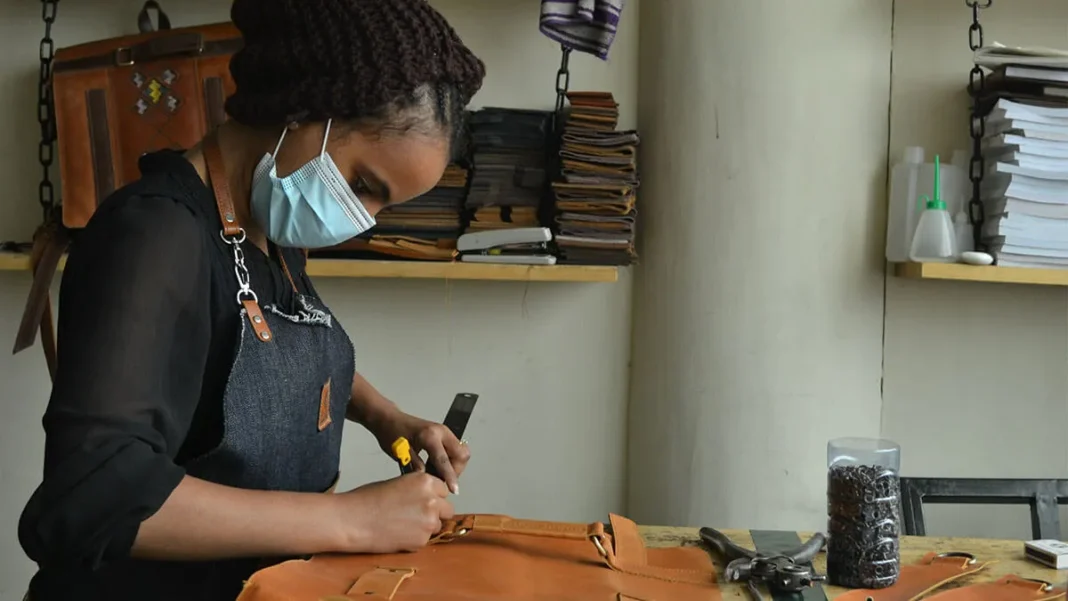

Africa’s leather industry is positioning itself for greater participation in global fashion and manufacturing markets, with designers and industry leaders calling for stronger investment in processing, manufacturing and commercial distribution to unlock the continent’s economic potential.
The call gained prominence at the Real Leather. Stay Different. (RLSD) Africa Talent Leather Design Showcase 2026 in Addis Ababa, Ethiopia, where 15 finalists from across the continent presented innovative leather products in apparel, accessories and footwear.
The November 14 showcase, held alongside Africa Sourcing and Fashion Week, highlighted the growing capacity of African designers to transform locally available leather resources into high-value products capable of competing in international markets.
Nigeria’s Omosalewa Ogunjimi, creator of EXUVIA, emerged as the overall and apparel category winner. Rwanda’s Umuhuza Hirwa Jeanluc won both the accessories category and the People’s Choice Award with INGABO, while Zimbabwe’s Nompumelelo Marilyn Samambgwa took the footwear category award with Tethered Earth.
The achievements reflect the potential of Africa’s leather industry to create new business opportunities by connecting creative talent with livestock production, leather processing, industrial manufacturing and international retail markets.
Nicholus Mudungwe, Executive Director of the Africa Leather and Leather Products Institute (ALLPI), said the priority should now shift from celebrating design talent to developing commercially viable businesses.
“We have seen the designers. We have seen their designs. We need to commercialise the design,” Mudungwe said.
He called for stronger partnerships among designers, manufacturers, distributors, retailers and governments to ensure that innovative products move beyond exhibitions and reach consumers.
Africa has significant opportunities to develop its leather value chain, particularly through its livestock resources. However, converting this potential into economic value requires investment in modern tanneries, quality processing facilities, manufacturing technology, skills development and access to affordable financing.
The industry also needs stronger connections between livestock farmers, hide and skin collectors, tanneries, footwear manufacturers and fashion brands. Improving quality standards and traceability will be essential for African products seeking entry into demanding international markets.
The RLSD showcase also highlighted the role of international partnerships in strengthening the sector.
Sarah K. Gilleski, Agricultural Counselor at the United States Embassy in Addis Ababa, said collaboration between American suppliers and African manufacturers could create opportunities across the leather value chain.
“Africa’s greatest resource is not its livestock or its hides. It’s the creativity and industrious people in this room,” she said.
Representing the US Embassy and the US Department of Agriculture, Gilleski highlighted American expertise in materials, traceability and technical capabilities, alongside Africa’s growing design and manufacturing potential.
She cited nearly $700 million in US hides and skins exports globally in the previous year, pointing to opportunities for expanding commercial partnerships with African businesses.
For African economies, developing the leather industry could support industrial diversification, increase export earnings and generate employment, particularly among young people entering fashion, design, manufacturing and entrepreneurship.
The sector offers opportunities extending beyond traditional footwear and clothing production to include handbags, travel accessories, furniture, automotive interiors and other specialised leather products.
The growth of African fashion brands and the increasing international visibility of homegrown designers could also provide a platform for locally manufactured products to access new consumer markets.
Now in its fourth African edition, RLSD Africa attracted hundreds of registrations from more than 12 countries. The 15 finalists were assessed on individuality, conceptualisation, relevance, sustainability and commercial viability.
The initiative is powered by the Leather and Hide Council of America in partnership with ALLPI and coordinated in Africa by the Centre for Business Innovation and Training (CBiT).
Its wider campaign reached approximately 750 million people globally in 2025, while RLSD Africa recorded more than 2.4 million digital engagements across over 20 African countries.
Beyond promoting design excellence, the initiative seeks to encourage responsible production and longer-lasting leather products as alternatives to disposable fashion.
However, industry stakeholders face the broader challenge of building the infrastructure and commercial networks needed to support large-scale production.
Access to capital, reliable supplies of quality processed leather, modern manufacturing equipment, product certification and international distribution channels will determine whether Africa can transform its creative advantage into a competitive industrial sector.
The Addis Ababa showcase therefore underscored a wider economic opportunity: positioning leather not simply as an agricultural by-product but as a strategic resource for manufacturing, trade and employment.
For Africa, the next phase will depend on translating its livestock resources and creative talent into competitive brands, stronger domestic industries and products that can command greater value in global markets.



