
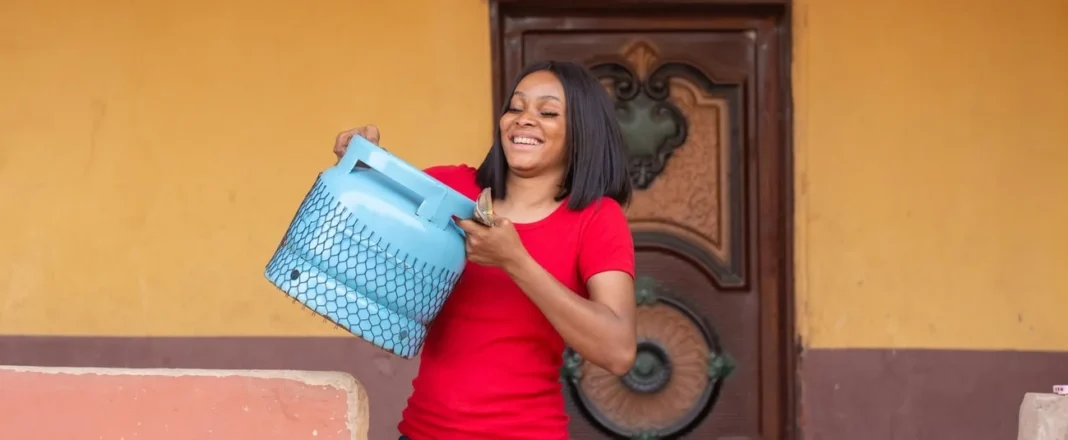

Clean cooking has emerged as a major development and energy-transition priority at the 81st United Nations General Assembly, with the African Development Bank Group calling for stronger political leadership, financing and coordinated action to expand access to cleaner household energy across Africa.
The call came during a high-level Heads of State event on Clean Cooking in Africa on September 22, convened by Kenya and Norway on the margins of UNGA81, in partnership with the International Energy Agency, the African Union, Clean Cooking Alliance and UN-Energy.
The event marked the first time clean cooking was placed at the centre of a high-level event at the UN General Assembly, bringing together heads of state, ministers, multilateral development banks, UN agencies and private-sector partners to mobilise investment and accelerate progress towards universal access.
The urgency is particularly acute in Africa, where nearly one billion people still lack access to clean cooking. Millions of households continue to depend on wood, charcoal and other polluting fuels, exposing families to household air pollution while contributing to deforestation, environmental degradation and lost economic productivity.
Women and children bear a disproportionate share of the burden, including exposure to health risks and the time required to collect fuel.
African Development Bank Group Senior Vice President Marie-Laure Akin-Olugbade, representing AfDB President Sidi Ould Tah, said clean cooking could no longer be treated as a secondary component of Africa’s energy transition.
“How a family cooks affects health, forests, productivity, gender equality, and the daily lives of millions of women and children in Africa,” she said. “It is therefore not a marginal issue; it is central to development, climate action and human dignity.”
Kenyan President William Ruto told the gathering that clean cooking should be integrated into national planning across African countries. Kenya is expected to host the second Summit on Clean Cooking in Africa in Nairobi in 2027, providing a platform to translate the momentum generated at UNGA81 into investment commitments and implementation plans.
The African Development Bank is seeking to make clean cooking part of broader efforts to expand energy access. Akin-Olugbade said the Mission 300 initiative, led jointly by the AfDB and World Bank to connect 300 million Africans to electricity by 2030, has helped bring household energy needs further into national energy planning.
According to the Bank, all 36 National Energy Compacts adopted so far under Mission 300 include clean-cooking ambitions. Countries are pursuing different solutions, including improved cookstoves, liquefied petroleum gas, electric cooking, biogas, bioethanol and briquettes.
The bank has also significantly increased its financing for the sector. Following the first Summit on Clean Cooking in Africa in 2024, it committed to mobilize $2 billion over 10 years for clean cooking. It has since channelled about $135 million into clean-cooking projects, representing a tenfold increase over its cumulative financing before the 2024 summit.
Its interventions include support for biogas plants and more affordable efficient electric cooking appliances in Uganda, integration of electric cooking into electrification investments in Tanzania, and results-based financing in Rwanda targeting clean-cooking access for 100,000 households and 300 institutions.
The Bank is also expanding concessional and catalytic financing through the Rome Process/Mattei Plan Financing Facility and the Africa Clean Cooking Programme under the Sustainable Energy Fund for Africa. The Rome Process/Mattei Plan facility is designed to combine grant and concessional financing to co-finance strategic development investments, including energy access.
The UNGA81 discussions also highlighted the need for international partnerships and additional financing. Ireland announced a €300,000 contribution to support the work of the Clean Cooking Alliance.
For the AfDB, the challenge now is to move clean cooking from political commitments to large-scale implementation.
“Success will not be measured by the dollars we invest, but by the lives we improve,” Akin-Olugbade said, calling for clean cooking to become a central pillar of Africa’s energy transition through sustained political leadership, financing and collective action.
The UNGA81 event is expected to build momentum towards the next African Clean Cooking Summit in Nairobi, where governments, development finance institutions and private-sector partners will seek to turn commitments into measurable investments and expanded access to cleaner cooking technologies.



