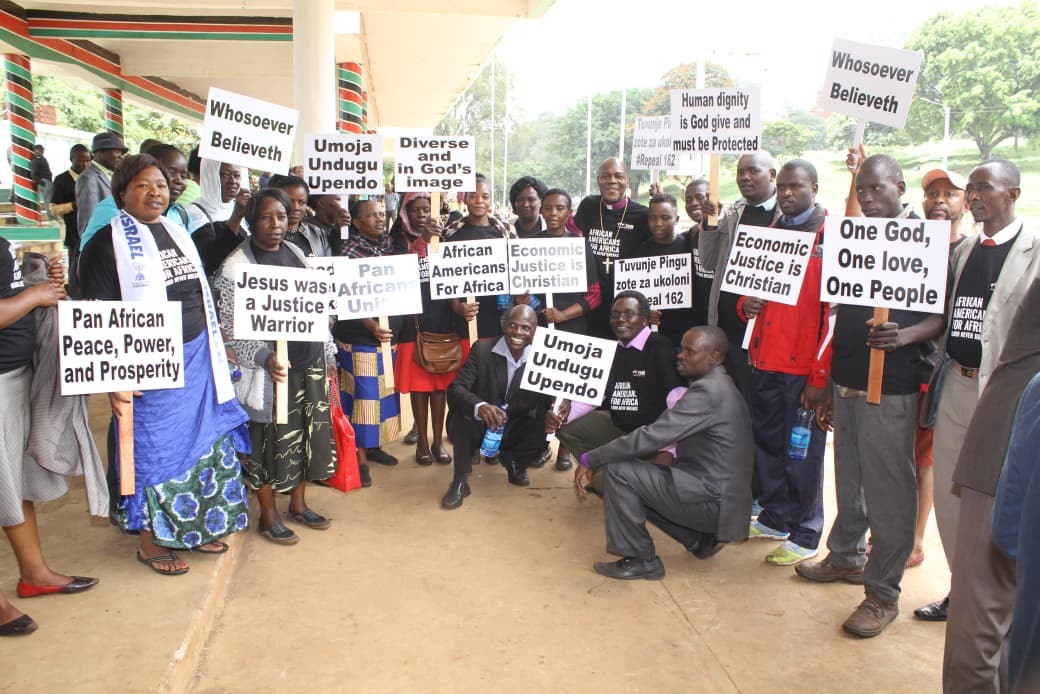
Faith leaders, scholars and human rights advocates from Africa and the diaspora have called for a renewed commitment to democratic governance, human dignity and accountability, warning that the shrinking of civic freedoms and the criminalisation of marginalised communities threaten the continent’s democratic future.
Speaking during a virtual meeting convened by Interconnected Justice, participants introduced the African Democratic Covenant, a framework that seeks to unite African and diaspora communities around democratic renewal, economic justice, African sovereignty and the protection of human rights.
The meeting brought together religious leaders, academics, constitutional thinkers and journalists to examine the relationship between democracy, African identity, religious influence and the continent’s struggle for self-determination.
Bishop Joseph William Tolton, President and Founder of Interconnected Justice, said Africa’s pursuit of sovereignty must extend beyond control of its natural resources to include the freedom to shape its political, cultural and spiritual future.
“We cannot reclaim our minerals while surrendering our spiritual imagination,” Bishop Tolton said, arguing that African reconstruction must not come at the expense of the rights and dignity of African people.
He challenged the idea that sovereignty and human dignity are competing priorities, saying African nations cannot claim genuine independence while using restrictive laws and inherited systems of punishment against their own citizens.
The covenant calls on African leaders to consider a moratorium on legislation that restricts democratic freedoms and criminalises LGBTQ+ people. Its proponents argue that such a pause would create space for constitutional dialogue, public education and broader African-led conversations about governance, identity and human rights.
The intervention comes amid debates in several African countries over legislation affecting LGBTQ+ communities, civil liberties and the role of religious organisations in public policy. The meeting particularly examined Ghana’s proposed legislation on human sexual rights and family values, placing the debate within the country’s constitutional and democratic history.
Ghana’s democratic foundations under scrutiny
Professor Akosua Adomako Ampofo, a Ghanaian feminist scholar and professor emerita, said the proposed legislation should not be treated as an isolated moral dispute. Instead, she situated it within Ghana’s democratic development and the constitutional protections of fundamental rights.
She noted that Ghana’s 1992 Constitution established a commitment to human rights and non-discrimination, and warned that legislation expanding state surveillance and restricting civic freedoms could undermine those principles.
“Shrinking the rights of one minority sets a precedent for police surveillance, censorship and the dismantling of broader democratic freedoms,” Professor Ampofo argued.
She said legislation that threatens journalists with punishment for reporting on LGBTQ+ issues, or places obligations on health workers and family members to report others, could create fear and weaken trust within communities.
She added that the debate also risks diverting public attention from pressing challenges such as economic hardship, corruption, youth unemployment, environmental concerns, healthcare and public service delivery.
“A nation is best judged by how it treats those with the least institutional power,” she said, calling on political leaders and constitutional institutions to uphold the rule of law.
Professor Ampofo further challenged the claim that human rights are foreign to Africa. Drawing on African traditions of mutuality, solidarity and dialogue, she argued that the protection of human dignity is consistent with African moral and social values.
She said African societies have historically developed ways of managing differences through conversation and community engagement, rather than relying on the criminalisation of private relationships.
A call for African-led democratic renewal
Bishop Tolton described the covenant as part of a wider project of African reconstruction — one that seeks to reconnect the continent with its diaspora while confronting the political and economic systems that continue to shape African life.
He said the historical dispersal of African people through slavery, colonialism and the partition of the continent had created a need to rebuild political, moral and economic relationships across geographical boundaries.
“Africa will determine the terms upon which it enters the future,” he said, describing the demand for control over resources, cultural authority and democratic institutions as an expression of African agency.
However, he cautioned that African sovereignty must be comprehensive. The bishop questioned why African countries would resist external political domination while accepting religious and ideological influences that promote restrictive laws and undermine democratic participation.
He also called for closer collaboration between people on the continent and those in the diaspora, arguing that reparatory justice requires shared responsibility rather than a relationship in which the diaspora acts as an external authority over Africa.
“This is not the diaspora doing something for Africa,” he said. “This is people of African descent on the continent working with those of us in the diaspora to design solutions that strengthen democratic realities.”
Faith leaders urged to reconsider the role of religion
The meeting also examined the role of Christian institutions and religious networks in shaping political debates around sexuality, family and national identity.
Rev. Canon Thabo Otukole, an Anglican priest from Botswana and an advocate for democratic leadership and human dignity, was among the faith leaders who took part in the gathering. The discussions emphasised the need for religious communities to reflect critically on the relationship between faith, power and human rights.
Speakers argued that religious teachings should not be used to justify the exclusion or criminalisation of vulnerable groups. They also called for a deeper examination of the historical relationship between Christianity, colonialism and systems of political and economic control.
Professor Ampofo said African societies had long experienced social and gender diversity, even though contemporary terminology for describing those experiences might not have existed in the same form.
She urged religious leaders to engage with historical and sociological evidence rather than presenting human sexuality as an entirely new or foreign phenomenon.
The discussion also raised questions about the influence of international religious and political networks on African legislation. Participants called for greater scrutiny of external funding, ideological partnerships and the ways moral debates might intersect with wider questions of power, resource extraction and governance.
Kenya’s constitutional experience offers lessons
Former Kenyan Chief Justice Hon. Dr Willy Mutunga contributed to the discussion by reflecting on Kenya’s constitutional experience.
He referred to court decisions recognising the rights of LGBTQ+ people to freedom of association and protection from discrimination. He also highlighted judicial decisions concerning reproductive rights, particularly the principle that decisions involving pregnancies resulting from rape or incest should not be dictated by churches or the state.
Dr Mutunga said constitutional and theological arguments could both play an important role in challenging restrictive interpretations of human rights and religious teachings.
He also criticised the use of “African values” as a justification for policies that undermine constitutional protections, arguing that African values should be understood through a more comprehensive engagement with history, culture and human dignity.
The former chief justice linked the broader debate to the need for alternative and accountable political leadership across the continent.
The media’s responsibility in the democratic struggle
Journalists participating in the meeting questioned how the covenant would engage African governments and religious communities, particularly in countries where restrictive legislation enjoys political or religious support.
Questions also focused on whether African leaders had responded to the covenant, how the coalition intended to build political support, and whether it would work with established churches, including Anglican and Catholic institutions.
Bishop Tolton said the media had a critical role in investigating the networks behind anti-gender movements across Africa.
He urged journalists to examine the sources of funding, the international relationships involved and the political interests that might benefit from moral panic surrounding LGBTQ+ issues.
He also called for more coverage of African voices that support democratic inclusion but often lack access to influential media platforms.
“The media has to do a better job of actually talking to Africans who have more progressive sensibilities,” he said, arguing that these perspectives should form part of the continent’s public conversation.
The discussion further encouraged journalists to investigate the relationship between resource extraction and public distraction, while ensuring that coverage of LGBTQ+ rights and other human rights issues remains evidence-based and attentive to the experiences of affected communities.
Building a movement across Africa and the diaspora
The meeting concluded with a call for organised solidarity among faith leaders, scholars, civil society groups, journalists and communities across Africa and the diaspora.
Bishop Tolton said the African Democratic Covenant was not merely a statement of principles but a commitment to collective action and accountability.
He described Interconnected Justice’s work as an effort to build a counter-movement focused on economic fairness, democratic governance, human dignity and a deeper engagement with African spirituality, history and political traditions.
The covenant’s supporters argue that Africa’s future cannot be built on exclusion or fear. Instead, they say, the continent’s pursuit of sovereignty must be accompanied by respect for constitutional rights, inclusive governance and the recognition of the shared humanity of its people.
As debates over democracy, religion and human rights continue across the continent, the organisers are calling for African societies and their diaspora communities to take part in shaping a future grounded in dignity, justice and mutual accountability.