
African economies could unlock billions of dollars for small and medium-sized enterprises (SMEs) by redirecting a fraction of domestic pension savings and institutional capital away from traditional safe havens and into productive sectors.
With vast pools of retirement savings tied up in government securities, bank deposits, and real estate, investors and financial leaders are pushing for specialized vehicles to channel local liquidity directly into African enterprises.
Speaking in Nairobi during The African Circuit—under the theme “Africa Is Building a Continental Market. Who Will Build the Capital Corridors?”—industry leaders argued that the continent must mobilize its own capital to finance enterprise and infrastructure, rather than treating foreign direct investment as a silver bullet.
Kenya’s pension industry, which holds more than Sh3 trillion (roughly $25 billion) in assets, highlights this untapped potential. Because these funds remain heavily concentrated in treasury bills, bonds, and property, local businesses remain starved of growth capital. Redirecting just 10 per cent of Kenya’s pension assets through dedicated private equity or SME debt funds would inject roughly $2.5 billion into local enterprises—diversifying institutional returns while driving job creation. However, rigid regulatory frameworks and a shortage of de-risked investment vehicles continue to stall this shift.
The push comes as African businesses grapple with prohibitive borrowing costs and a scarcity of patient, long-term capital needed to scale operations and adopt new technologies.
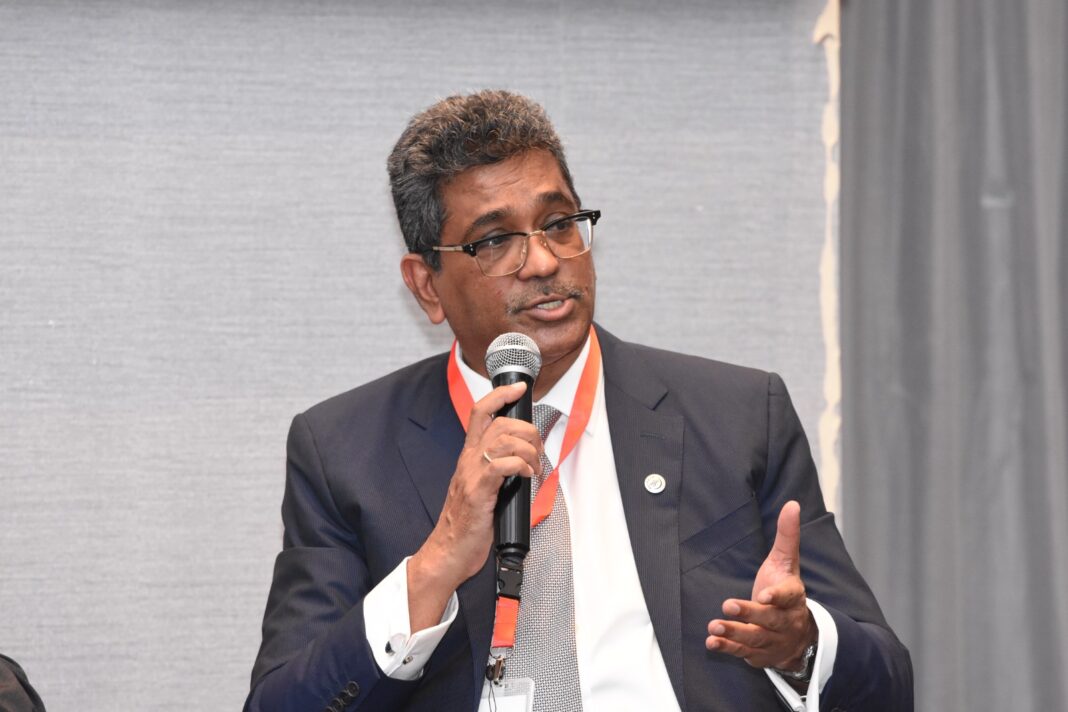
Chris Diaz, Executive Chairman of Adili Group, one of global leaders , who delivered a strong speech and assessment of the continent’s capital flows , arguing that domestic liquidity must be deliberately engineered to build local industrial capacity rather than subsidize foreign imports.
“Africa does not have a capital shortage; it has a capital-allocation challenge . Right now, our financing models make it easier to import finished goods than to build local factories,with incentives to investors ” Diaz said. “If we want globally competitive Africa high quality enterprises, we must deploy strategic affordable capital directly into agro-processing and manufacturing—integrating smallholder farmers into structured supply chains where value is retained on the continent.”
Diaz emphasized that capital-intensive sectors require competitive interest rates and extended repayment horizons that match real industrial recovery timelines. Pointing to contract farming models—where major manufacturers off-take raw materials like barley, sunflower, and maize directly from local growers—he noted that strategic partnerships between corporates, financiers, and entrepreneurs can de-risk supply chains while anchoring broad-based economic growth.
Chris Diaz who also is a board director of Kenya Airways PLC, is pushing for investment to create employment and entrepreneurship, focused on “One continent, connected markets and borderless capital”
Regional capital markets are already proving they have the appetite to fund major African assets when structured properly.
Kenneth Miriti, chairman of the ICC Kenya Banking Commission, pointed to the Kenya Pipeline Company public offering, which was 105 per cent oversubscribed on the back of strong East African investor participation. He also highlighted a $20 million green bond for water infrastructure in Tanga, Tanzania, which achieved a 103 per cent subscription rate after a local-currency bond fund anchored 35 per cent of the issue, drawing in domestic institutional buyers for the rest.
To replicate these successes across the SME sector, development finance institutions (DFIs) must help bridge the structuring gap. Joseph Alain Saraka, vice-president at the Africa Finance Corporation (AFC), noted that DFIs play a critical role in helping governments and project sponsors package bankable, commercially viable deals capable of absorbing institutional capital.
Ultimately, unlocking Africa’s domestic savings requires balancing fiduciary prudence with economic ambition. With SMEs driving the bulk of employment across the continent, regulatory modernization and innovative risk-sharing instruments will be decisive in turning Africa’s own savings into the primary engine of its industrial transformation.