
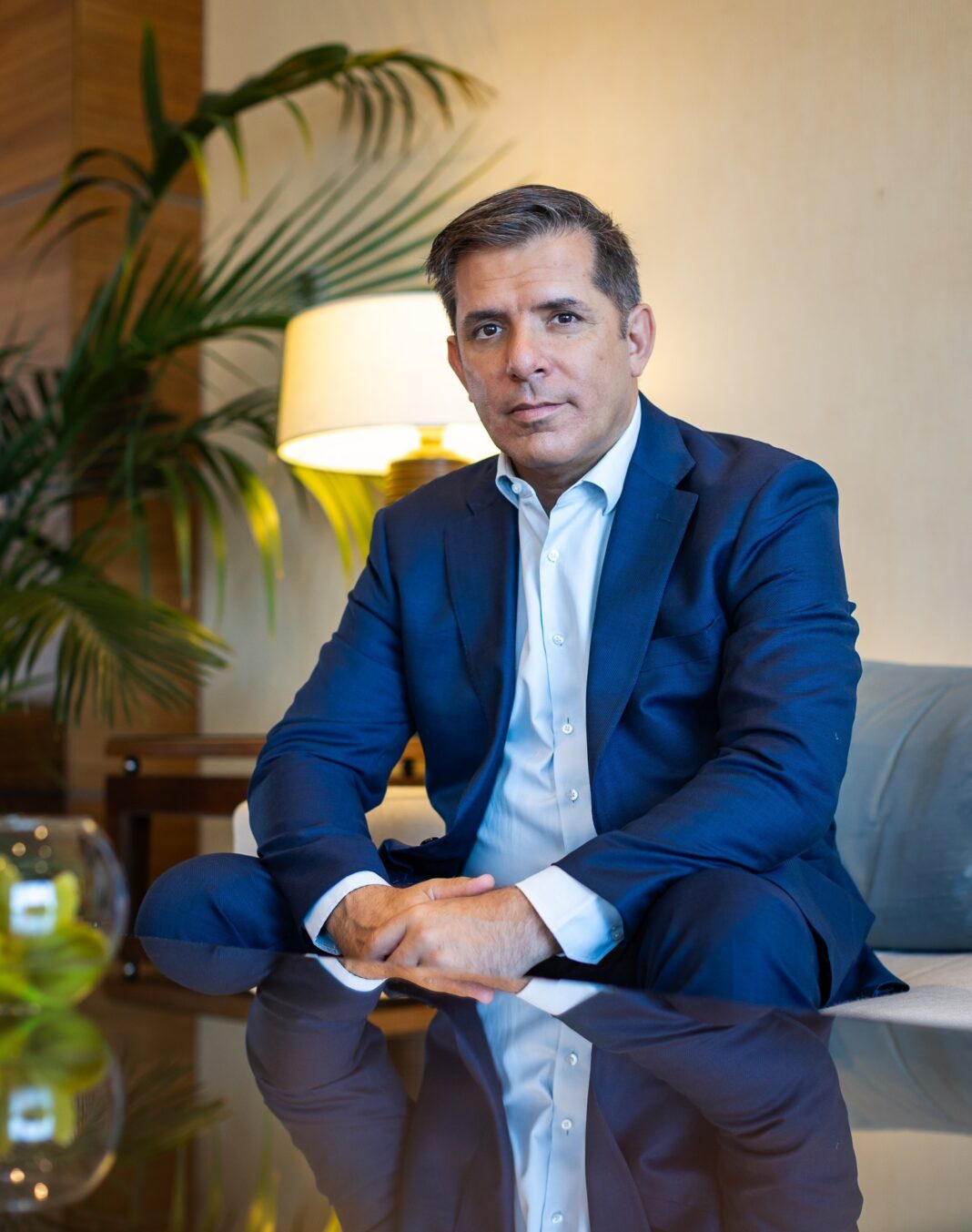

African sports infrastructure must move beyond football stadiums towards integrated sports and entertainment districts capable of attracting investment, creating jobs and generating revenue throughout the year, says ACG CEO Paulo J. Cruz.
Africa’s ambition to build a competitive sports industry will depend increasingly on its ability to develop commercially sustainable infrastructure, with integrated sports and entertainment facilities emerging as a potential model for attracting investment and expanding the continent’s sports economy.
Paulo J. Cruz, Chief Executive Officer of African Collaborations Group (ACG), argues that African countries must rethink their approach to sports infrastructure by moving away from standalone football stadiums towards multi-purpose developments that combine sports, hospitality, entertainment, retail and commercial activities.
In an interview published on Africa.com, Cruz said billions of dollars invested in football-only stadiums across the continent had not translated into sustainable economic returns, with some facilities reportedly being used for fewer than 25 days annually.
“Africa has invested billions in standalone, football-only stadiums that on average are used fewer than 25 days a year,” Cruz said. “They drain public budgets instead of generating revenue. That model has failed.”
His argument comes as African governments, sports federations and private investors explore opportunities to transform sports from a predominantly recreational and competitive activity into a commercially viable industry capable of supporting employment, tourism, infrastructure development and economic diversification.
Moving beyond stadium construction
Cruz advocates developing integrated sports and entertainment districts incorporating between 15 and 20 different asset categories within a single master-planned development.
Such developments would combine stadiums and training facilities with hotels, restaurants, shopping centres, sports academies, conference facilities, entertainment venues and commercial offices.
The model seeks to create multiple income streams rather than relying primarily on football matches and major sporting events to sustain expensive infrastructure.
“When there is no conference, there is a concert. When the stadium is quiet, the hotels, training academies, restaurants, and commercial tenants are operating. Revenue flows every day from multiple sources,” he said.
For Africa, where governments face competing demands for public resources, the approach raises important questions about how sports infrastructure can be structured to attract private capital while delivering long-term economic and social benefits.
The commercialisation of sports facilities could also create opportunities for local businesses operating in hospitality, transport, catering, retail, broadcasting, advertising and event management.
Rather than measuring the success of sports infrastructure solely through the number of sporting events hosted, the proposed model places greater emphasis on the economic activity generated throughout the year.
Unlocking investment in Africa’s sports economy
One of the major challenges facing sports infrastructure development across Africa is the difficulty of converting ambitious proposals into bankable projects capable of attracting institutional investors and development finance.
Cruz argues that the continent has a structural gap between government ambitions, financial institutions and the technical expertise required to originate and structure commercially viable projects.
“A financial institution finances projects; it does not originate them,” he explained, noting that governments provide policy direction and an enabling environment but may lack the technical capacity to structure complex infrastructure investments.
He believes specialised project origination is necessary to bring governments, investors, financial institutions, developers and sports organisations together around commercially sustainable developments.
The proposed approach could open opportunities for public-private partnerships (PPPs), particularly in countries seeking to expand sports facilities without placing the entire financial burden on taxpayers.
However, Cruz acknowledges that investors must navigate several challenges across African markets, including differences in PPP legislation, land ownership arrangements, currency volatility, political risk and regulatory uncertainty.
He argues that feasibility studies must adequately address these risks before projects advance towards financing and construction.
Sports infrastructure as a jobs engine
Beyond investment returns, the industrialisation of sports could provide African economies with opportunities to create permanent employment across multiple sectors.
While stadium construction generates temporary employment, integrated sports developments could sustain jobs in facility management, hospitality, retail, professional sports, media production, broadcasting, tourism and entertainment.
Cruz said the long-term employment opportunities would extend beyond athletes and coaching professionals to include hotel employees, restaurant workers, physiotherapists, event coordinators, broadcast technicians, media producers and conference organisers.
“These are not temporary construction jobs. They are permanent positions in a permanent urban economy,” he said.
The model also presents opportunities for young Africans seeking careers in sports management, sports medicine, digital broadcasting, event production, marketing and other emerging areas of the global sports business.
For African countries with large youth populations, developing these professional pathways could help expand the economic contribution of sports beyond the traditional boundaries of football and other competitive disciplines.
Building a commercially sustainable sports future
ACG’s proposed model seeks to reposition sports infrastructure as part of wider urban and economic development rather than treating stadiums as isolated public facilities.
The company was established by Nicolas Pompigne-Mognard, who in 2022 was appointed to FIFA’s Task Force for Infrastructure Development in Africa and tasked by FIFA President Gianni Infantino with developing a new model for sports infrastructure on the continent.
ACG’s CEO, Cruz, brings 28 years of infrastructure project origination experience across Africa, the Middle East and Europe, including his previous position as Senior Vice-President at DAMAC Group.
The organisation’s 28-member advisory board includes former FIFA Secretary General Fatma Samoura, former World Bank Executive Director Paulo Gomes, World Football Summit co-founder Jan Alessie and Rugby Africa President and World Rugby Executive Board member Herbert Mensah, alongside professionals from international finance, infrastructure, media and entertainment.
Cruz’s vision is to develop African urban destinations where sports, education, entertainment and commercial activities operate within interconnected ecosystems.
He believes the success of the model should ultimately be measured by whether these developments can sustain themselves financially while providing communities with access to sporting, educational and entertainment opportunities.
His vision reflects a broader opportunity for African countries to develop sports as an economic sector capable of attracting investment, supporting tourism, creating skilled employment and expanding the continent’s participation in the global sports business.
The central proposition is that Africa’s next phase of sports development should not be defined simply by how many stadiums it builds, but by how effectively those facilities generate economic value, support local businesses and create employment throughout the year.
Opinion Written By : Paulo J. Cruz, Founding CEO of African Collaborations Group (ACG), a new African-led platform originating investable sport and entertainment infrastructure across the continent, discusses how integrated sports and entertainment developments can transform the continent’s sports economy.



