
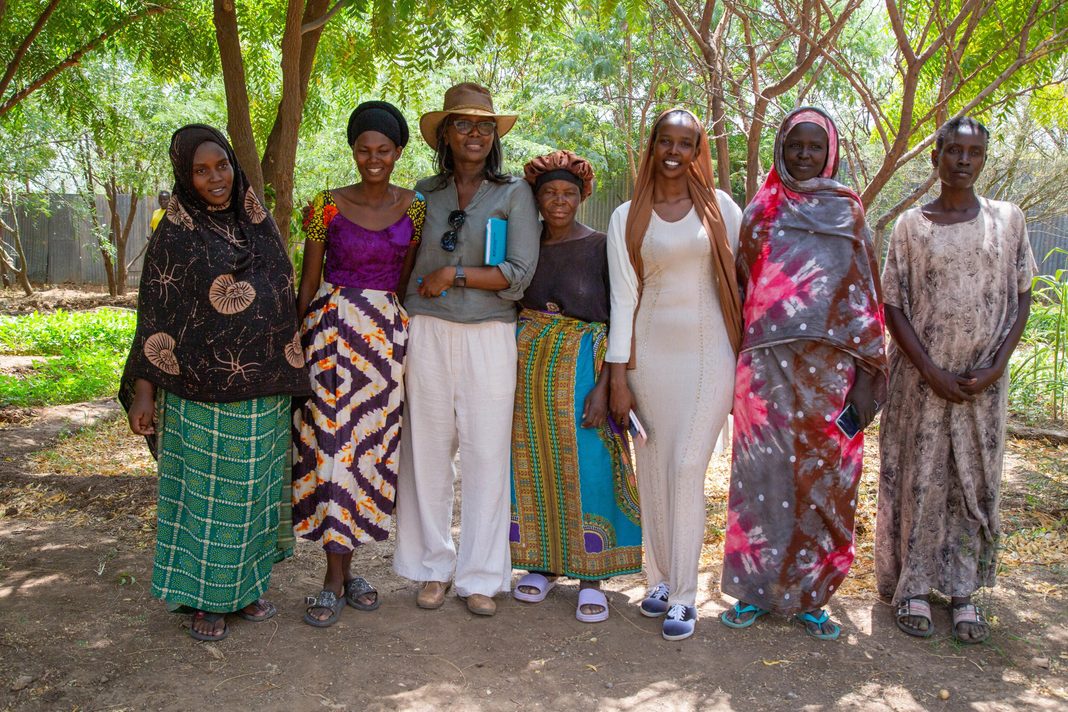

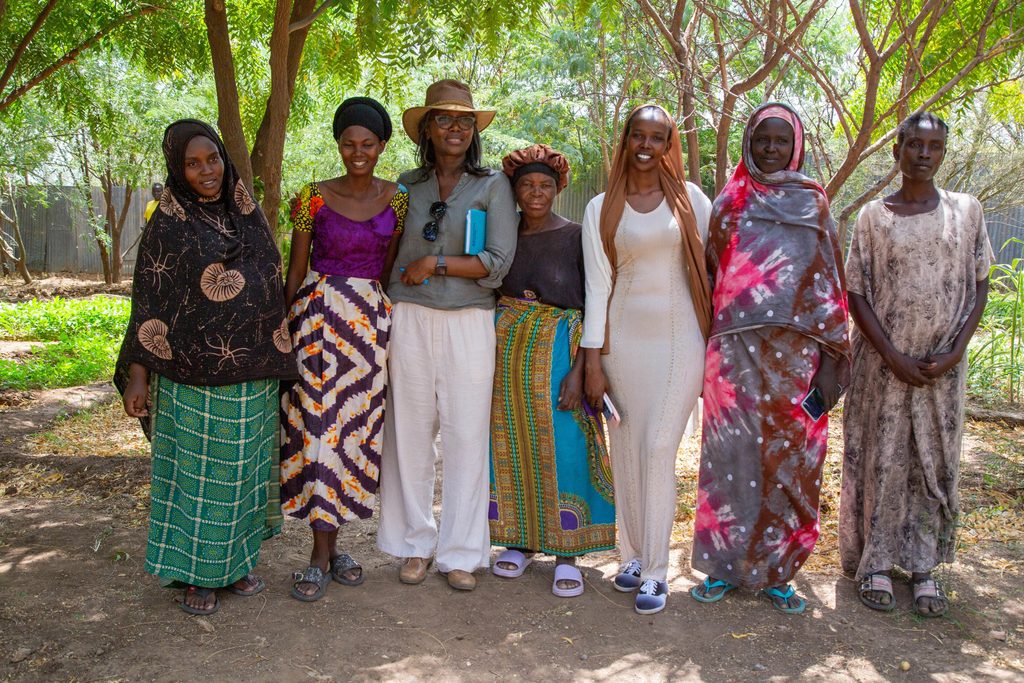
For thousands of refugee and host community women, girls and young people living in Kenya’s Kakuma Refugee Camp and Kalobeyei Integrated Settlement, resilience is not simply about overcoming hardship. It is part of everyday life.
Many continue to face the difficult realities of displacement, poverty, limited employment opportunities and heightened protection risks. For women and girls, these challenges are often compounded by limited access to financial services, skills training, digital technologies and economic opportunities.
Yet across Turkana County, stories of transformation are emerging. Women who once depended entirely on humanitarian assistance are starting businesses. Young people are turning vocational skills into employment opportunities. Girls are gaining confidence and knowledge to make informed choices about their futures.
These changes have been supported through the Government of Japan-funded project, Enhancing Women’s Resilience in Refugee Camps and Host Communities, implemented by UN Women Kenya in partnership with the Turkana County Government and a network of international and national organisations.
Although the project has concluded, its impact continues to be felt across Kakuma and Kalobeyei, where investments in skills, protection and economic empowerment are helping women and young people build more independent and sustainable lives.
Kenya hosts one of the largest refugee populations in the Horn of Africa, with more than 300,000 refugees and asylum seekers living in Kakuma and Kalobeyei. As the country advances refugee inclusion and self-reliance through the Shirika Plan, addressing the barriers facing women and girls remains critical.
The project was designed to strengthen resilience by combining economic empowerment, vocational training, protection services and community engagement. It brought together partners including the International Rescue Committee, Refugee Consortium of Kenya, Don Bosco Kakuma, Peace Winds Japan and Rural Women Peace Link.
A recent UN Women Kenya mission led by Country Representative Antonia Sodonon revisited project sites to assess how beneficiaries have continued to build on the opportunities created through the initiative.
One of the strongest messages from the visit was that investments in women and young people can continue generating benefits long after formal project activities have ended.
For Neema, a refugee from the Democratic Republic of Congo, vocational training provided an opportunity to rebuild her life. In 2023, she enrolled in a tailoring and dressmaking course supported through the project.
The training gave her more than technical knowledge. It provided her with confidence and a practical path towards financial independence.
Today, Neema runs her own tailoring business in Kakuma, earning an income that helps support her family and strengthen household stability. Her growing business has also given her a new sense of purpose and ambition.
“I joined the programme because I wanted a skill that could help me support myself and my family,” Neema says. “Now I have my own business, and I am able to earn an income. My dream is to expand the business and mentor other women so that they can also become self-reliant.”
Her experience reflects the wider impact of vocational training programmes supported through institutions such as Don Bosco Kakuma. Refugees and members of host communities received training in areas including tailoring, mechanics, plumbing, carpentry and salon services, equipping them with skills that could be turned into employment or small businesses.
For Nawar, a refugee from South Sudan, the project offered support during a critical period of her life. After arriving in Kenya in 2014, she participated in a girls’ empowerment initiative before pursuing hairdressing as a livelihood.
She later transformed the skills she acquired into a business.
Today, Nawar operates a hairdressing business from the Women’s Empowerment Centre, earning an income and contributing to her family’s wellbeing.
“The project helped me believe in my abilities and gave me the skills I needed to start something of my own,” she says. “Through my salon business, I can support my family and plan for a better future.”
Her journey highlights the importance of investing in adolescent girls and young women in displacement settings, where opportunities are often limited.
Beyond economic empowerment, the project provided girls with life skills, sexual and reproductive health information, sports activities and awareness programmes aimed at reducing vulnerability to child marriage, teenage pregnancy and school dropout.
Young men also benefited from investments in technical and vocational education.
Alex, a refugee from South Sudan, received mechanical training through the project and used his new skills to establish a spare parts shop and mini garage in Kakuma.
What began as an opportunity to gain technical knowledge has grown into a business that supports his livelihood and creates opportunities for others.
“The training gave me practical skills that I could immediately use to earn a living,” Alex says. “Today, I train other young people in mechanical work so that they can also gain skills, find opportunities and become self-reliant.”
Alex’s experience demonstrates the wider impact of vocational education. When young people acquire marketable skills, the benefits can extend beyond individual beneficiaries through job creation, mentorship and the growth of local enterprises.
The project also recognised that economic empowerment cannot succeed without stronger protection systems.
Through collaboration with the International Rescue Committee, survivor-centred services were strengthened through the Gender Violence Recovery Centre, providing medical care, counselling, psychosocial support and referral services for survivors of violence.
Partnerships with the Refugee Consortium of Kenya improved access to justice through legal aid services, while collaboration with community actors strengthened prevention and response efforts.
Other partners, including Peace Winds Japan and refugee-led organisations, supported youth skills development, improved access to water and strengthened community resilience.
The experiences of Neema, Nawar and Alex demonstrate the lasting value of investing in people rather than simply responding to immediate needs.
By combining skills development, economic empowerment, protection services and community partnerships, the initiative has helped create pathways towards self-reliance and inclusion.
As Kenya pursues greater refugee inclusion and shared prosperity under the Shirika Plan, these stories offer an important lesson: lasting change becomes possible when women, girls and young people are given the skills, opportunities and support to shape their own futures.
From tailoring shops and hair salons to garages and strengthened protection services, the legacy of the Government of Japan-supported initiative continues to live on.
For the women and young people whose lives have been transformed, resilience is no longer only about surviving difficult circumstances. Increasingly, it is about building businesses, supporting families, creating opportunities for others and imagining a future defined by dignity, independence and hope.



